
• About
  • Crypto Exchange
Bullbearlearn
Advertisement
  • Home
  • Learn Forex
    • Forex Basic
    • Trading Strategies
    • Price Action
  • Learn Crypto
  • Broker Reviews
  • Tools FREE
  • Blog
Start
No Result
View All Result
Bullbearlearn
No Result
View All Result
Home Price Action

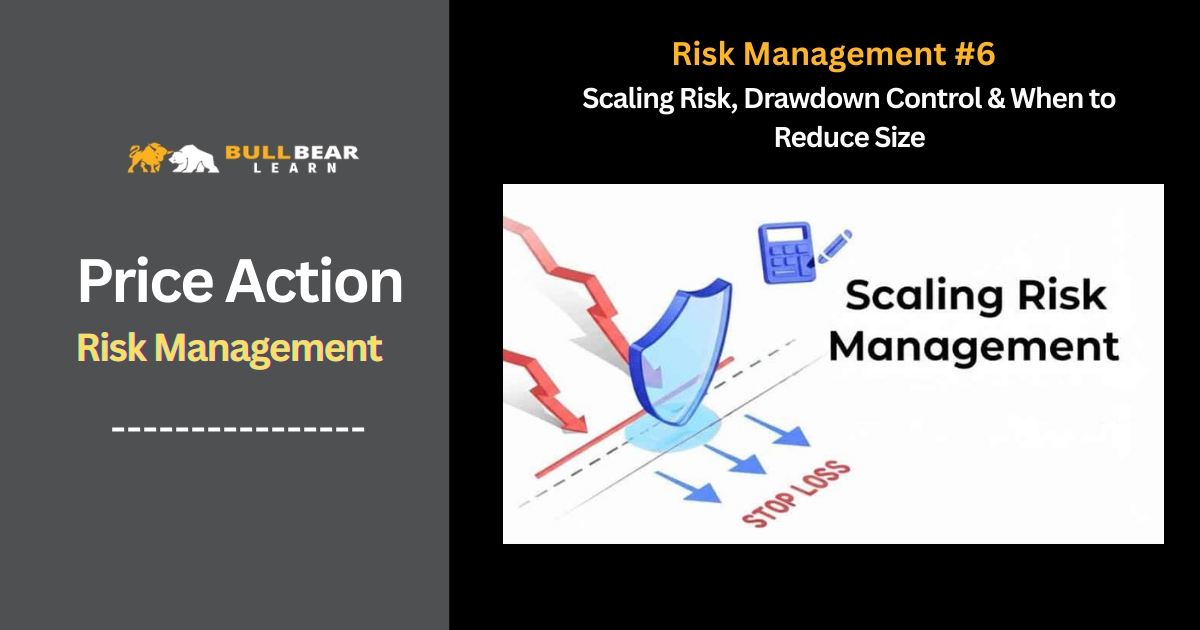
Risk Management #6: Scaling Risk, Drawdown Control & When to Reduce Size

Baby Bull by Baby Bull
March 16, 2026
in Price Action, Risk Management
57 1
0
scaling risk in forex trading

scaling risk in forex trading

190
SHARES
1.5k
VIEWS
Share on FacebookShare on Twitter

Table of Contents

Toggle
  • Why Advanced Traders Fail Not Because of Strategy — But Because of Risk Scaling
  • 1. Risk Is Not Static — It Must Adapt to Account Conditions
  • 2. Understanding Drawdown as a Risk Signal (Not a Failure)
    • What Is Drawdown (Proper Definition)
  • 3. The Drawdown Curve: Why Losses Accelerate Exponentially
  • 4. Risk Scaling Models (What Professionals Actually Use)
    • Model 1: Fixed Risk (Beginner / Foundation)
    • Model 2: Performance-Based Risk Scaling (Intermediate)
    • Model 3: Equity Curve-Based Scaling (Professional)
  • 5. When You Must Reduce Position Size (Non-Negotiable Rules)
  • 6. The “Risk-Off Mode” (Most Traders Don’t Know This Exists)
    • Risk-On Mode
    • Risk-Off Mode
  • 7. Scaling Up: When (and When NOT) to Increase Risk
  • 8. Risk Management Is a System, Not a Rule
  • 9. How This Article Connects the Entire Risk Silo
  • Final Thought: Surviving Is Easy — Scaling Is Where Traders Die

Why Advanced Traders Fail Not Because of Strategy — But Because of Risk Scaling

Most traders do not blow accounts because their entries are wrong.
They fail because risk increases faster than skill, or because they do not know when to reduce size.

This article completes the Risk Management series by addressing advanced capital preservation topics:

  • How to scale risk responsibly

  • How to control drawdown before it becomes unrecoverable

  • When and how to reduce position size

  • Why “doing nothing” is sometimes the correct risk decision

If Risk #1–#5 taught you how to survive, this article teaches you how to grow without dying.


1. Risk Is Not Static — It Must Adapt to Account Conditions

One of the most dangerous assumptions traders make:

“If 1% risk works, it always works.”

This is false.

Risk must adapt based on:

  • Account equity

  • Recent performance

  • Market volatility

  • Psychological state

Professional traders do not use fixed risk blindly — they use conditional risk frameworks.


2. Understanding Drawdown as a Risk Signal (Not a Failure)

What Is Drawdown (Proper Definition)

Drawdown is not “losing money.”
Drawdown is the distance from your equity peak to your current equity.

  • 5% drawdown = normal fluctuation

  • 10% drawdown = warning zone

  • 20% drawdown = structural failure

The goal of risk management is not avoiding drawdown, but preventing drawdown escalation.


3. The Drawdown Curve: Why Losses Accelerate Exponentially

Mathematically:

Drawdown Required Recovery
10% +11%
20% +25%
30% +43%
50% +100%

This is why controlling drawdown early is critical.

Professional risk management is front-loaded defense, not late recovery.


4. Risk Scaling Models (What Professionals Actually Use)

Model 1: Fixed Risk (Beginner / Foundation)

  • Risk: constant (e.g. 1%)

  • Pros: simple, stable

  • Cons: ignores performance context

Used in: Risk Management #1 – Position Sizing in forex trading


Model 2: Performance-Based Risk Scaling (Intermediate)

Risk adjusts based on recent results.

Example:

  • 3 consecutive losses → reduce risk from 1% → 0.5%

  • 5 profitable trades → gradually restore to 1%

This model protects capital during negative streaks.


Model 3: Equity Curve-Based Scaling (Professional)

Risk depends on equity curve position:

  • Above equity high → normal risk

  • Below equity high by X% → reduced risk

  • New equity low → minimum risk or stop trading

This is how prop firms manage trader exposure.


5. When You Must Reduce Position Size (Non-Negotiable Rules)

You must reduce size immediately when:

  1. Drawdown exceeds pre-defined threshold (e.g. −8%)

  2. You break a risk rule (revenge trade, over-leverage)

  3. Market volatility increases beyond tested conditions

  4. You feel urgency, fear, or emotional pressure

Reducing size is not weakness.
It is professional capital defense.


6. The “Risk-Off Mode” (Most Traders Don’t Know This Exists)

Professional traders operate in risk modes:

Risk-On Mode

  • Normal size

  • Favorable conditions

  • High-quality setups

Risk-Off Mode

  • 30–50% reduced size

  • Only A+ setups

  • No experimentation

Risk-off mode is activated before damage, not after destruction.


7. Scaling Up: When (and When NOT) to Increase Risk

You should never increase risk because:

  • You feel confident

  • You had a lucky streak

  • You want faster recovery

You may increase risk only when:

  • Equity makes a new confirmed high

  • Drawdown is zero

  • Execution discipline is intact

  • Strategy performance is statistically validated

Scaling up is earned, not desired.


8. Risk Management Is a System, Not a Rule

At this level, risk management is no longer:

  • “1% per trade”

  • “Don’t risk too much”

It becomes:

  • Capital exposure control

  • Probability containment

  • Psychological pressure regulation

This is the line between retail traders and professionals.


9. How This Article Connects the Entire Risk Silo

This article ties together:

  • Position sizing → Risk #1

  • R:R & expectancy → Risk #2

  • Risk rules → Risk #3

  • Losing streak survival → Risk #4

  • Risk of ruin → Risk #5

Without this final layer, traders know rules but not adaptation.


Final Thought: Surviving Is Easy — Scaling Is Where Traders Die

Most traders can survive with good risk rules.
Most traders fail when trying to grow faster than their system allows.

Risk Management #6 exists to ensure:

  • You stay in the game

  • You scale responsibly

  • You never need to “recover” a blown account again

Tags: price actionrisk
Share76Tweet48
Previous Post

Risk Management #5: Drawdown, Losing Streaks & Capital Survival

Next Post

Risk–Reward Strategy: The Foundation of All Profitable Trading

Related Posts

breakout forex strategy

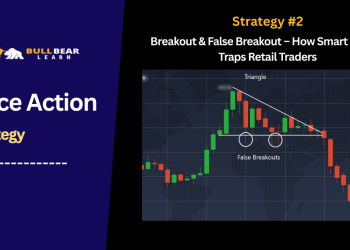
Strategy #2: Breakout & False Breakout – How Smart Money Traps Retail Traders

by Baby Bull
March 23, 2026
0

1. What Is a Breakout in Price Action? A breakout occurs when price moves beyond a significant level such as:...

price action trading strategy

Strategy #1: Price Action Trading Strategy: A Complete Framework for Consistent Decisions

by Baby Bull
March 23, 2026
0

Introduction: Why Most Trading Strategies Fail Most traders spend their time searching for: the best indicator the perfect entry a...

trading mindset

Psychology #6: Process-Based Thinking vs Outcome-Based Thinking in Trading

by Baby Bear
March 21, 2026
0

Introduction: Why Results Can Be Misleading Most traders judge their performance based on one thing: Did I make money or...

trading journal

Psychology #5: Trading Routine, Journaling & Mental Process: How Professionals Build Consistency

by Baby Bull
March 22, 2026
0

Introduction: Consistency Is Built, Not Natural Most traders struggle with: inconsistency emotional decisions lack of discipline They believe the solution...

losing streaks in trading

Psychology #4: Losing Streaks, Tilt & Psychological Recovery in Trading

by Baby Bull
March 21, 2026
0

Introduction: Losing Streaks Are Inevitable — Breakdown Is Optional Every trader experiences losing streaks. Even the best strategies, with solid...

Load More
  • Trending
  • Comments
  • Latest
Market Structure in Price Action

Market Structure in Price Action: Higher Highs, Lower Lows Explained

February 27, 2026
exness review

Exness Review 2026: Is It Safe, Legit & Worth It for Beginners?

March 23, 2026
Discipline & Consistency in Trading

Psychology #3: Discipline & Consistency in Trading: How Professionals Actually Follow Rules

March 21, 2026
trading psychology basics

Psychology #1: Trading Psychology Basics: Why Most Traders Fail Despite Good Strategies

March 20, 2026
breakout forex strategy

Strategy #2: Breakout & False Breakout – How Smart Money Traps Retail Traders

0
price action trading strategy

Strategy #1: Price Action Trading Strategy: A Complete Framework for Consistent Decisions

0
trading mindset

Psychology #6: Process-Based Thinking vs Outcome-Based Thinking in Trading

0
trading journal

Psychology #5: Trading Routine, Journaling & Mental Process: How Professionals Build Consistency

0
breakout forex strategy

Strategy #2: Breakout & False Breakout – How Smart Money Traps Retail Traders

March 23, 2026
price action trading strategy

Strategy #1: Price Action Trading Strategy: A Complete Framework for Consistent Decisions

March 23, 2026
trading mindset

Psychology #6: Process-Based Thinking vs Outcome-Based Thinking in Trading

March 21, 2026
trading journal

Psychology #5: Trading Routine, Journaling & Mental Process: How Professionals Build Consistency

March 22, 2026

BullBearLearn.com is an independent educational website on Forex and financial trading, offering knowledge, strategies, and tools to help traders understand and navigate markets—whether bullish or bearish.

Categories
  • Broker Reviews
  • Core Concepts
  • Core Strategies
  • Crypto Exchange
  • Execution
  • Forex Basic
  • Learn Forex
  • Market Condition
  • Price Action
  • Psychology
  • Risk Management
  • Strategy
  • Tools
  • Trading Strategies
Tags
Beginner Binance Review breakout Broker Reviews Bybit review calculator Core Concepts cost crypto exchange Execution Exness Review fees forex basic guide Leverage lot Margin mistake OKX review pip position size price action Psychology risk risk reward Spread swap Swing XM Review xtb review

Disclaimer: Content on BullBearLearn.com is for educational purposes only and not intended as financial advice. Trading involves risk.​

  • About
  • Privacy Policy
  • Terms of Service
  • Disclaimer
  • Cookie Policy
  • Affiliate Disclosure
  • Contact Us

© 2025 BullBearLearn.com — Learn to Trade, Bull or Bear.

Welcome Back!

Login to your account below

Forgotten Password?

Retrieve your password

Please enter your username or email address to reset your password.

Log In

Session expired

Please log in again. The login page will open in a new tab. After logging in you can close it and return to this page.

Add New Playlist

>

Table of Contents

×
  • Why Advanced Traders Fail Not Because of Strategy — But Because of Risk Scaling
  • 1. Risk Is Not Static — It Must Adapt to Account Conditions
  • 2. Understanding Drawdown as a Risk Signal (Not a Failure)
    • What Is Drawdown (Proper Definition)
  • 3. The Drawdown Curve: Why Losses Accelerate Exponentially
  • 4. Risk Scaling Models (What Professionals Actually Use)
    • Model 1: Fixed Risk (Beginner / Foundation)
    • Model 2: Performance-Based Risk Scaling (Intermediate)
    • Model 3: Equity Curve-Based Scaling (Professional)
  • 5. When You Must Reduce Position Size (Non-Negotiable Rules)
  • 6. The “Risk-Off Mode” (Most Traders Don’t Know This Exists)
    • Risk-On Mode
    • Risk-Off Mode
  • 7. Scaling Up: When (and When NOT) to Increase Risk
  • 8. Risk Management Is a System, Not a Rule
  • 9. How This Article Connects the Entire Risk Silo
  • Final Thought: Surviving Is Easy — Scaling Is Where Traders Die
→ Index
No Result
View All Result
  • Home
  • Learn Forex
    • Forex Basic
    • Trading Strategies
    • Price Action
  • Learn Crypto
  • Broker Reviews
  • Tools FREE
  • Blog
START

© 2025 BullBearLearn.com — Learn to Trade, Bull or Bear.