
• About
  • Crypto Exchange
Bullbearlearn
Advertisement
  • Home
  • Learn Forex
    • Forex Basic
    • Trading Strategies
    • Price Action
  • Learn Crypto
  • Broker Reviews
  • Tools FREE
  • Blog
Start
No Result
View All Result
Bullbearlearn
No Result
View All Result
Home Price Action

Psychology #2: Emotions in Trading – Fear, Greed & Overtrading Explained

Baby Bull by Baby Bull
March 21, 2026
in Price Action, Psychology
58 0
0
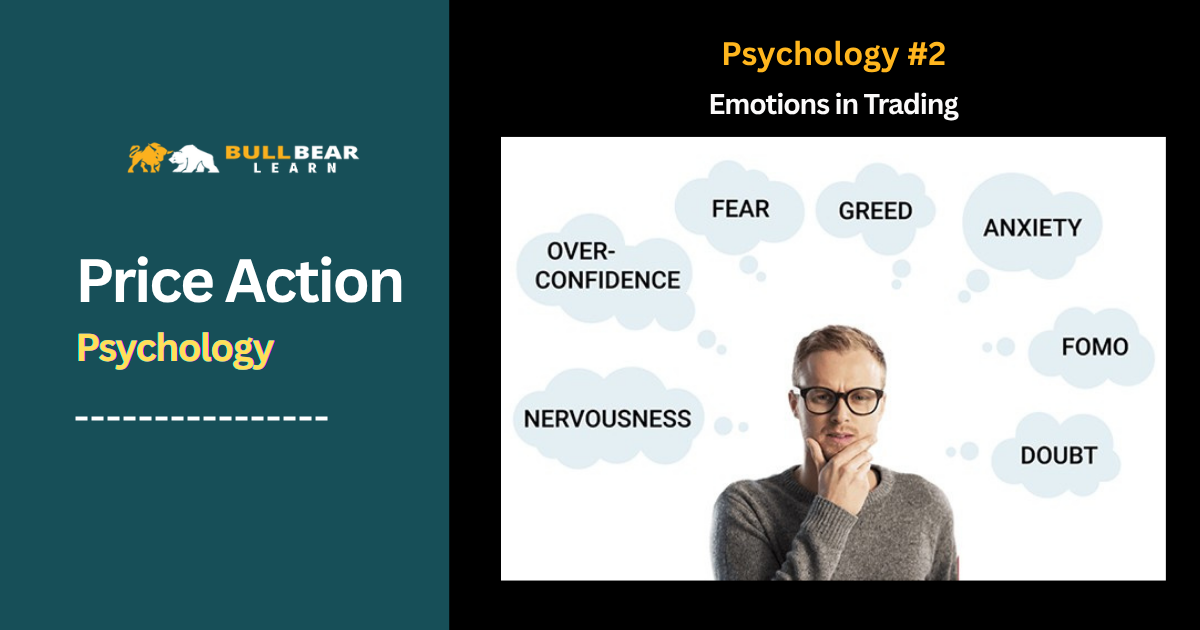
Emotions in Trading

Emotions in Trading

189
SHARES
1.5k
VIEWS
Share on FacebookShare on Twitter

Table of Contents

Toggle
  • Introduction: The Hidden Force Behind Most Trading Losses
  • 1. Fear in Trading: Why It Destroys Execution
    • Common Forms of Fear
    • How Fear Affects Trading Decisions
  • 2. Greed in Trading: The Silent Account Killer
    • How Greed Shows Up in Trading
    • Why Greed Is More Dangerous Than Fear
  • 3. Overtrading: The Result of Emotional Instability
    • Why Traders Overtrade
    • Signs of Overtrading
  • 4. The Emotional Cycle That Destroys Traders
  • 5. Why Emotions Override Logic in Trading
  • 6. The Link Between Emotions and Risk Management
  • 7. Professional Traders Do Not Remove Emotions — They Control Behavior
  • 8. The First Step to Controlling Emotions
  • Conclusion: Control Behavior, Not Emotion

Introduction: The Hidden Force Behind Most Trading Losses

Many traders believe their losses come from poor strategy, bad timing, or lack of technical knowledge.

But in reality, the majority of trading mistakes are not technical — they are emotional.

Even traders who understand price action, risk management, and execution often fail because they cannot control how they react under pressure. Fear causes hesitation. Greed leads to overexposure. Frustration results in overtrading.

The market does not defeat traders — their reactions to the market do.

In this article, you will learn how the three core emotions — fear, greed, and overtrading behavior — affect decision-making, and how professional traders manage them to maintain consistency.


1. Fear in Trading: Why It Destroys Execution

Fear is the most common emotional response in trading, especially for beginners or traders coming off a losing streak.

Common Forms of Fear

  • Fear of losing money

  • Fear of being wrong

  • Fear of missing out (FOMO)

  • Fear after consecutive losses

Fear is not always obvious. Sometimes it appears as hesitation or “waiting for confirmation” that never comes.

How Fear Affects Trading Decisions

Fear leads to:

  • Skipping valid setups

  • Closing trades too early

  • Moving stop losses irrationally

  • Avoiding trades after losses

This directly breaks consistent execution, which is essential for any strategy to work.

For example, a trader may identify a valid setup based on their system, but after a recent loss, they hesitate. The trade works without them, reinforcing frustration and self-doubt.

This creates a cycle:

Loss → Fear → Hesitation → Missed trade → Frustration

Fear feels like protection, but in trading, it distorts probability-based decision-making.


2. Greed in Trading: The Silent Account Killer

While fear prevents action, greed pushes traders to take unnecessary risks.

Greed is not simply “wanting more profit.” It is the inability to stay within a structured plan.

How Greed Shows Up in Trading

  • Increasing position size after a win

  • Holding trades beyond planned targets

  • Ignoring risk-reward structure

  • Refusing to accept losses

Greed often appears during periods of success.

After a series of winning trades, traders begin to feel:

  • Overconfident

  • Invincible

  • In control of the market

This leads to breaking rules that were previously followed.

Why Greed Is More Dangerous Than Fear

Fear limits damage by reducing participation.
Greed increases damage by increasing exposure.

A single emotionally oversized trade can:

  • erase weeks of profit

  • trigger emotional instability

  • start a losing spiral

This directly violates principles from:

  • Risk Management #2: Position Sizing Explained

  • Risk Management #4: Risk-Reward Ratio

Greed turns controlled risk into uncontrolled gambling.


3. Overtrading: The Result of Emotional Instability

Overtrading is not caused by strategy — it is caused by emotional imbalance.

It is often the combined result of fear, greed, and frustration.

Why Traders Overtrade

  • Desire to recover losses quickly

  • Boredom when no setups appear

  • Addiction to market activity

  • Need to feel productive

Signs of Overtrading

  • Taking low-quality setups

  • Trading outside your plan

  • Increasing trade frequency randomly

  • Ignoring market conditions

Overtrading leads to:

  • inconsistent risk exposure

  • poor decision-making

  • rapid capital erosion

It is often the final stage before traders experience serious drawdown or account failure.


4. The Emotional Cycle That Destroys Traders

Most traders unknowingly follow a repeating psychological cycle:

  1. Confidence (after wins)

  2. Greed (increase risk)

  3. Losses (market normalizes)

  4. Fear (hesitation begins)

  5. Frustration (emotional pressure builds)

  6. Overtrading (revenge or recovery attempts)

  7. Burnout (loss of control or quitting)

This cycle is not caused by the market — it is caused by emotional reactions to outcomes.

Traders focus on:

  • short-term results (profit/loss)

Instead of:

  • long-term process (execution consistency)

Breaking this cycle requires shifting from outcome-based thinking to process-based discipline.


5. Why Emotions Override Logic in Trading

Many traders know what they should do, but fail to do it.

This happens because:

  • Emotional responses are immediate

  • Logical thinking is delayed

Under stress, the brain prioritizes:

  • avoiding pain

  • seeking quick relief

This leads to:

  • moving stop losses

  • closing trades early

  • abandoning plans

Even with knowledge, traders act against their own system.

The issue is not lack of knowledge — it is lack of emotional control under uncertainty.


6. The Link Between Emotions and Risk Management

Emotions become dangerous when they interfere with risk control.

Examples:

  • Fear → reducing position size randomly

  • Greed → increasing risk beyond plan

  • Overtrading → multiplying exposure

This breaks core principles from:

  • Risk Management #2: Position Sizing Explained

  • Risk Management #5: Drawdown & Losing Streaks

Without emotional discipline:

Risk management becomes theoretical — not executable.

This is why many traders “know” risk rules but fail to follow them in real trading.


7. Professional Traders Do Not Remove Emotions — They Control Behavior

A common misconception is that successful traders do not feel emotions.

This is false.

Professional traders still feel:

  • fear

  • pressure

  • uncertainty

The difference is:

They do not act on those emotions.

They rely on:

  • predefined rules

  • structured processes

  • consistent execution

Their edge is not emotional absence — it is behavioral discipline.


8. The First Step to Controlling Emotions

Before controlling emotions, traders must:

  • Recognize emotional triggers

  • Accept that emotions are normal

  • Separate feelings from actions

This creates awareness.

Awareness leads to control.
Control leads to consistency.

The next step is building discipline and structured habits, which will be covered in:

→ Psychology #3: Discipline & Consistency – How Professionals Follow Rules


Conclusion: Control Behavior, Not Emotion

Fear, greed, and overtrading are not problems you can eliminate.

They are part of being human.

The goal is not to remove emotion —
it is to prevent emotion from controlling your actions.

Successful traders are not those who feel less,
but those who act with discipline regardless of how they feel.

Tags: price actionPsychology
Share76Tweet47
Previous Post

News-Driven Market Trading Strategies: How to Trade Economic News Safely

Next Post

Psychology #3: Discipline & Consistency in Trading: How Professionals Actually Follow Rules

Related Posts

breakout forex strategy

Strategy #2: Breakout & False Breakout – How Smart Money Traps Retail Traders

by Baby Bull
March 23, 2026
0

1. What Is a Breakout in Price Action? A breakout occurs when price moves beyond a significant level such as:...

price action trading strategy

Strategy #1: Price Action Trading Strategy: A Complete Framework for Consistent Decisions

by Baby Bull
March 23, 2026
0

Introduction: Why Most Trading Strategies Fail Most traders spend their time searching for: the best indicator the perfect entry a...

trading mindset

Psychology #6: Process-Based Thinking vs Outcome-Based Thinking in Trading

by Baby Bear
March 21, 2026
0

Introduction: Why Results Can Be Misleading Most traders judge their performance based on one thing: Did I make money or...

trading journal

Psychology #5: Trading Routine, Journaling & Mental Process: How Professionals Build Consistency

by Baby Bull
March 22, 2026
0

Introduction: Consistency Is Built, Not Natural Most traders struggle with: inconsistency emotional decisions lack of discipline They believe the solution...

losing streaks in trading

Psychology #4: Losing Streaks, Tilt & Psychological Recovery in Trading

by Baby Bull
March 21, 2026
0

Introduction: Losing Streaks Are Inevitable — Breakdown Is Optional Every trader experiences losing streaks. Even the best strategies, with solid...

Load More
  • Trending
  • Comments
  • Latest
Market Structure in Price Action

Market Structure in Price Action: Higher Highs, Lower Lows Explained

February 27, 2026
exness review

Exness Review 2026: Is It Safe, Legit & Worth It for Beginners?

March 23, 2026
Discipline & Consistency in Trading

Psychology #3: Discipline & Consistency in Trading: How Professionals Actually Follow Rules

March 21, 2026
trading psychology basics

Psychology #1: Trading Psychology Basics: Why Most Traders Fail Despite Good Strategies

March 20, 2026
breakout forex strategy

Strategy #2: Breakout & False Breakout – How Smart Money Traps Retail Traders

0
price action trading strategy

Strategy #1: Price Action Trading Strategy: A Complete Framework for Consistent Decisions

0
trading mindset

Psychology #6: Process-Based Thinking vs Outcome-Based Thinking in Trading

0
trading journal

Psychology #5: Trading Routine, Journaling & Mental Process: How Professionals Build Consistency

0
breakout forex strategy

Strategy #2: Breakout & False Breakout – How Smart Money Traps Retail Traders

March 23, 2026
price action trading strategy

Strategy #1: Price Action Trading Strategy: A Complete Framework for Consistent Decisions

March 23, 2026
trading mindset

Psychology #6: Process-Based Thinking vs Outcome-Based Thinking in Trading

March 21, 2026
trading journal

Psychology #5: Trading Routine, Journaling & Mental Process: How Professionals Build Consistency

March 22, 2026

BullBearLearn.com is an independent educational website on Forex and financial trading, offering knowledge, strategies, and tools to help traders understand and navigate markets—whether bullish or bearish.

Categories
  • Broker Reviews
  • Core Concepts
  • Core Strategies
  • Crypto Exchange
  • Execution
  • Forex Basic
  • Learn Forex
  • Market Condition
  • Price Action
  • Psychology
  • Risk Management
  • Strategy
  • Tools
  • Trading Strategies
Tags
Beginner Binance Review breakout Broker Reviews Bybit review calculator Core Concepts cost crypto exchange Execution Exness Review fees forex basic guide Leverage lot Margin mistake OKX review pip position size price action Psychology risk risk reward Spread swap Swing XM Review xtb review

Disclaimer: Content on BullBearLearn.com is for educational purposes only and not intended as financial advice. Trading involves risk.​

  • About
  • Privacy Policy
  • Terms of Service
  • Disclaimer
  • Cookie Policy
  • Affiliate Disclosure
  • Contact Us

© 2025 BullBearLearn.com — Learn to Trade, Bull or Bear.

Welcome Back!

Login to your account below

Forgotten Password?

Retrieve your password

Please enter your username or email address to reset your password.

Log In

Session expired

Please log in again. The login page will open in a new tab. After logging in you can close it and return to this page.

Add New Playlist

>

Table of Contents

×
  • Introduction: The Hidden Force Behind Most Trading Losses
  • 1. Fear in Trading: Why It Destroys Execution
    • Common Forms of Fear
    • How Fear Affects Trading Decisions
  • 2. Greed in Trading: The Silent Account Killer
    • How Greed Shows Up in Trading
    • Why Greed Is More Dangerous Than Fear
  • 3. Overtrading: The Result of Emotional Instability
    • Why Traders Overtrade
    • Signs of Overtrading
  • 4. The Emotional Cycle That Destroys Traders
  • 5. Why Emotions Override Logic in Trading
  • 6. The Link Between Emotions and Risk Management
  • 7. Professional Traders Do Not Remove Emotions — They Control Behavior
  • 8. The First Step to Controlling Emotions
  • Conclusion: Control Behavior, Not Emotion
→ Index
No Result
View All Result
  • Home
  • Learn Forex
    • Forex Basic
    • Trading Strategies
    • Price Action
  • Learn Crypto
  • Broker Reviews
  • Tools FREE
  • Blog
START

© 2025 BullBearLearn.com — Learn to Trade, Bull or Bear.