

Introduction: Why Knowing the Rules Is Not Enough
Most traders already know what they should do.
They know:
-
where to place stop losses
-
how much to risk per trade
-
when a setup is valid
Yet they still fail.
Why?
Because knowledge does not guarantee execution.
The real challenge in trading is not understanding the rules —
it is following them consistently under pressure.
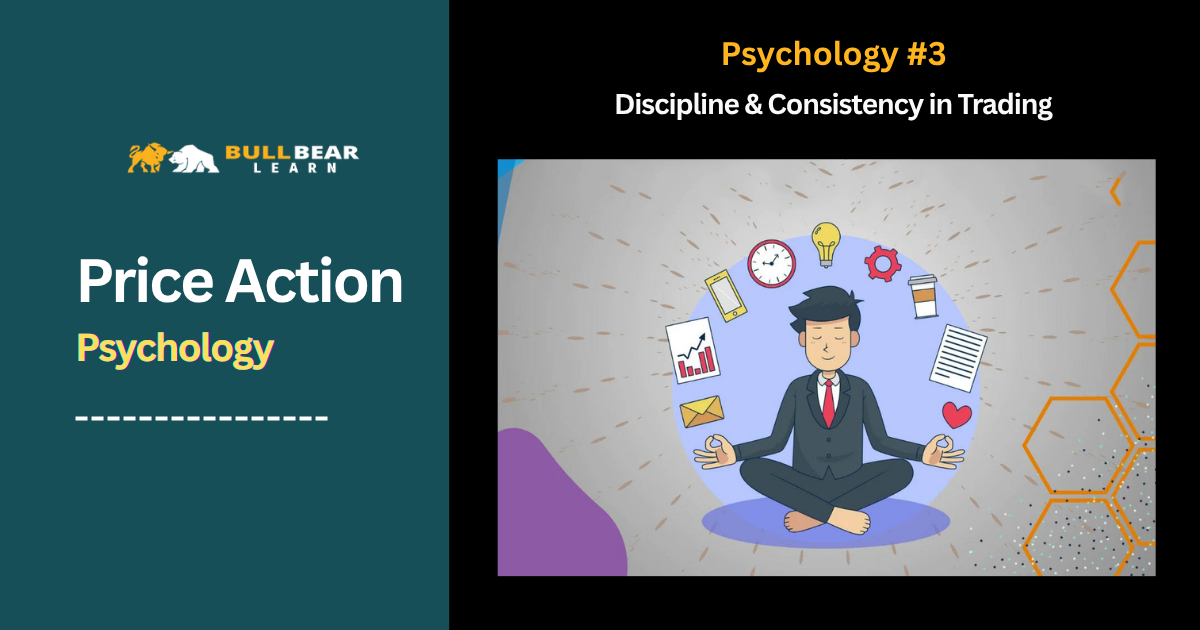
Discipline is what turns a strategy into results.
Consistency is what turns results into long-term success.
In this article, you will learn how professional traders develop discipline, why most traders lack it, and how to build consistency step by step.
1. What Is Discipline in Trading?
Discipline is not motivation.
It is not willpower.
Discipline is the ability to:
-
follow a predefined plan
-
execute without hesitation
-
avoid impulsive decisions
Even when:
-
you feel fear
-
you feel confident
-
you feel frustrated
A disciplined trader does not ask:
“What do I feel like doing?”
They ask:
“What does my system require me to do?”
2. Why Most Traders Lack Discipline
Discipline fails when traders rely on emotion instead of structure.
Common reasons include:
No Clear Trading Plan
Without a defined system:
-
every decision becomes subjective
-
emotions fill the gap
Inconsistent Risk Management
When risk varies randomly:
-
losses feel unpredictable
-
fear and greed increase
This breaks principles from:
Emotional Decision-Making
As explained in:
Fear and greed override logic, causing:
-
hesitation
-
overtrading
-
revenge trading
Lack of Accountability
Without tracking behavior:
-
mistakes repeat
-
patterns go unnoticed
3. Consistency: The Real Edge in Trading
Most traders search for:
-
better strategies
-
better indicators
-
better entry signals
Professionals focus on:
-
consistency of execution
Consistency means:
-
taking every valid setup
-
risking the same percentage
-
following the same rules
Even a profitable system fails if applied inconsistently.
In trading, consistency creates edge — not perfection.
4. The Cost of Inconsistency
Inconsistent behavior destroys performance in ways traders often do not realize.
Examples:
-
Skipping winning trades → lowers win rate
-
Overtrading → increases losses
-
Changing risk → distorts expectancy
This leads to:
-
unstable equity curves
-
emotional stress
-
loss of confidence
It also amplifies problems discussed in:
5. Discipline Is Built Through Systems, Not Motivation
Motivation is temporary.
Discipline is structural.
Professional traders rely on systems such as:
Predefined Rules
-
Entry criteria
-
Stop loss placement
-
Risk per trade
These rules remove decision-making under pressure.
Checklists Before Every Trade
Before entering a trade:
-
Is the setup valid?
-
Is risk within limits?
-
Is market condition suitable?
Checklists reduce impulsive decisions.
Fixed Risk Framework
Consistent position sizing ensures:
-
predictable losses
-
stable drawdowns
(Connected to Risk Management #2)
Journaling and Review
Tracking trades helps identify:
-
emotional mistakes
-
behavioral patterns
-
performance issues
This creates feedback and improvement.
6. The Role of Routine in Consistent Trading
Consistency is easier when behavior becomes routine.
Professional traders follow structured processes:
-
analyzing markets at specific times
-
trading only during defined sessions
-
limiting screen time
Routine reduces:
-
randomness
-
impulsive decisions
-
emotional fatigue
Without routine, trading becomes reactive.
7. Discipline During Losing Streaks
Discipline is easy when winning.
It is tested during losses.
During losing streaks, traders often:
-
increase risk
-
abandon strategy
-
overtrade
This accelerates drawdown.
A disciplined trader does the opposite:
-
maintains risk
-
follows the plan
-
reduces activity if needed
This aligns with:
8. Process-Based Thinking vs Outcome-Based Thinking
Most traders evaluate success based on:
-
profit or loss
Professionals evaluate based on:
-
execution quality
Example:
Bad trade but profit → still a mistake
Good trade but loss → still correct execution
Focusing on outcomes leads to:
-
emotional reactions
-
inconsistent behavior
Focusing on process leads to:
-
stability
-
long-term profitability
This concept will be expanded in:
9. How to Build Discipline Step by Step
Discipline is not developed instantly.
It is built through repetition.
Step 1: Define Clear Rules
Remove ambiguity from decision-making.
Step 2: Reduce Trade Frequency
Focus only on high-quality setups.
Step 3: Fix Risk Per Trade
Eliminate emotional position sizing.
Step 4: Track Every Trade
Identify patterns and mistakes.
Step 5: Accept Imperfection
Losses are part of the system.
Consistency improves when expectations become realistic.
Conclusion: Discipline Is the Real Trading Edge
Most traders fail not because they lack knowledge,
but because they lack discipline.
They:
-
break rules
-
react emotionally
-
trade inconsistently
Professional traders succeed because they:
-
follow systems
-
control behavior
-
execute consistently
Discipline turns knowledge into action.
Consistency turns action into results.
Without discipline, no strategy works.
With discipline, even simple systems can succeed.