
• About
  • Crypto Exchange
Bullbearlearn
Advertisement
  • Home
  • Learn Forex
    • Forex Basic
    • Trading Strategies
    • Price Action
  • Learn Crypto
  • Broker Reviews
  • Tools FREE
  • Blog
Start
No Result
View All Result
Bullbearlearn
No Result
View All Result
Home Price Action Core Concepts

Timeframes in Price Action: How to Use Top-Down Analysis Correctly

Baby Bull by Baby Bull
February 28, 2026
in Core Concepts, Price Action
57 1
0
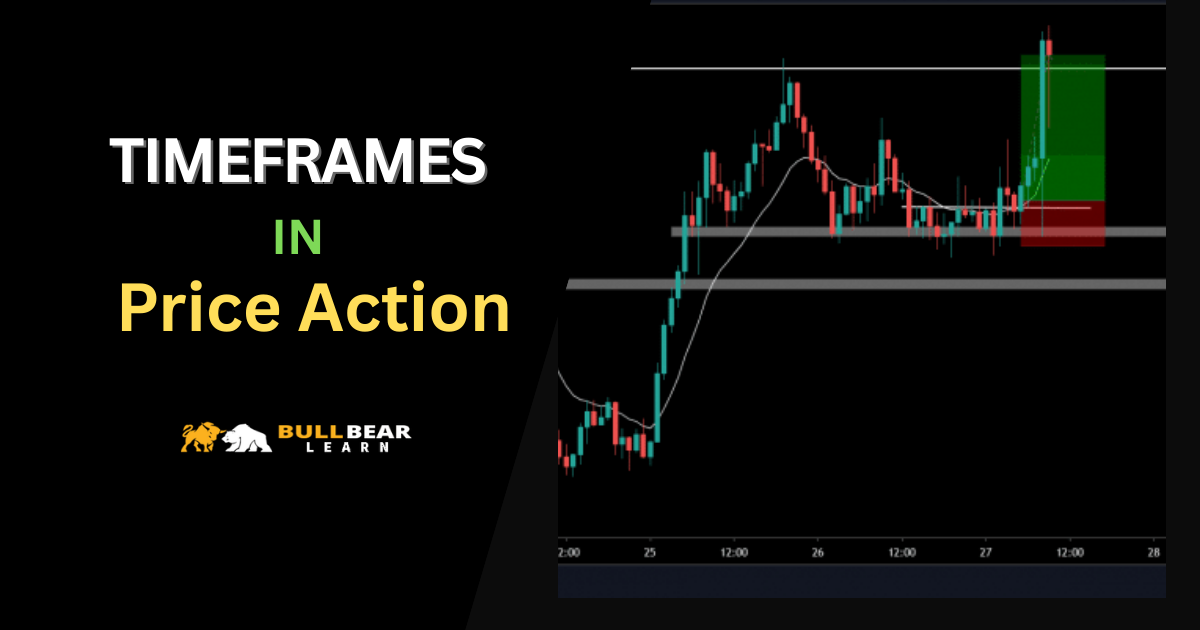
Timeframes in Price Action: How to Use Top-Down Analysis Correctly
190
SHARES
1.5k
VIEWS
Share on FacebookShare on Twitter

One of the biggest reasons traders fail is not poor strategy—it is poor context.

That context is defined by timeframes.

Price Action works across all timeframes, but not all timeframes serve the same purpose. Without understanding how they relate to each other, traders become confused, reactive, and inconsistent.

This article explains:

  • Why timeframes exist

  • How higher and lower timeframes interact

  • What top-down analysis really means

  • How professionals avoid multi-timeframe conflict

Before execution, you must understand where you are in the market.


Table of Contents

Toggle
  • Why Timeframes Matter in Price Action
  • The Timeframe Hierarchy
    • 1. Higher timeframes:
    • 2. Lower timeframes:
  • What Is Top-Down Analysis?
  • Why Beginners Experience Timeframe Conflict
  • Higher Timeframes Define the Playing Field
  • Lower Timeframes Provide Detail, Not Direction
  • How Many Timeframes Should You Use?
  • Timeframe Selection Is Personal—but Structured
  • Why Indicators Fail Across Timeframes
  • Multi-Timeframe Structure Alignment
  • Timeframes and Support & Resistance
  • Why Top-Down Analysis Improves Discipline
  • Common Timeframe Mistakes
  • How to Practice Top-Down Analysis
  • How Timeframes Fit Into the Price Action Framework
  • Final Thoughts

Why Timeframes Matter in Price Action

Every candle represents decisions made during a specific period.

  • A daily candle reflects a full trading day of decisions

  • A 15-minute candle reflects short-term reactions

These are not separate markets—they are different perspectives of the same market.

Problems arise when traders treat all timeframes as equal.

They are not.


The Timeframe Hierarchy

Price Action operates within a hierarchy.

1. Higher timeframes:

  • Control major direction

  • Contain institutional activity

  • Define structure, trends, and key levels

2. Lower timeframes:

  • Reflect execution

  • Show internal fluctuations

  • Contain more noise

A lower timeframe move cannot override a higher timeframe structure without time and confirmation.

→ Market Structure in Price Action


What Is Top-Down Analysis?

Top-down analysis is the process of analyzing the market from higher to lower timeframes, in order.

The purpose is not prediction—it is alignment.

A typical Price Action flow:

  1. Identify higher timeframe bias

  2. Mark major structure and levels

  3. Observe how price behaves within that context

  4. Use lower timeframes only for refinement

Skipping steps leads to emotional decisions.


Why Beginners Experience Timeframe Conflict

Common beginner thoughts:

  • “The daily is bullish, but M15 looks bearish”

  • “H1 broke structure—should I reverse?”

This confusion comes from misunderstanding role separation.

Lower timeframe pullbacks often look like reversals—but are simply corrections within a higher timeframe trend.

Understanding hierarchy resolves this conflict.


Higher Timeframes Define the Playing Field

Higher timeframes answer:

  • Who is in control?

  • Is the market trending or ranging?

  • Where are major decision areas?

They provide directional bias, not entries.

Ignoring higher timeframes is like trading without a map.


Lower Timeframes Provide Detail, Not Direction

Lower timeframes:

  • Show internal structure

  • Reveal momentum shifts

  • Reflect short-term psychology

However, without higher timeframe context:

  • Signals lose meaning

  • Noise increases

  • False moves dominate

Lower timeframes are tools—not leaders.


How Many Timeframes Should You Use?

More is not better.

Professional traders typically use:

  • One higher timeframe (context)

  • One execution timeframe

  • Sometimes one intermediate bridge

Using too many timeframes creates paralysis.

Clarity comes from simplicity and consistency.


Timeframe Selection Is Personal—but Structured

There is no “best” timeframe.

Timeframe choice depends on:

  • Trading style

  • Risk tolerance

  • Screen time availability

What matters is relative structure, not absolute numbers.

Daily-to-H4-to-H1 works the same way as H4-to-H1-to-M15.


Why Indicators Fail Across Timeframes

Indicators often conflict across timeframes because:

  • They are derived from price

  • They lag differently on each timeframe

  • They encourage signal-hunting

Price Action remains consistent across timeframes because structure and behavior scale naturally.

This is one reason professional traders rely on price, not indicators.


Multi-Timeframe Structure Alignment

Healthy alignment looks like:

  • Higher timeframe trend intact

  • Lower timeframe pullbacks respecting structure

  • Reactions near higher timeframe levels

Misalignment looks like:

  • Trading against higher timeframe bias

  • Chasing lower timeframe noise

  • Overreacting to minor breaks

Alignment increases probability—not certainty.


Timeframes and Support & Resistance

Levels gain meaning through timeframe context.

  • A daily level overrides a 15-minute level

  • Lower timeframe levels matter only within higher timeframe zones

This prevents over-marking and overtrading.

→ Support and Resistance in Price Action


Why Top-Down Analysis Improves Discipline

Top-down analysis:

  • Reduces impulsive trades

  • Filters low-quality opportunities

  • Builds patience

  • Improves consistency

Instead of reacting to every candle, traders wait for price to reach meaningful areas.

This alone improves results—without changing strategy.


Common Timeframe Mistakes

Avoid these errors:

  • Starting analysis on low timeframes

  • Switching timeframes emotionally

  • Forcing alignment that doesn’t exist

  • Trading against higher timeframe structure

Timeframes are tools, not escape routes.


How to Practice Top-Down Analysis

To build skill:

  1. Start each session on a higher timeframe

  2. Write down market bias in words

  3. Mark only major levels

  4. Observe lower timeframe behavior near those areas

  5. Review outcomes objectively

The goal is understanding—not prediction.


How Timeframes Fit Into the Price Action Framework

Timeframes connect:

  • Market structure

  • Trends

  • Support and resistance

  • Execution logic (next stage)

Without timeframe awareness:

  • Entries feel random

  • Losses feel unfair

  • Confidence erodes

With it, traders operate with context and intent.


Final Thoughts

Price Action is not about finding signals—it is about seeing the market clearly.

Timeframes provide perspective. Top-down analysis provides structure. Together, they transform chaos into clarity.

With the Foundation complete, the next step is learning how traders execute decisions using Price Action, combining everything you have learned so far—without turning it into rigid rules.

→ Price Action Execution

Tags: Core Conceptsprice action
Share76Tweet48
Previous Post

Support and Resistance in Price Action: How Levels Really Work

Next Post

Price Action Execution: A Professional Framework for Decision-Making

Related Posts

breakout forex strategy

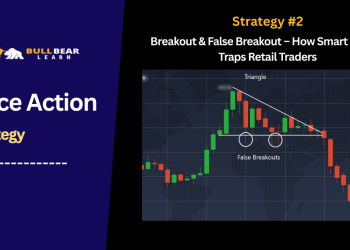
Strategy #2: Breakout & False Breakout – How Smart Money Traps Retail Traders

by Baby Bull
March 23, 2026
0

1. What Is a Breakout in Price Action? A breakout occurs when price moves beyond a significant level such as:...

price action trading strategy

Strategy #1: Price Action Trading Strategy: A Complete Framework for Consistent Decisions

by Baby Bull
March 23, 2026
0

Introduction: Why Most Trading Strategies Fail Most traders spend their time searching for: the best indicator the perfect entry a...

trading mindset

Psychology #6: Process-Based Thinking vs Outcome-Based Thinking in Trading

by Baby Bear
March 21, 2026
0

Introduction: Why Results Can Be Misleading Most traders judge their performance based on one thing: Did I make money or...

trading journal

Psychology #5: Trading Routine, Journaling & Mental Process: How Professionals Build Consistency

by Baby Bull
March 22, 2026
0

Introduction: Consistency Is Built, Not Natural Most traders struggle with: inconsistency emotional decisions lack of discipline They believe the solution...

losing streaks in trading

Psychology #4: Losing Streaks, Tilt & Psychological Recovery in Trading

by Baby Bull
March 21, 2026
0

Introduction: Losing Streaks Are Inevitable — Breakdown Is Optional Every trader experiences losing streaks. Even the best strategies, with solid...

Load More
  • Trending
  • Comments
  • Latest
Market Structure in Price Action

Market Structure in Price Action: Higher Highs, Lower Lows Explained

February 27, 2026
exness review

Exness Review 2026: Is It Safe, Legit & Worth It for Beginners?

March 23, 2026
Discipline & Consistency in Trading

Psychology #3: Discipline & Consistency in Trading: How Professionals Actually Follow Rules

March 21, 2026
trading psychology basics

Psychology #1: Trading Psychology Basics: Why Most Traders Fail Despite Good Strategies

March 20, 2026
breakout forex strategy

Strategy #2: Breakout & False Breakout – How Smart Money Traps Retail Traders

0
price action trading strategy

Strategy #1: Price Action Trading Strategy: A Complete Framework for Consistent Decisions

0
trading mindset

Psychology #6: Process-Based Thinking vs Outcome-Based Thinking in Trading

0
trading journal

Psychology #5: Trading Routine, Journaling & Mental Process: How Professionals Build Consistency

0
breakout forex strategy

Strategy #2: Breakout & False Breakout – How Smart Money Traps Retail Traders

March 23, 2026
price action trading strategy

Strategy #1: Price Action Trading Strategy: A Complete Framework for Consistent Decisions

March 23, 2026
trading mindset

Psychology #6: Process-Based Thinking vs Outcome-Based Thinking in Trading

March 21, 2026
trading journal

Psychology #5: Trading Routine, Journaling & Mental Process: How Professionals Build Consistency

March 22, 2026

BullBearLearn.com is an independent educational website on Forex and financial trading, offering knowledge, strategies, and tools to help traders understand and navigate markets—whether bullish or bearish.

Categories
  • Broker Reviews
  • Core Concepts
  • Core Strategies
  • Crypto Exchange
  • Execution
  • Forex Basic
  • Learn Forex
  • Market Condition
  • Price Action
  • Psychology
  • Risk Management
  • Strategy
  • Tools
  • Trading Strategies
Tags
Beginner Binance Review breakout Broker Reviews Bybit review calculator Core Concepts cost crypto exchange Execution Exness Review fees forex basic guide Leverage lot Margin mistake OKX review pip position size price action Psychology risk risk reward Spread swap Swing XM Review xtb review

Disclaimer: Content on BullBearLearn.com is for educational purposes only and not intended as financial advice. Trading involves risk.​

  • About
  • Privacy Policy
  • Terms of Service
  • Disclaimer
  • Cookie Policy
  • Affiliate Disclosure
  • Contact Us

© 2025 BullBearLearn.com — Learn to Trade, Bull or Bear.

Welcome Back!

Login to your account below

Forgotten Password?

Retrieve your password

Please enter your username or email address to reset your password.

Log In

Session expired

Please log in again. The login page will open in a new tab. After logging in you can close it and return to this page.

Add New Playlist

>

Table of Contents

×
  • Why Timeframes Matter in Price Action
  • The Timeframe Hierarchy
    • 1. Higher timeframes:
    • 2. Lower timeframes:
  • What Is Top-Down Analysis?
  • Why Beginners Experience Timeframe Conflict
  • Higher Timeframes Define the Playing Field
  • Lower Timeframes Provide Detail, Not Direction
  • How Many Timeframes Should You Use?
  • Timeframe Selection Is Personal—but Structured
  • Why Indicators Fail Across Timeframes
  • Multi-Timeframe Structure Alignment
  • Timeframes and Support & Resistance
  • Why Top-Down Analysis Improves Discipline
  • Common Timeframe Mistakes
  • How to Practice Top-Down Analysis
  • How Timeframes Fit Into the Price Action Framework
  • Final Thoughts
→ Index
No Result
View All Result
  • Home
  • Learn Forex
    • Forex Basic
    • Trading Strategies
    • Price Action
  • Learn Crypto
  • Broker Reviews
  • Tools FREE
  • Blog
START

© 2025 BullBearLearn.com — Learn to Trade, Bull or Bear.