


If you ask experienced traders which concept every beginner should learn first, many will answer the same way: support and resistance.
Support and resistance levels form the foundation of technical analysis. Whether you trade price action, indicators, Smart Money Concepts, or even algorithmic strategies, understanding these levels can significantly improve your market analysis.
The reason is simple. Price does not move randomly. It often reacts at specific areas where buyers and sellers have previously shown strong interest. These areas are known as support and resistance levels.
In this guide, you’ll learn:
- What support and resistance are
- Why they work
- How to identify them correctly
- Common mistakes beginners make
- Practical trading strategies using support and resistance
What Is Support in Forex?
Support is a price level where buying pressure is strong enough to slow down or stop a decline.
When price falls into a support zone, buyers often enter the market, creating demand that pushes price higher.
Think of support as a floor beneath the market.
When price reaches this floor, it may bounce upward rather than continue falling.
Example of Support
Imagine EUR/USD repeatedly falls toward 1.0800 but struggles to move below that level.
Each time price reaches 1.0800:
- Buyers enter
- Selling pressure weakens
- Price moves higher
This repeated reaction suggests that 1.0800 is acting as a support level.
What Is Resistance in Forex?
Resistance is a price level where selling pressure is strong enough to slow down or stop an upward move.
When price rises into a resistance zone, sellers often enter the market and push price lower.
Think of resistance as a ceiling above the market.
When price reaches the ceiling, it may reverse downward.
Example of Resistance
Suppose GBP/USD repeatedly rises toward 1.3000 but cannot break higher.
At this level:
- Sellers enter the market
- Buying momentum decreases
- Price moves lower
This indicates that 1.3000 is acting as resistance.
Why Do Support and Resistance Work?
Support and resistance work because of market psychology.
Financial markets are driven by human emotions such as:
- Fear
- Greed
- Hope
- Regret
When traders remember a previous turning point, they often react similarly when price returns to that area.
For example:
- Buyers who missed a previous rally may buy when price revisits support.
- Sellers who missed an earlier opportunity may sell when price revisits resistance.
As thousands of traders make similar decisions, support and resistance become self-fulfilling levels.
Types of Support and Resistance
Not all support and resistance levels are created equally.
There are several ways these levels can appear on a chart.
Horizontal Support and Resistance
This is the most common type.
Horizontal levels form when price repeatedly reacts at approximately the same price area.
These are usually the easiest levels for beginners to identify.
Dynamic Support and Resistance
Dynamic levels move with price.
Examples include:
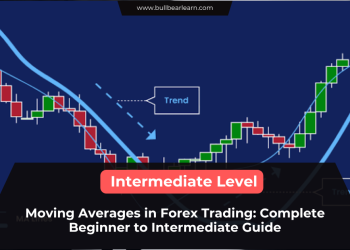
- Moving averages
- Trendlines
- Channels
Unlike horizontal levels, dynamic support and resistance change over time.
Psychological Levels
Psychological levels are round numbers that attract trader attention.
Examples:
- EUR/USD 1.1000
- GBP/USD 1.3000
- USD/JPY 150.00
Large institutions and retail traders often place orders around these numbers.
As a result, price frequently reacts there.
How to Identify Support and Resistance Correctly
Many beginners draw too many lines on their charts.
The goal is not to identify every reaction.
The goal is to identify meaningful levels.
Step 1: Start with Higher Timeframes
Begin with:
- Daily chart
- 4-hour chart
Higher timeframes reveal stronger levels and reduce market noise.
Step 2: Look for Multiple Reactions
A level becomes more important when price has reacted there multiple times.
One reaction may be random.
Three or four reactions often indicate a significant level.
Step 3: Focus on Zones, Not Exact Prices
Support and resistance are rarely precise lines.
They are better viewed as zones.
Instead of drawing:
1.1000
Think of a range such as:
1.0990–1.1010
This approach reflects how real markets operate.
Step 4: Identify Major Swing Highs and Lows
Previous highs often become resistance.
Previous lows often become support.
These swing points provide valuable clues about where buyers and sellers may return.
Support and Resistance Role Reversal
One of the most powerful concepts in technical analysis is role reversal.
Resistance Becomes Support
When price breaks above resistance, that level may become support.
This happens because:
- Previous sellers exit positions
- New buyers enter after the breakout
The old resistance level often acts as a floor.
Support Becomes Resistance
The opposite can also occur.
When price breaks below support:
- Buyers may exit positions
- Sellers gain confidence
The former support level may become resistance.
Role reversal is commonly used in breakout trading strategies.
How Traders Use Support and Resistance
Support and resistance can help traders make better decisions.
Finding Trade Entries
Many traders look for buying opportunities near support.
Likewise, they may look for selling opportunities near resistance.
This provides a logical area for entering trades.
Setting Stop Losses
Support and resistance can help determine stop-loss placement.
For example:
- Buy near support
- Place stop loss below support
This creates a logical risk management structure.
Setting Profit Targets
Resistance levels can serve as profit targets for buy trades.
Support levels can serve as profit targets for sell trades.
This helps traders maintain realistic expectations.
Support and Resistance Trading Example
Imagine EUR/USD is in an uptrend.
You identify:
- Support at 1.0900
- Resistance at 1.1100
Price retraces toward support and forms a bullish rejection candle.
A trader may:
- Enter a buy position near support
- Place a stop loss below support
- Target resistance as the take-profit level
This simple approach demonstrates how support and resistance can be integrated into a trading plan.
Common Beginner Mistakes
Drawing Too Many Levels
One of the most common mistakes is cluttering the chart.
Focus only on the most significant levels.
If every price point is marked, none of them are useful.
Ignoring Market Trends
Support and resistance should not be analyzed in isolation.
A support level in a strong downtrend may eventually break.
Always consider overall market structure.
Treating Levels as Exact Prices
Price rarely reverses at a precise number.
Support and resistance should be viewed as areas rather than exact lines.
Trading Every Touch
Not every touch of support or resistance creates a valid setup.
Look for additional confirmation such as:
- Candlestick patterns
- Trend alignment
- Market structure
Best Confirmation Signals
Support and resistance become more reliable when combined with other tools.
Candlestick Patterns
Popular confirmations include:
- Pin bars
- Engulfing candles
- Hammer patterns
Trend Analysis
Trading with the trend generally produces better results than trading against it.
Market Structure
Higher highs and higher lows can strengthen support.
Lower highs and lower lows can strengthen resistance.
Multi Timeframe Analysis
A level visible on both the daily and 4-hour charts is often stronger than a level visible only on lower timeframes.
Final Thoughts
Support and resistance are among the most important concepts in Forex trading.
They help traders understand where buyers and sellers are likely to become active and provide a framework for identifying potential trading opportunities.
However, support and resistance should not be used alone. The most effective approach is to combine them with:
- Market structure
- Trend analysis
- Candlestick patterns
- Risk management
Mastering support and resistance is often the first step toward becoming a consistently profitable trader.
Related Articles
- What Is Technical Analysis in Forex?
- How to Read Forex Charts
- Trendlines in Forex Trading
- Candlestick Basics for Beginners
- Breakout vs Fakeout
- Multi Timeframe Analysis Guide
FAQ
What is the difference between support and resistance?
Support is an area where buying pressure may stop a decline, while resistance is an area where selling pressure may stop an advance.
Are support and resistance always accurate?
No. Support and resistance represent probabilities, not guarantees. Price can break through any level.
Which timeframe is best for identifying support and resistance?
Daily and 4-hour charts generally provide the most reliable levels.
Should beginners use support and resistance?
Yes. Support and resistance are among the simplest and most effective tools available to beginner traders.
Can support become resistance?
Yes. When a support level breaks, it often becomes resistance. This concept is known as role reversal.