

For many forex traders, Non-Farm Payroll (NFP) day is one of the most anticipated events of the month. The report often creates significant volatility across currency pairs, gold, stock indices, and bond markets.
Large price movements can generate attractive trading opportunities, but they can also expose traders to substantial risks. Many beginners are drawn to the excitement of NFP trading only to discover that volatility can quickly lead to unexpected losses.
The key to long-term success is not simply learning how to trade NFP, but learning how to trade it safely.
In this guide, you’ll learn what makes NFP so important, the risks involved, and practical strategies traders use to approach NFP announcements with discipline and effective risk management.
What Is NFP?
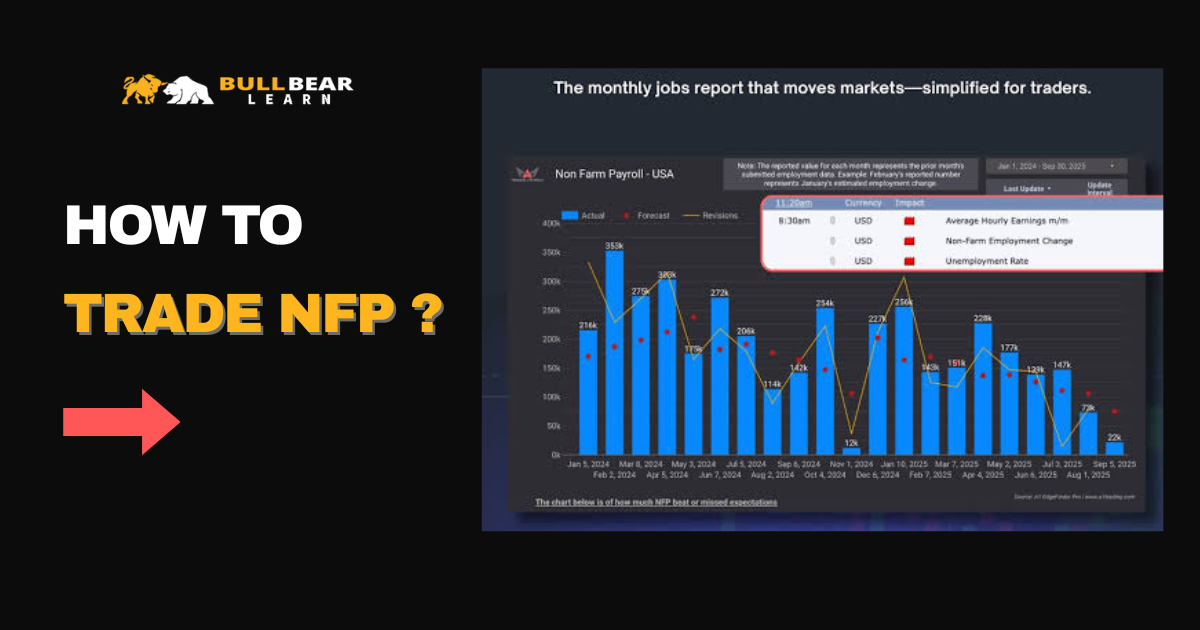
Non-Farm Payroll (NFP) is a monthly employment report released by the U.S. Bureau of Labor Statistics.
The report measures the number of jobs added or lost in the U.S. economy during the previous month, excluding:
- Farm workers
- Household employees
- Non-profit workers
- Self-employed individuals
The report also includes:
- Unemployment Rate
- Average Hourly Earnings
- Labor Force Participation Rate
Because employment is closely tied to economic growth and inflation, NFP is one of the most influential economic indicators in financial markets.
Why Does NFP Create Volatility?
Markets constantly attempt to predict future economic conditions.
Before the report is released, economists publish forecasts regarding:
- Job growth
- Unemployment levels
- Wage growth
When actual data differs from expectations, traders rapidly adjust their positions.
This adjustment process often causes:
- Sharp price movements
- Increased volatility
- Sudden changes in market sentiment
The larger the surprise, the larger the potential market reaction.
Markets Most Affected by NFP
Forex
Major currency pairs often experience substantial volatility.
Popular NFP trading pairs include:
- EUR/USD
- GBP/USD
- USD/JPY
- USD/CAD
Gold
Gold frequently reacts to changes in U.S. dollar strength and interest rate expectations.
Stock Indices
Major indices such as the S&P 500 and Nasdaq can experience significant movement.
Bond Markets
Treasury yields often respond quickly to labor market surprises.
The Biggest Risks of Trading NFP
Many traders focus on potential profits but underestimate the risks.
Extreme Volatility
Prices can move dozens or even hundreds of pips within minutes.
Wider Spreads
Brokers often widen spreads during major news releases.
This increases trading costs and can affect trade execution.
Slippage
Orders may be filled at prices different from the intended entry or exit level.
False Breakouts
Initial market reactions frequently reverse after traders analyze the complete report.
These reversals can catch traders off guard.
Why Beginners Should Be Careful
NFP trading can be particularly challenging for inexperienced traders.
Many beginners make mistakes such as:
- Overleveraging
- Entering before the release
- Chasing volatility
- Ignoring risk management
Although NFP can create opportunities, preserving capital should remain the primary objective.
Strategy 1: Wait for the Initial Reaction
One of the safest approaches is simply waiting.
Instead of trading immediately after the release:
- Observe the market reaction.
- Allow volatility to settle.
- Identify the dominant direction.
- Look for structured setups.
Advantages:
- Reduced emotional decision-making
- Fewer false signals
- Better trade confirmation
Many professional traders prefer this method.
Strategy 2: Trade the Post-News Trend
Major economic surprises can create trends that last for hours or even days.
Instead of trying to capture the first move, traders can focus on:
- Trend continuation
- Pullback entries
- Support and resistance levels
This approach often provides more favorable risk-to-reward opportunities.
Strategy 3: Use Smaller Position Sizes
Volatility increases uncertainty.
Even experienced traders often reduce position sizes during major news releases.
Benefits include:
- Lower emotional pressure
- Better risk control
- Reduced exposure to unexpected market moves
Managing risk is often more important than maximizing profits.
Strategy 4: Trade Only If Expectations Are Clear
Understanding market expectations is critical.
For example:
Forecast:
- 180,000 jobs
Actual:
- 182,000 jobs
The surprise is minimal.
Market reaction may be limited.
However:
Forecast:
- 180,000 jobs
Actual:
- 300,000 jobs
This significant surprise could trigger stronger market movement.
Many traders avoid trading when the data closely matches expectations.
Why Wage Growth Matters
Many traders focus exclusively on the headline payroll number.
However, Average Hourly Earnings can be equally important.
Strong wage growth may indicate:
- Inflation pressure
- Increased consumer spending
- Potential interest rate hikes
As a result, wage data can significantly influence market reactions.
Why the Unemployment Rate Matters
The unemployment rate provides additional insight into labor market conditions.
A lower unemployment rate generally suggests:
- Strong economic activity
- Healthy labor demand
A rising unemployment rate may indicate:
- Economic weakness
- Slower growth
Professional traders analyze all major components of the report rather than focusing solely on payroll growth.
Common NFP Trading Mistakes
Entering Before the Release
Predicting the outcome is extremely difficult.
Unexpected results can trigger substantial losses.
Using Excessive Leverage
Leverage magnifies both gains and losses.
NFP volatility can quickly turn a small mistake into a significant loss.
Ignoring Market Expectations
Markets react to surprises rather than absolute numbers.
Chasing the Initial Move
The first reaction is often not the final direction.
Patience frequently leads to better opportunities.
Risk Management Rules for NFP Trading
Regardless of strategy, risk management remains essential.
Define Risk Before Entry
Know:
- Entry level
- Stop loss
- Profit target
before opening a trade.
Avoid Emotional Decisions
Stick to your trading plan.
Accept Missed Opportunities
Not every market move needs to be traded.
Protecting capital is more important than participating in every opportunity.
Focus on Consistency
Long-term success comes from disciplined execution rather than occasional large wins.
A Simple NFP Trading Checklist
Before the release:
✓ Check market forecasts
✓ Review previous NFP data
✓ Identify key support and resistance levels
✓ Understand current market sentiment
✓ Determine acceptable risk levels
After the release:
✓ Compare actual data to expectations
✓ Observe market reaction
✓ Wait for confirmation
✓ Follow your trading plan
This process can help reduce impulsive decisions.
Who Should Trade NFP?
NFP trading is not suitable for every trader.
For traders who specialize in economic news events, broker execution speed and platform stability become particularly important. See our comparison of the best forex brokers for news trading.
Suitable For
- Experienced traders
- News traders
- Volatility traders
- Traders with strong risk management
Less Suitable For
- Beginners
- Traders using excessive leverage
- Traders without a structured plan
Many successful traders simply observe NFP and trade later when conditions become more predictable.
Conclusion
NFP is one of the most important economic events in the financial markets. While it can create significant trading opportunities, it also introduces substantial risks through volatility, slippage, and unpredictable price movements.
The safest approach is often to focus on preparation, patience, and risk management rather than attempting to predict the initial reaction. By understanding market expectations, analyzing the full report, and following a structured trading plan, traders can approach NFP releases with greater confidence and discipline.
Remember that successful trading is not about catching every move—it is about managing risk and preserving capital over the long term.
Related Articles
- What Is Non-Farm Payroll (NFP)?
- What Is CPI and Why Does It Matter?
- FOMC Explained: Why Forex Traders Watch Every Meeting
- How Interest Rate Changes Affect Forex Markets
- Trading Around Central Bank Announcements
Frequently Asked Questions (FAQ)
What time is NFP released?
NFP is typically released on the first Friday of each month at 8:30 AM Eastern Time.
Is NFP good for beginner traders?
NFP can be challenging for beginners because of extreme volatility and rapid market movements.
Which currency pairs move the most during NFP?
EUR/USD, GBP/USD, USD/JPY, and USD/CAD are among the most actively traded pairs during NFP releases.
Should I trade before the NFP announcement?
Many traders prefer to wait until after the release because predicting the outcome can be difficult.
What is the safest NFP trading strategy?
Many traders consider waiting for the initial volatility to settle and trading the post-news trend to be one of the safest approaches.