

Interest rates are among the most powerful forces driving the foreign exchange market. While many beginner traders focus primarily on chart patterns and technical analysis, professional traders understand that interest rates often determine long-term currency trends.
Every major central bank uses interest rates as a tool to manage inflation, support economic growth, and maintain financial stability. When interest rates change, the value of a country’s currency can change dramatically.
This is why forex traders closely monitor announcements from central banks such as the Federal Reserve (Fed), the European Central Bank (ECB), the Bank of England (BoE), and the Bank of Japan (BoJ).
In this guide, you will learn how interest rates affect forex markets, why central banks change rates, and how traders use interest rate expectations to make trading decisions.
What Are Interest Rates?
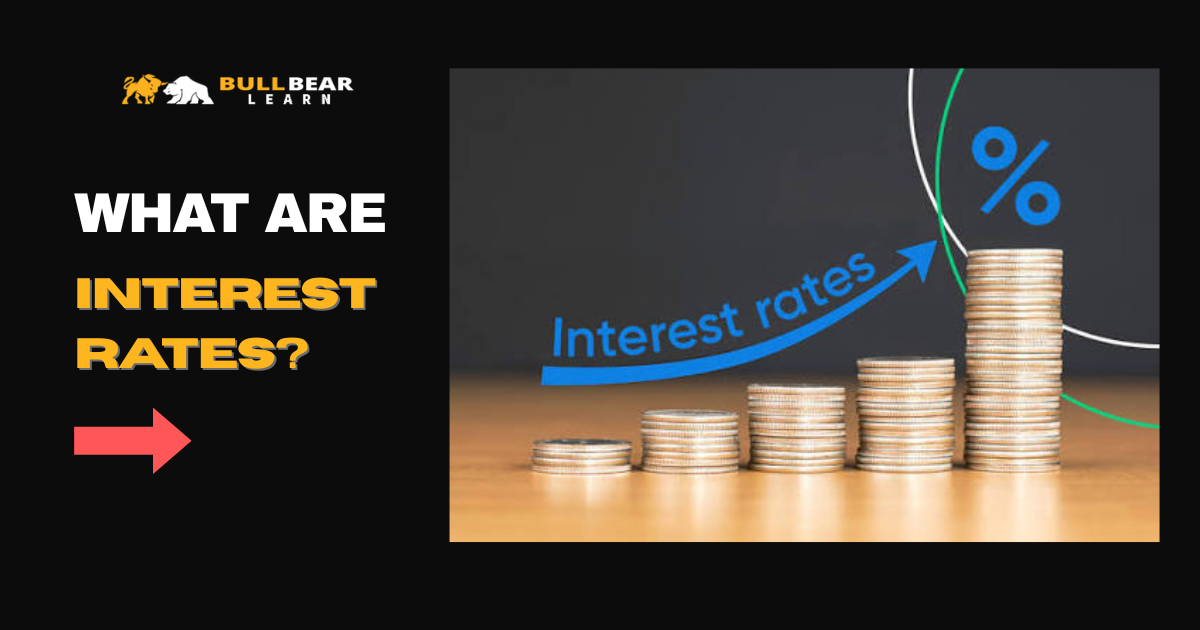
An interest rate is the cost of borrowing money.
When a central bank sets its benchmark interest rate, it influences:
- Commercial bank lending rates
- Mortgage rates
- Business loans
- Consumer credit
- Savings account returns
Higher interest rates generally make borrowing more expensive.
Lower interest rates generally make borrowing cheaper.
Because interest rates affect spending, investment, and inflation, they play a crucial role in economic growth.
Why Do Central Banks Change Interest Rates?
Central banks adjust interest rates to achieve economic objectives.
The most common goals include:
- Controlling inflation
- Supporting employment
- Encouraging economic growth
- Maintaining financial stability
Interest rates are one of the most effective tools available to policymakers.
Raising Interest Rates
Central banks may increase rates when:
- Inflation becomes too high
- Economic growth is overheating
- Consumer demand is excessive
Higher rates help reduce spending and slow inflation.
Lowering Interest Rates
Central banks may reduce rates when:
- Economic growth weakens
- Unemployment rises
- Recession risks increase
Lower rates encourage borrowing, spending, and investment.
Why Interest Rates Matter in Forex Trading
Currencies compete against one another.
Investors naturally seek higher returns on their capital.
Countries offering higher interest rates often attract:
- Foreign investment
- Institutional capital
- Bond market inflows
As demand for the currency increases, its value may rise.
This is one of the primary reasons why interest rates have such a strong influence on exchange rates.
How Higher Interest Rates Affect a Currency
In many cases, higher interest rates are bullish for a currency.
Example
Suppose the Federal Reserve raises interest rates from 4% to 5%.
Investors may find U.S. assets more attractive because they can earn a higher return.
As capital flows into the United States:
- Demand for USD increases
- USD may strengthen against other currencies
This is why hawkish central bank policies often support currency appreciation.
How Lower Interest Rates Affect a Currency
Lower interest rates can reduce the attractiveness of a currency.
Example
Suppose a central bank cuts rates from 5% to 3%.
Investors may seek better returns elsewhere.
Potential consequences include:
- Capital outflows
- Reduced currency demand
- Currency depreciation
This is why dovish monetary policy often weakens a currency.
Interest Rate Differentials
Forex traders pay close attention to interest rate differentials.
An interest rate differential is the difference between the interest rates of two countries.
For example:
- United States: 5.00%
- Japan: 0.50%
The difference is 4.50%.
A large differential often supports the higher-yielding currency.
This concept is especially important in long-term currency trends.
What Is a Hawkish Central Bank?
A hawkish central bank prioritizes controlling inflation.
Characteristics include:
- Higher interest rates
- Tight monetary policy
- Concerns about rising prices
A hawkish stance often strengthens the currency.
Hawkish Examples
Statements such as:
- Inflation remains elevated
- Additional tightening may be needed
- Rates may remain higher for longer
are generally viewed as hawkish by financial markets.
What Is a Dovish Central Bank?
A dovish central bank prioritizes economic growth and employment.
Characteristics include:
- Lower interest rates
- Easier monetary policy
- Support for economic activity
A dovish stance often weakens the currency.
Dovish Examples
Statements such as:
- Inflation is moderating
- Economic growth is slowing
- Policy easing may be appropriate
are generally viewed as dovish.
Why Expectations Matter More Than Actual Rate Decisions
One of the most important lessons in trading is that markets are forward-looking.
Often, a rate increase does not strengthen a currency because traders already expected it.
Instead, markets react to surprises.
Scenario 1
Expected:
- Rate increase of 0.25%
Actual:
- Rate increase of 0.25%
Market reaction may be limited.
Scenario 2
Expected:
- Rate increase of 0.25%
Actual:
- No rate increase
This surprise could trigger significant currency weakness.
Understanding expectations is often more important than understanding the actual decision.
How Interest Rates Affect Major Currency Pairs
EUR/USD
The pair is heavily influenced by differences between:
- Federal Reserve policy
- European Central Bank policy
If the Fed is more hawkish than the ECB, EUR/USD may decline.
If the ECB becomes more hawkish than the Fed, EUR/USD may rise.
USD/JPY
USD/JPY is highly sensitive to interest rate differentials.
Because Japanese rates have historically been very low, changes in U.S. rates often create substantial movements in this pair.
GBP/USD
The Bank of England’s policy decisions frequently influence GBP/USD volatility.
Changes in inflation and growth expectations can significantly impact the pair.
How Interest Rates Affect Gold
Gold does not pay interest.
As interest rates rise:
- Bonds become more attractive
- Opportunity costs increase
- Gold may weaken
As interest rates fall:
- Bond yields decline
- Gold may become more attractive
This explains why gold traders closely monitor central bank decisions.
How Interest Rates Affect Stock Markets
Interest rates also influence equities.
Higher Rates
Can lead to:
- Higher borrowing costs
- Slower economic growth
- Lower corporate profits
Lower Rates
Can lead to:
- Increased investment
- Stronger economic activity
- Higher stock valuations
Stock market reactions depend heavily on economic conditions and investor expectations.
Common Mistakes New Traders Make
Ignoring Central Bank Communication
Future guidance is often more important than the actual rate decision.
Focusing Only on Technical Analysis
Fundamental factors frequently drive major currency trends.
Forgetting About Expectations
Markets react to surprises, not just economic data.
Trading Immediately After Announcements
Volatility can create unpredictable price movements.
Patience often produces better trading opportunities.
How Professional Traders Prepare for Rate Decisions
Experienced traders typically:
- Monitor inflation reports
- Analyze employment data
- Track central bank speeches
- Review economic forecasts
- Assess market expectations
This preparation helps them understand whether a decision is likely to surprise the market.
Conclusion
Interest rates are one of the most important drivers of forex markets. Central bank decisions influence capital flows, investor sentiment, inflation expectations, and economic growth, all of which affect currency values.
Successful traders understand that forex markets do not simply react to interest rate changes themselves. Instead, markets react to differences between expectations and reality.
By learning how interest rates work and how central banks use monetary policy, traders can develop a deeper understanding of the forces driving currency movements and make more informed trading decisions.
Related Articles
- What Is Non-Farm Payroll (NFP)?
- What Is CPI and Why Does It Matter?
- FOMC Explained: Why Forex Traders Watch Every Meeting
- Fed Rate Decisions Explained
- Trading Around Central Bank Announcements
Frequently Asked Questions (FAQ)
Why do higher interest rates usually strengthen a currency?
Higher rates often attract foreign investment because investors can earn greater returns on their capital.
Do interest rate cuts always weaken a currency?
Not always. If markets expect larger cuts, a smaller-than-expected cut may actually strengthen the currency.
Which central banks affect forex markets the most?
The Federal Reserve, European Central Bank, Bank of England, and Bank of Japan are among the most influential.
Why do traders care about future rate expectations?
Forex markets are forward-looking and often price in expected policy changes before they occur.
What economic reports influence interest rate decisions?
Inflation data, employment reports, GDP growth, and consumer spending data are among the most important indicators.