

Inflation is one of the most important forces driving financial markets, and the Consumer Price Index (CPI) is one of the most closely watched measures of inflation worldwide.
Every month, traders, investors, economists, and central banks eagerly await CPI data because it provides valuable insight into how quickly prices are rising across the economy.
A CPI release can trigger major movements in the forex market, stock indices, gold prices, and government bonds within minutes.
In this guide, you will learn what CPI is, how it is calculated, why it matters, and how traders use CPI reports to understand market expectations and potential central bank actions.
What Is CPI?
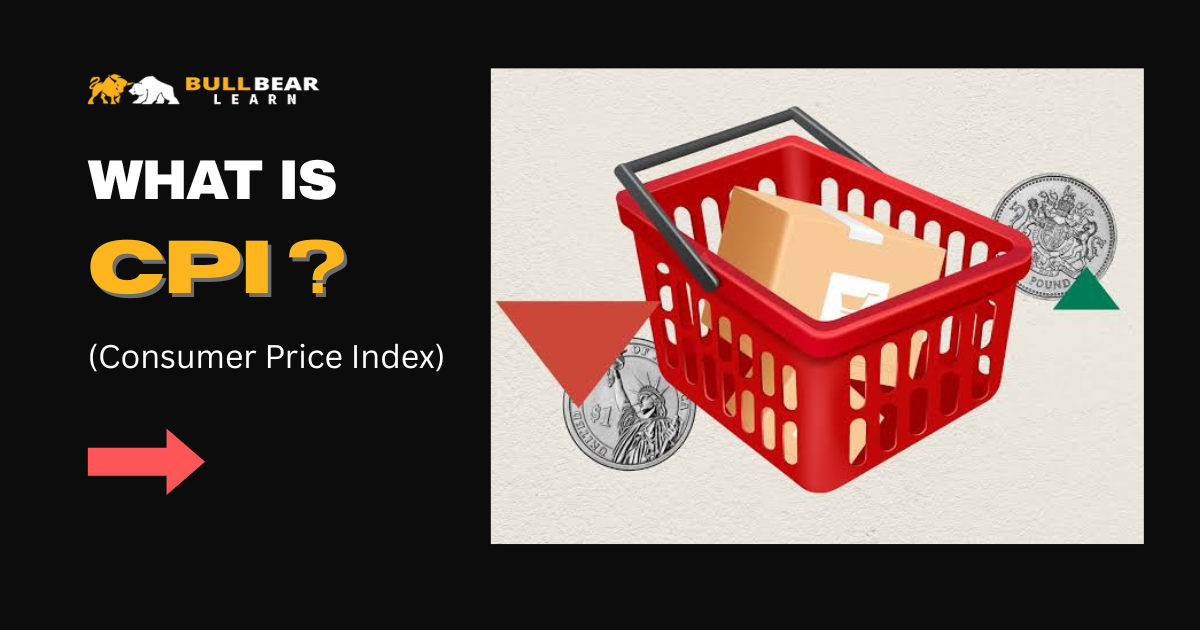
CPI stands for Consumer Price Index.
It is an economic indicator that measures the average change in prices paid by consumers for a basket of goods and services over time.
The CPI basket typically includes:
- Food and beverages
- Housing and rent
- Transportation
- Healthcare
- Education
- Energy
- Clothing
- Recreation
By tracking changes in these prices, economists can estimate the rate of inflation affecting households.
If the CPI rises, it generally means the cost of living is increasing.
If CPI falls or grows more slowly, inflationary pressures may be easing.
Why Is CPI Important?
Inflation affects nearly every aspect of the economy.
When prices rise rapidly:
- Consumers lose purchasing power
- Business costs increase
- Interest rates may rise
- Economic growth may slow
When inflation remains stable:
- Consumers can plan spending more effectively
- Businesses can invest with greater confidence
- Central banks can maintain predictable monetary policies
Because inflation influences economic stability, CPI has become one of the most important economic reports in financial markets.
How Is CPI Calculated?
Government agencies collect thousands of price observations from businesses across the country.
Economists compare the current prices of goods and services with prices from previous periods.
The percentage change becomes the inflation rate.
For example:
If the CPI was 300 last year and increases to 309 this year:
Inflation Rate = 3%
This means the average basket of goods and services costs 3% more than it did one year earlier.
Headline CPI vs Core CPI
Many traders focus on two versions of CPI.
Headline CPI
Headline CPI includes all items in the consumer basket.
This includes:
- Food
- Energy
- Housing
- Transportation
- Medical expenses
Because food and energy prices can fluctuate significantly, headline CPI often experiences larger short-term swings.
Core CPI
Core CPI excludes:
- Food
- Energy
Economists often consider Core CPI a more reliable indicator of underlying inflation trends because it removes some of the most volatile components.
Central banks frequently pay close attention to Core CPI when making policy decisions.
Why Traders Watch CPI Releases
CPI is important because inflation directly influences central bank policy.
When inflation rises above target levels, central banks may:
- Increase interest rates
- Reduce monetary stimulus
- Tighten financial conditions
When inflation falls significantly:
- Interest rates may be reduced
- Monetary stimulus may increase
- Economic growth may be supported
Since interest rates are one of the primary drivers of currency values, CPI data can create substantial market volatility.
How CPI Affects the Forex Market
The foreign exchange market reacts strongly to inflation surprises.
Higher-Than-Expected CPI
When CPI exceeds forecasts:
- Inflation concerns increase
- Interest rate expectations rise
- The currency may strengthen
Example:
Forecast CPI: 2.8%
Actual CPI: 3.4%
Traders may expect tighter monetary policy, increasing demand for the currency.
Lower-Than-Expected CPI
When CPI falls below expectations:
- Inflation concerns decrease
- Interest rate cut expectations may rise
- The currency may weaken
Example:
Forecast CPI: 3.0%
Actual CPI: 2.5%
Markets may interpret the report as a sign that inflation pressures are easing.
How CPI Impacts the U.S. Dollar
For forex traders, U.S. CPI is one of the most influential economic releases.
A stronger-than-expected CPI report often causes:
- USD appreciation
- Rising Treasury yields
- Increased rate hike expectations
A weaker-than-expected report often causes:
- USD depreciation
- Falling yields
- Increased expectations for monetary easing
This is why currency pairs such as EUR/USD, GBP/USD, and USD/JPY frequently experience large movements following CPI releases.
How CPI Affects Gold Prices
Gold and inflation have a complicated relationship.
When CPI Is High
Higher inflation can initially support gold because investors seek protection against declining purchasing power.
However, if higher inflation causes central banks to raise interest rates aggressively, gold may fall because non-yielding assets become less attractive.
When CPI Is Low
Lower inflation often reduces pressure on central banks to tighten policy.
This can weaken the currency and sometimes support gold prices.
As a result, traders often analyze both inflation data and interest rate expectations when evaluating gold market reactions.
CPI and Interest Rates
The relationship between CPI and interest rates is one of the most important concepts in trading.
Most major central banks target inflation levels around 2%.
When inflation rises far above target:
- Interest rates may increase
- Borrowing becomes more expensive
- Economic demand slows
When inflation falls below target:
- Interest rates may decrease
- Borrowing becomes cheaper
- Economic activity may improve
Because of this relationship, CPI reports often influence expectations for future interest rate decisions.
Why Expectations Matter More Than the CPI Number
One of the biggest mistakes new traders make is focusing only on whether inflation is high or low.
Markets typically react to the difference between:
- Forecast CPI
- Actual CPI
Example:
Scenario A:
- Forecast: 2.5%
- Actual: 3.0%
Bullish surprise.
Scenario B:
- Forecast: 4.0%
- Actual: 3.0%
Bearish disappointment.
Although the actual inflation figure is identical, market reactions can be completely different because expectations were different.
Professional traders always compare actual data with consensus forecasts.
Risks of Trading CPI Announcements
Major CPI releases often create substantial volatility.
Common risks include:
Wider Spreads
Liquidity providers may temporarily increase spreads.
Slippage
Orders may execute at less favorable prices.
Rapid Price Swings
Markets can move aggressively in both directions before establishing a trend.
False Breakouts
Initial reactions may reverse quickly as traders digest the full report.
For inexperienced traders, waiting for volatility to settle can be a safer approach.
Common Beginner Mistakes
Ignoring Core CPI
Core inflation often influences central bank decisions more than headline inflation.
Trading Without Knowing Expectations
The forecast is critical to understanding market reactions.
Overleveraging
Inflation releases can create large and unexpected price swings.
Chasing the Initial Move
The first move is not always the final move.
Patience often leads to better trading decisions.
Conclusion
The Consumer Price Index (CPI) is one of the most important economic indicators in global financial markets. It measures inflation, influences central bank policy, and often drives significant movements in currencies, stocks, bonds, and precious metals.
For traders, understanding CPI is essential because inflation expectations frequently shape future interest rate decisions. Rather than focusing solely on the headline number, successful traders compare actual results with forecasts and consider how the data may influence monetary policy.
By understanding how CPI works, traders can better prepare for one of the most impactful economic events on the financial calendar.
Related Articles
Frequently Asked Questions (FAQ)
What does CPI stand for?
CPI stands for Consumer Price Index, a measure of inflation that tracks changes in consumer prices over time.
Why is CPI important?
CPI helps measure inflation and influences central bank decisions regarding interest rates.
How often is CPI released?
Most countries publish CPI data monthly.
Does CPI affect forex markets?
Yes. CPI data can significantly impact currency values because inflation influences interest rate expectations.
What is the difference between Headline CPI and Core CPI?
Headline CPI includes all goods and services, while Core CPI excludes food and energy prices to provide a more stable measure of inflation.