

Forex Beginner Course – Lesson 15 of 20
Many new traders are eager to start trading Forex as soon as possible. After learning about currency pairs, technical analysis, and risk management, it can be tempting to open a live account and begin placing trades immediately.
However, jumping into the market with real money before developing basic skills is one of the fastest ways to lose capital.
This is where a Forex demo account becomes valuable.
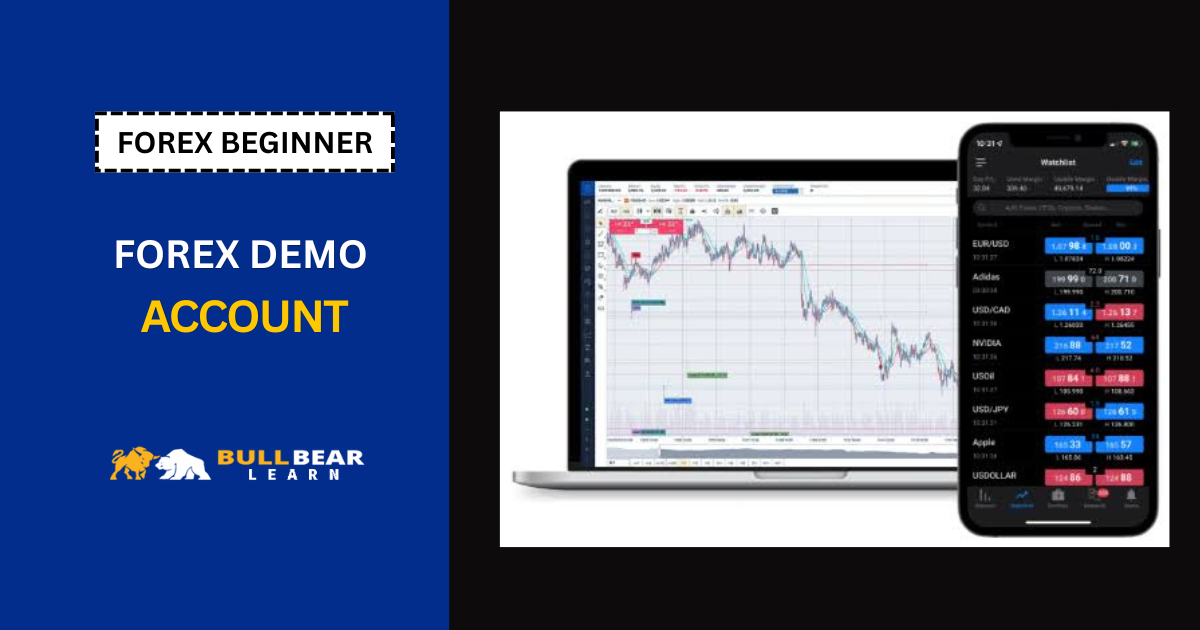
A demo account allows traders to experience real market conditions using virtual funds instead of real money. It provides an opportunity to practice trading, test strategies, and become familiar with trading platforms without financial risk.
In this guide, you’ll learn what a Forex demo account is, how it works, its advantages and limitations, and how beginners can use one effectively to accelerate their learning.
What Is a Forex Demo Account?
A Forex demo account is a simulated trading account provided by brokers that allows traders to practice using virtual money.
The trading environment closely resembles a real trading account, including:
- Live market prices
- Trading charts
- Order execution
- Technical indicators
- Account management tools
The key difference is that no real money is involved.
Profits and losses are simulated, allowing traders to gain experience without risking capital.
Why Demo Trading Matters for Beginners
Learning Forex involves more than understanding theory.
Reading articles and watching videos can provide knowledge, but trading skills develop through practice.
A demo account allows traders to:
- Understand platform functionality
- Practice order execution
- Learn risk management
- Test trading plans
- Build confidence
Most successful traders spend considerable time practicing before moving to a live account.
How a Forex Demo Account Works
When opening a demo account, a broker typically provides a virtual balance.
Examples:
- $10,000 virtual funds
- $50,000 virtual funds
- $100,000 virtual funds
Traders can then place trades exactly as they would in a real account.
Activities include:
- Opening buy and sell positions
- Setting stop-loss orders
- Setting take-profit orders
- Monitoring account performance
- Testing strategies
Because market prices are real, demo trading provides a realistic learning environment.
Benefits of Using a Demo Account
Learn Trading Platforms Safely
Most beginners struggle with platform mechanics initially.
A demo account allows traders to learn:
- MT4 navigation
- MT5 functionality
- Chart customization
- Order placement
- Position management
Mistakes become learning experiences rather than costly losses.
Practice Risk Management
Risk management concepts are easier to understand when applied in real market conditions.
A demo account allows traders to practice:
- Position sizing
- Stop-loss placement
- Risk-to-reward calculations
- Trade management
These skills are essential before risking real money.
Test Trading Strategies
Many traders develop strategies based on:
- Technical indicators
- Price action
- Trend-following systems
- Breakout setups
A demo account provides a controlled environment to evaluate whether a strategy works over time.
Build Trading Discipline
Consistency often matters more than strategy selection.
By following a written trading plan in a demo account, traders can develop habits that transfer to live trading.
What You Can Learn From Demo Trading
Market Behavior
Watching price movement daily helps traders understand:
- Trends
- Volatility
- Consolidation
- News reactions
Over time, markets become more familiar.
Trade Execution
Beginners often underestimate the importance of execution.
Demo trading teaches:
- Entry timing
- Exit timing
- Order types
- Position management
Emotional Awareness
Although demo trading lacks real financial pressure, traders can still observe:
- Impatience
- Overtrading tendencies
- Fear of missing out
- Lack of discipline
Recognizing these behaviors early can be valuable.
Limitations of Demo Accounts
Despite their benefits, demo accounts are not perfect.
No Real Emotional Pressure
The biggest difference between demo and live trading is psychology.
When real money is at risk, traders often experience:
- Fear
- Greed
- Anxiety
- Hesitation
These emotions are difficult to replicate in a simulated environment.
Unrealistic Position Sizing
Many beginners take excessively large positions in demo accounts because losses have no real consequences.
This creates unrealistic expectations.
Execution Differences
In live markets, traders may experience:
- Slippage
- Wider spreads during news events
- Liquidity fluctuations
Demo accounts sometimes provide smoother execution.
Common Demo Trading Mistakes
Treating the Demo Account Like a Game
Because the funds are virtual, some traders place random trades without a plan.
This defeats the purpose of practice.
Using Unrealistic Account Sizes
If you plan to start with $1,000, practicing with a $100,000 demo account creates unrealistic expectations.
Use a demo balance similar to your future live account.
Constantly Switching Strategies
Many beginners test a strategy for a few days, then abandon it after several losses.
Meaningful evaluation requires consistency and sufficient sample size.
Ignoring Risk Management
Good habits should begin in the demo stage.
Trade as if the money were real.
How Long Should You Use a Demo Account?
There is no universal timeline.
However, beginners should consider moving to a live account only after they can consistently demonstrate:
- Risk management discipline
- Understanding of order execution
- Consistent strategy application
- Trading journal usage
For many traders, this process takes several months.
The goal is not perfection but competence.
When Should You Move to a Live Account?
A trader may be ready for a small live account when they:
- Follow a trading plan consistently
- Understand basic market analysis
- Use stop-loss orders correctly
- Maintain reasonable risk per trade
- Achieve stable demo performance over time
Starting small is often the best approach.
Many experienced traders recommend treating the first live account as part of the learning process rather than expecting immediate profits.
Choosing a Good Demo Account
Not all demo accounts are identical.
When evaluating brokers, look for:
Many beginner-friendly brokers offer free demo accounts that allow traders to practice under real market conditions before opening a live account.
Real-Time Market Data
Live pricing provides a more realistic experience.
Platform Availability
The broker should support platforms such as:
- MT4
- MT5
Flexible Account Types
A good demo environment should resemble available live account options.
Educational Resources
Some brokers provide additional learning materials that can support beginners.
Demo Trading vs Live Trading
| Feature | Demo Account | Live Account |
|---|---|---|
| Real Money | No | Yes |
| Emotional Pressure | Low | High |
| Financial Risk | None | Present |
| Learning Environment | Excellent | Excellent |
| Psychological Training | Limited | Full |
Both account types play important roles in trader development.
A Practical Demo Trading Plan for Beginners
A structured approach might include:
Month 1
Focus on:
- Platform navigation
- Basic chart analysis
- Understanding order execution
Month 2
Focus on:
- Trading plan implementation
- Risk management
- Trading journal development
Month 3
Focus on:
- Strategy consistency
- Performance tracking
- Emotional discipline
This gradual progression helps create a stronger foundation before live trading.
Before depositing real money, spend enough time in a demo environment to understand your strategy, risk management rules, and trading platform. A structured learning process often leads to better long-term results than rushing into live trading.
Conclusion
A Forex demo account is one of the most valuable tools available to beginners. It allows traders to gain practical experience, develop discipline, and test strategies without risking capital.
While demo trading cannot fully replicate the emotions of live trading, it provides a safe environment for learning essential skills.
The traders who benefit most from demo accounts are those who treat them seriously. By practicing consistently, following a trading plan, and applying proper risk management, beginners can significantly improve their readiness for live market conditions.