

Forex Beginner Course – Lesson 17 of 20
Placing a trade may seem simple at first glance. You click a button, enter a position, and wait for the market to move.
In reality, professional traders rarely enter trades randomly. Instead, they use different order types to control how and when trades are executed.
Understanding Forex order types is an essential skill because it directly affects trade execution, risk management, and overall trading performance.
Many beginners know only the basic “Buy” and “Sell” buttons. However, modern trading platforms such as MT4 and MT5 offer several order types designed for different market situations.
In this guide, you’ll learn the most important Forex order types, how they work, when to use them, and the common mistakes traders make when placing orders.
What Is a Forex Order?
A Forex order is an instruction sent to your broker to execute a trade under specific conditions.
Orders determine:
- When a trade should open
- At what price it should open
- When a trade should close
- How risk is managed
Without understanding order types, traders often struggle with execution and discipline.
Why Order Types Matter
Order types help traders:
- Enter trades more efficiently
- Reduce emotional decision-making
- Automate trade execution
- Improve risk management
- Avoid chasing the market
Instead of constantly watching charts, traders can predefine trading conditions and allow the platform to execute orders automatically.
Market Orders
A market order is the simplest order type.
When a trader places a market order, the trade is executed immediately at the best available market price.
Example
EUR/USD is trading at 1.1200.
You decide to buy immediately.
The broker executes your order at the current available price.
Advantages
- Instant execution
- Easy to use
- Suitable for active traders
Disadvantages
- Possible slippage
- Less control over entry price
Best Used For
- Fast-moving markets
- Immediate trade opportunities
- Scalping and day trading
What Is Slippage?
Slippage occurs when the actual execution price differs from the expected price.
Example:
You click Buy at:
1.1200
But the order is filled at:
1.1203
The difference is called slippage.
Slippage becomes more common during:
- High volatility
- Economic news releases
- Low liquidity periods
Small amounts of slippage are normal in all financial markets.
Pending Orders
A pending order instructs the broker to execute a trade only if specific price conditions are met.
Unlike market orders, pending orders allow traders to plan trades in advance.
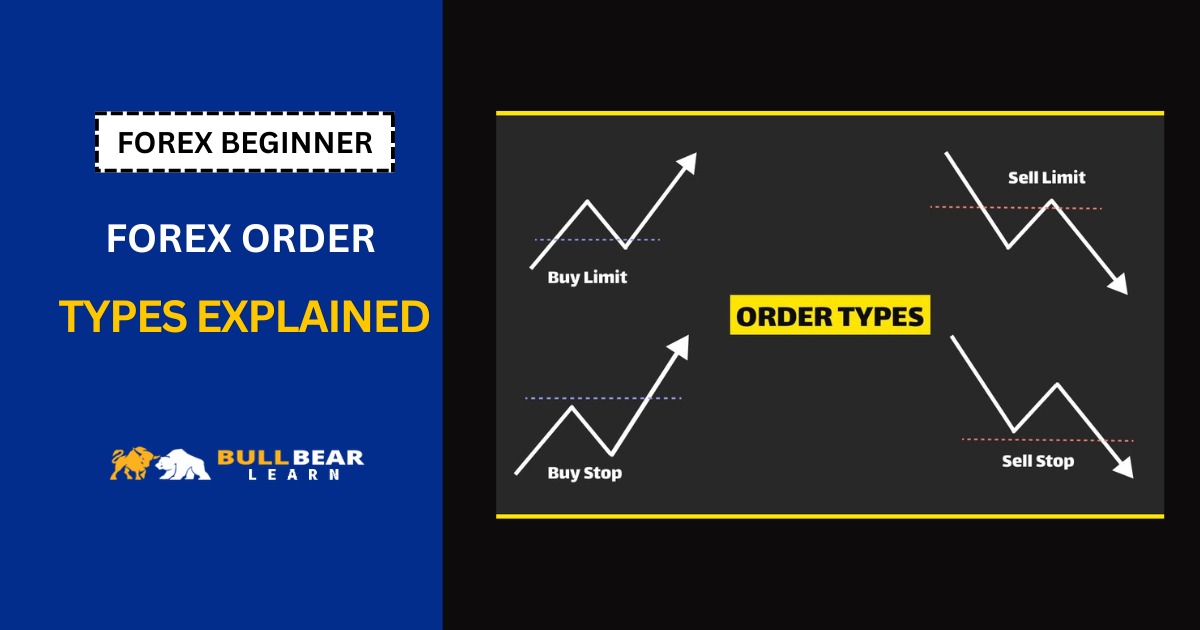
The four most common pending orders are:
- Buy Limit
- Sell Limit
- Buy Stop
- Sell Stop
Buy Limit Order
A Buy Limit order is placed below the current market price.
The trader expects price to decline before moving higher.
Example
Current EUR/USD price:
1.1200
You believe support exists near:
1.1150
Instead of buying immediately, you place a Buy Limit at 1.1150.
If price falls to that level, the trade opens automatically.
Best Used For
- Pullback trading
- Support zone entries
- Trend continuation setups
Sell Limit Order
A Sell Limit order is placed above the current market price.
The trader expects price to rise before moving lower.
Example
Current GBP/USD price:
1.3000
Expected resistance:
1.3050
A Sell Limit order can be placed at 1.3050.
If price reaches that level, the position opens automatically.
Best Used For
- Resistance trading
- Retracement entries
- Range trading strategies
Buy Stop Order
A Buy Stop order is placed above the current market price.
The trader expects upward momentum to continue.
Example
Current EUR/USD price:
1.1200
Major resistance:
1.1250
Buy Stop placement:
1.1255
If price breaks above resistance, the trade activates automatically.
Best Used For
- Breakout trading
- Momentum strategies
- Trend continuation
Sell Stop Order
A Sell Stop order is placed below the current market price.
The trader expects downward momentum after a support break.
Example
Current EUR/USD price:
1.1200
Support level:
1.1150
Sell Stop placement:
1.1145
If price breaks below support, the order activates.
Best Used For
- Bearish breakouts
- Trend continuation
- Momentum trading
Stop-Loss Orders
A stop-loss order is one of the most important tools in Forex trading.
It automatically closes a trade when the market moves against you.
Why Stop-Loss Orders Matter
Without a stop-loss, a small loss can become a catastrophic loss.
A stop-loss helps traders:
- Protect capital
- Control risk
- Maintain discipline
- Prevent emotional decision-making
Example
Buy Entry:
1.1200
Stop-Loss:
1.1170
Risk:
30 pips
If the market falls to 1.1170, the trade closes automatically.
Take-Profit Orders
A take-profit order automatically closes a trade once a profit target is reached.
Example
Buy Entry:
1.1200
Take-Profit:
1.1260
Potential Gain:
60 pips
When price reaches 1.1260, profits are locked in automatically.
Benefits
- Removes emotional decision-making
- Encourages discipline
- Supports consistent risk-to-reward planning
Stop-Loss vs Take-Profit
Both orders serve different purposes.
| Feature | Stop-Loss | Take-Profit |
|---|---|---|
| Purpose | Limit losses | Lock in profits |
| Risk Control | Yes | No |
| Emotion Reduction | Yes | Yes |
| Automated Exit | Yes | Yes |
Professional traders typically use both.
How Order Types Support Risk Management
Risk management begins before entering a trade.
A complete trade plan usually includes:
- Entry price
- Stop-loss level
- Take-profit target
- Position size
Order types allow traders to define these variables in advance.
This creates consistency and reduces impulsive trading decisions.
Common Beginner Mistakes
Trading Without Stop-Losses
Many beginners avoid stop-losses because they dislike taking losses.
Unfortunately, this often leads to larger losses later.
Moving Stop-Losses Constantly
Changing stop-loss levels after entering a trade can undermine risk management.
Entering Trades Emotionally
Pending orders help remove impulsive decision-making.
Using Incorrect Order Types
A Buy Limit and Buy Stop serve different purposes.
Confusing them can result in unexpected trade execution.
Which Order Types Should Beginners Focus On?
New traders do not need to master every advanced order type immediately.
Start with:
- Market Orders
- Buy Limit Orders
- Sell Limit Orders
- Stop-Loss Orders
- Take-Profit Orders
These cover the majority of trading situations.
As experience grows, traders can incorporate more advanced execution techniques.
Practical Example of a Complete Trade Setup
Imagine EUR/USD is trending upward.
A trader identifies support near 1.1150.
Trade plan:
- Buy Limit: 1.1150
- Stop-Loss: 1.1120
- Take-Profit: 1.1210
Risk:
30 pips
Reward:
60 pips
Risk-to-Reward Ratio:
1:2
Everything is planned before the trade begins.
This approach promotes consistency and discipline.
Conclusion
Forex order types are much more than simple execution tools. They help traders control entries, manage risk, automate exits, and maintain discipline.
Beginners should focus on understanding how Market Orders, Limit Orders, Stop Orders, Stop-Losses, and Take-Profits work before risking significant capital.
Mastering order execution may seem like a small skill, but it forms a critical part of long-term trading success.