

Non-Farm Payroll (NFP) day is one of the most important events on the economic calendar. Every month, traders around the world monitor the report because it often creates substantial volatility across financial markets.
For forex traders, NFP presents unique opportunities. However, not all currency pairs react in the same way. Some pairs experience extreme volatility, while others may show more controlled price movements.
Understanding which currency pairs tend to respond most strongly to NFP data can help traders prepare more effectively and manage risk more efficiently.
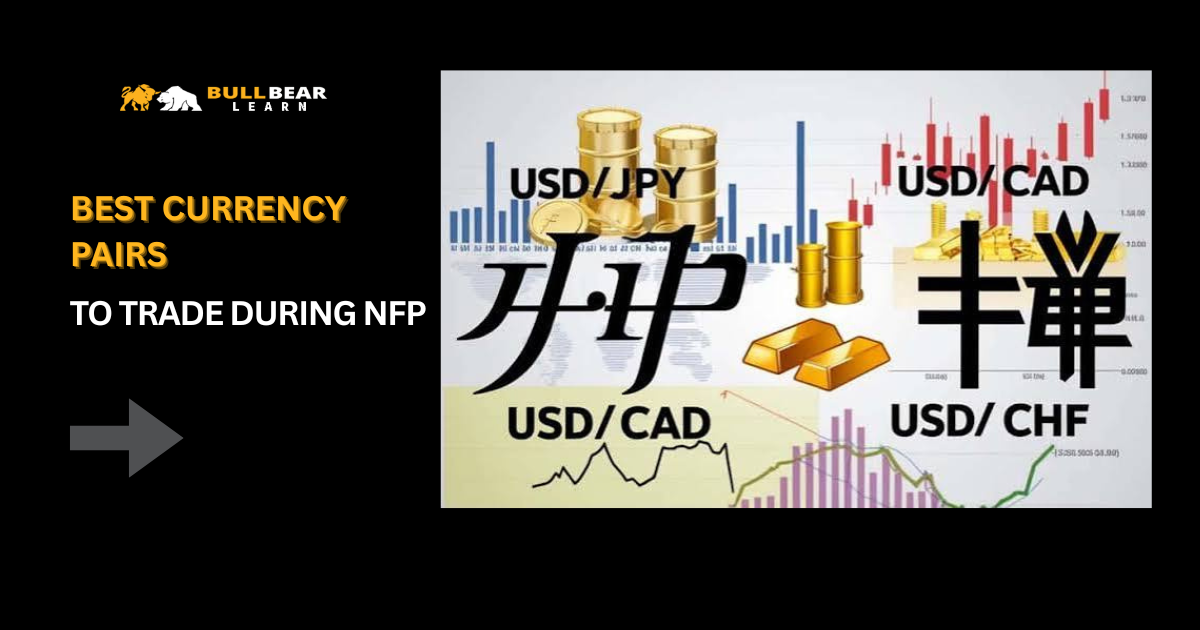
In this guide, we’ll examine the best currency pairs to trade during NFP releases, why they react to employment data, and what traders should consider before entering positions.
Why NFP Affects Currency Markets?
NFP provides insight into the health of the U.S. labor market.
Strong employment growth may suggest:
- Economic expansion
- Rising consumer spending
- Higher inflation pressure
- Potential interest rate increases
Weak employment data may suggest:
- Economic slowdown
- Reduced spending
- Lower inflation pressure
- Potential monetary easing
Because NFP influences expectations for Federal Reserve policy, the U.S. dollar often experiences significant volatility after the release.
As a result, currency pairs containing USD are usually the most active.
What Makes a Good NFP Trading Pair?
Several characteristics make certain currency pairs attractive during NFP events.
High Liquidity
Highly liquid pairs generally offer:
- Tighter spreads
- Better execution
- Lower trading costs
Strong USD Exposure
Since NFP directly affects the U.S. dollar, pairs involving USD tend to react the most.
Consistent Volatility
Traders often prefer pairs that produce meaningful price movement while remaining relatively predictable.
EUR/USD
Why EUR/USD Is Popular
EUR/USD is the most traded currency pair in the world.
Advantages include:
- Exceptional liquidity
- Tight spreads
- Deep market participation
- Strong reactions to U.S. economic data
Because the pair directly reflects the relationship between the U.S. dollar and the euro, NFP releases frequently create significant movement.
Typical NFP Reaction
Strong NFP:
- USD strengthens
- EUR/USD often falls
Weak NFP:
- USD weakens
- EUR/USD often rises
For many traders, EUR/USD remains the preferred pair for NFP trading.
GBP/USD
Why GBP/USD Is Attractive
GBP/USD often experiences larger price swings than EUR/USD.
This can create:
- Greater profit potential
- Larger intraday moves
- More trading opportunities
However, increased volatility also increases risk.
Typical NFP Reaction
Strong U.S. employment data generally supports USD and pressures GBP/USD lower.
Weak employment data often supports GBP/USD.
Because of its volatility, traders should apply disciplined risk management.
USD/JPY
Why USD/JPY Is Important
USD/JPY is heavily influenced by:
- U.S. interest rates
- Treasury yields
- Risk sentiment
Changes in Federal Reserve expectations often create substantial movement in the pair.
Typical NFP Reaction
Strong NFP:
- Higher rate expectations
- Rising Treasury yields
- USD/JPY often rises
Weak NFP:
- Lower rate expectations
- Falling yields
- USD/JPY often declines
USD/JPY is particularly popular among traders focused on monetary policy.
USD/CAD
Why USD/CAD Reacts Strongly
USD/CAD combines two major influences:
- U.S. economic data
- Commodity market dynamics
The Canadian economy has strong ties to energy markets, creating additional factors that influence price action.
Typical NFP Reaction
Strong NFP often supports USD/CAD.
However, oil prices can sometimes offset the impact of U.S. employment data.
Traders should consider both factors when analyzing the pair.
AUD/USD
Why Traders Watch AUD/USD
AUD/USD often reacts strongly to changes in risk sentiment.
The pair is also influenced by:
- Commodity prices
- Chinese economic growth
- Global market conditions
Although NFP is a U.S. report, changes in USD strength frequently drive meaningful movement in AUD/USD.
Typical NFP Reaction
Strong NFP:
- Stronger USD
- AUD/USD often declines
Weak NFP:
- Weaker USD
- AUD/USD often rises
NZD/USD
Similar Characteristics to AUD/USD
NZD/USD behaves similarly to AUD/USD during many NFP releases.
The pair often responds to:
- Changes in USD strength
- Global risk appetite
- Commodity market trends
Although liquidity is slightly lower than major pairs, many traders still consider NZD/USD a viable NFP trading option.
Which Pair Is Best for Beginners?
For beginners, EUR/USD is often the safest choice.
Advantages include:
- Highest liquidity
- Lowest spreads
- Strong market participation
- Easier technical analysis
The pair tends to provide cleaner price action compared with more volatile alternatives.
Which Pair Offers the Most Volatility?
Traders seeking larger moves often prefer:
GBP/USD
Known for substantial price swings.
USD/JPY
Can move aggressively when interest rate expectations change.
GBP/JPY
Although not directly tied to USD, GBP/JPY can experience significant volatility during major market events.
Higher volatility can increase profit potential but also increases risk.
Factors Beyond NFP
Many traders make the mistake of focusing solely on NFP data.
Other important factors include:
Wage Growth
Average Hourly Earnings often influences inflation expectations.
Unemployment Rate
Labor market conditions extend beyond payroll growth.
Federal Reserve Expectations
The market’s interpretation of the report often matters more than the headline number itself.
Risk Sentiment
Broader market conditions can amplify or reduce NFP reactions.
Successful traders analyze the complete economic picture.
Common Mistakes During NFP Trading
Choosing Illiquid Pairs
Exotic pairs often experience wider spreads and poor execution.
Ignoring Volatility
Large price movements can quickly trigger stop losses.
Overleveraging
High leverage increases risk significantly during volatile conditions.
Chasing Price Action
Entering after large moves often results in poor trade locations.
Patience remains essential.
Risk Management Tips
When trading NFP:
Reduce Position Size
Volatility increases uncertainty.
Use Realistic Stop Losses
Tight stops may be triggered by normal market fluctuations.
Monitor Economic Expectations
The difference between forecasts and actual data often drives market reactions.
Focus on Quality Setups
Not every NFP release creates a high-probability opportunity.
Conclusion
NFP releases often create some of the most significant trading opportunities in the forex market. Currency pairs with strong exposure to the U.S. dollar typically experience the largest reactions.
For most traders, EUR/USD remains the preferred choice because of its liquidity, tight spreads, and consistent market participation. More experienced traders may also consider GBP/USD, USD/JPY, and USD/CAD depending on market conditions and risk tolerance.
Regardless of the pair chosen, successful NFP trading requires preparation, patience, and disciplined risk management.
Frequently Asked Questions (FAQ)
Which currency pair moves the most during NFP?
GBP/USD and USD/JPY often experience some of the largest moves, although volatility varies between releases.
Is EUR/USD the best pair for NFP trading?
Many traders consider EUR/USD the best option because of its liquidity and tight spreads.
Should beginners trade NFP?
Beginners should approach NFP cautiously and prioritize risk management.
Does gold react to NFP?
Yes. Gold frequently responds to changes in U.S. dollar strength and interest rate expectations.
Are exotic currency pairs suitable for NFP trading?
Most traders avoid exotic pairs during major news releases because spreads can widen significantly.