
• About
  • Crypto Exchange
Bullbearlearn
Advertisement
  • Home
  • Learn Forex
    • Forex Basic
    • Trading Strategies
    • Price Action
  • Learn Crypto
  • Broker Reviews
  • Tools FREE
  • Blog
Start
No Result
View All Result
Bullbearlearn
No Result
View All Result
Home Learn Forex Forex Basic

What are Pip, Lot, Spread, Margin, Leverage?

Baby Bull by Baby Bull
December 14, 2025
in Forex Basic, Learn Forex
55 4
0
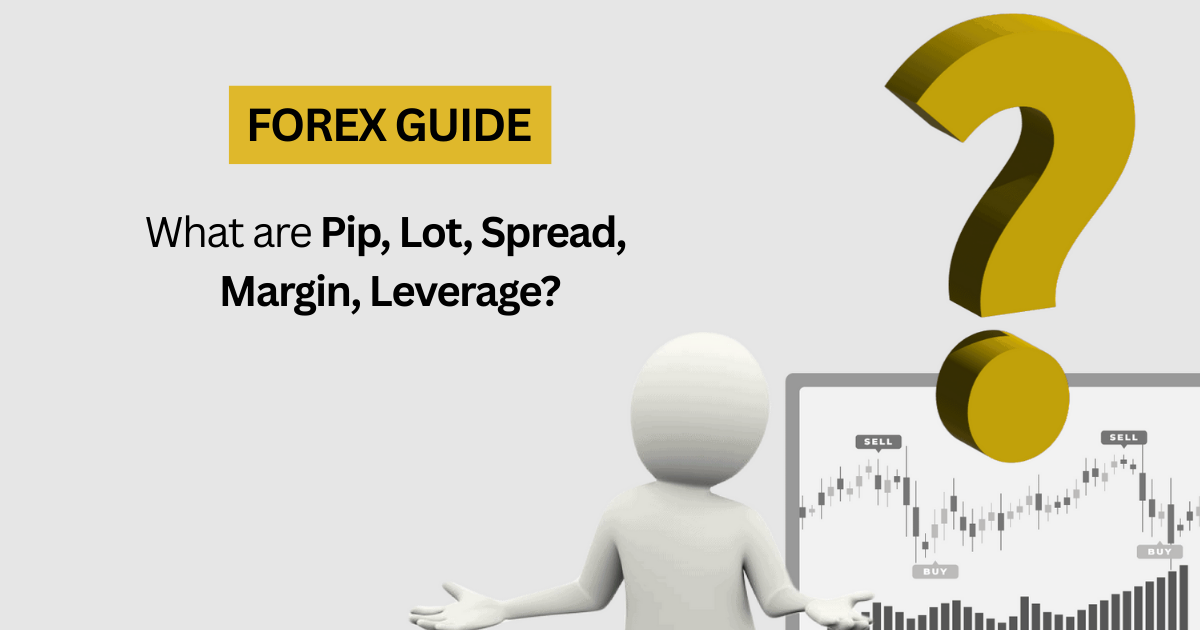
What are Pip, Lot, Spread, Margin, Leverage

What are Pip, Lot, Spread, Margin, Leverage

191
SHARES
1.5k
VIEWS
Share on FacebookShare on Twitter

If you want to succeed in forex trading, you must understand five core concepts: pip, lot, spread, margin, and leverage. These building blocks determine how profits are calculated, how risks arise, and how your trading account behaves.

Yet most beginners skip them — and then wonder why they blow their account in a week.

This guide breaks everything down in a simple, practical, beginner-friendly way. No complicated jargon. No recycled content. Just clear explanations with examples you can immediately apply.


Table of Contents

Toggle
    • 1. What Is a Pip? (The Smallest Price Movement in Forex)
      • 1.1 Standard Pip Rules
      • 1.2 Why Pips Matter
      • 1.3 Pip Value Formula
    • 2. What Is a Lot? (Your Trade Size)
      • 2.1 Types of Lots
      • 2.2 Why Lot Size Matters
      • 2.3 How Lot Size Impacts Pip Value
    • 3. What Is the Spread? (Broker’s Hidden Trading Cost)
      • 3.1 Types of Spreads
    • 4. What Is Margin? (Your Required Collateral)
      • 4.1 Margin Formula
      • 4.2 Free Margin, Used Margin & Margin Level
    • 5. What Is Leverage? (The Power & the Danger)
      • 5.1 Benefits of Leverage
      • 5.2 Risks of Leverage
    • 6. How These Five Concepts Connect (Simple Map)
    • 7. Putting It All Together: Real Trade Example
  • 8. Common Mistakes Beginners Make
    • Conclusion

1. What Is a Pip? (The Smallest Price Movement in Forex)

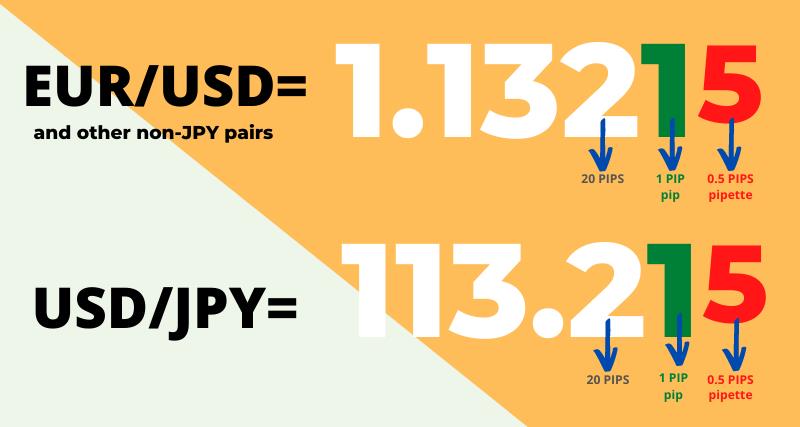
A pip stands for “percentage in point” and represents the smallest standardized change in price in forex.

1.1 Standard Pip Rules

  • Most forex pairs: 1 pip = 0.0001

  • For JPY pairs: 1 pip = 0.01

1.2 Why Pips Matter

Pips determine:

  • How you measure volatility

  • How you calculate profit & loss

  • How you size your trades correctly

Example of pip movement in EURUSD


1.3 Pip Value Formula

Pip Value = (1 pip / exchange rate) × lot size

Example (EUR/USD, 1 Standard Lot):

(0.0001 / 1.0850) × 100,000 ≈ $9.22 per pip

When EUR/USD moves 10 pips, your profit ≈ $92.20.


2. What Is a Lot? (Your Trade Size)

A lot defines how much of a currency you are buying or selling.

2.1 Types of Lots
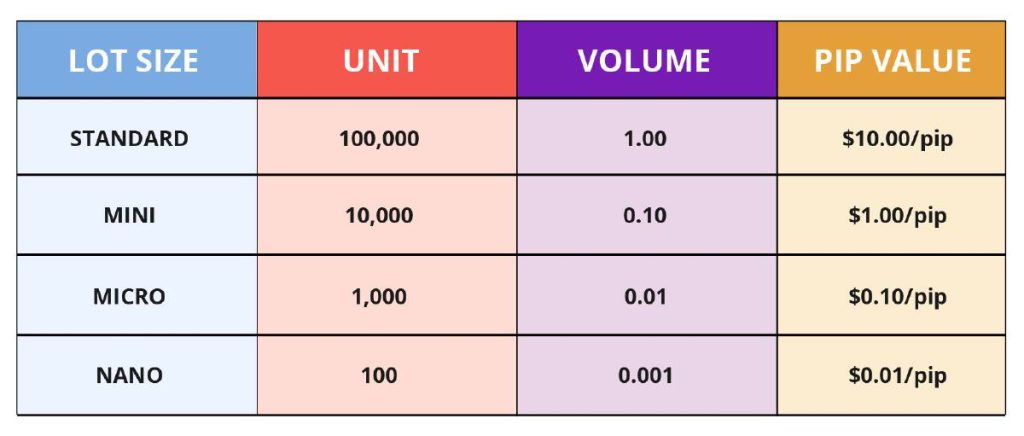
Lot size categories used in forex trading

2.2 Why Lot Size Matters

  • It directly affects risk

  • Determines pip value

  • Influences margin requirement

  • Controls account drawdown

A beginner using a large lot is like driving a Ferrari on ice—fast, exciting, but guaranteed to crash.


2.3 How Lot Size Impacts Pip Value

Example on EURUSD:

Lot Size Pip Value
1.00 lot ~$10/pip
0.10 lot ~$1/pip
0.01 lot ~$0.10/pip

This is why new traders should start with micro lots (0.01).


3. What Is the Spread? (Broker’s Hidden Trading Cost)

The spread is the difference between the Bid price and Ask price.
You pay this cost every time you open a trade.

Example: EUR/USD

  • Bid: 1.1051

  • Ask: 1.1053

  • Spread: 2 pips

This cost is immediately deducted from your trade.
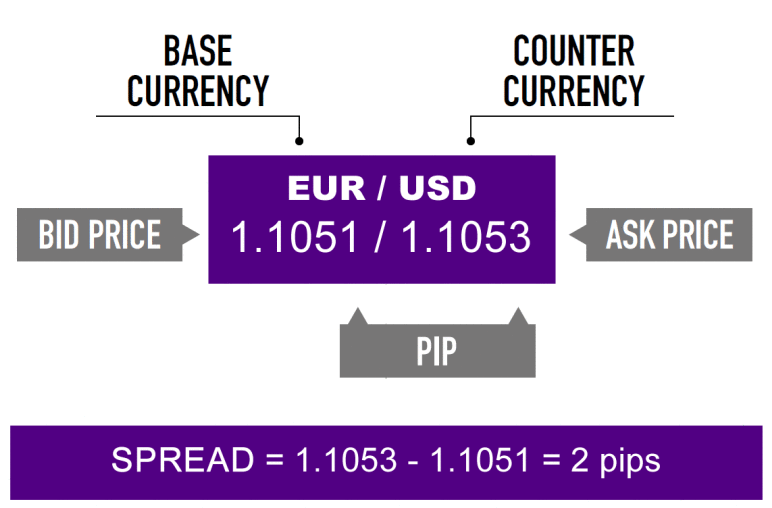
What Is Spread in Forex

3.1 Types of Spreads

  • Fixed Spread: stable, good for low volatility

  • Variable Spread: tight during normal market conditions, wider during news

ECN brokers typically offer very low spreads, but charge commission.


4. What Is Margin? (Your Required Collateral)

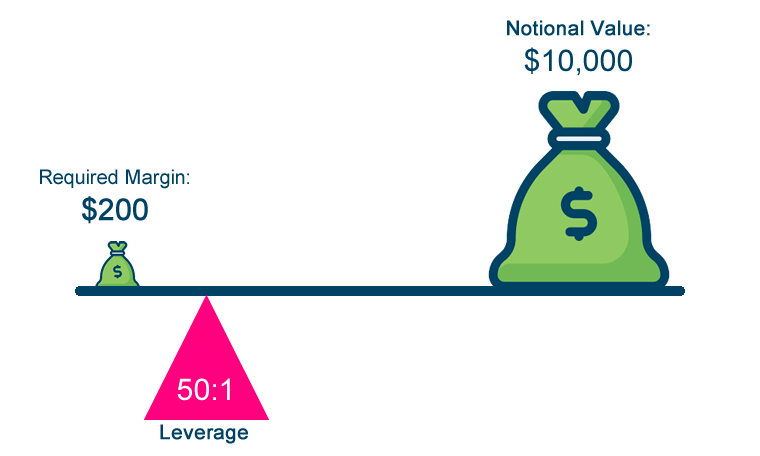
Margin is the amount of money your broker locks as collateral to open a position.

It is NOT a fee.
You get it back when your position closes — unless you take a loss.
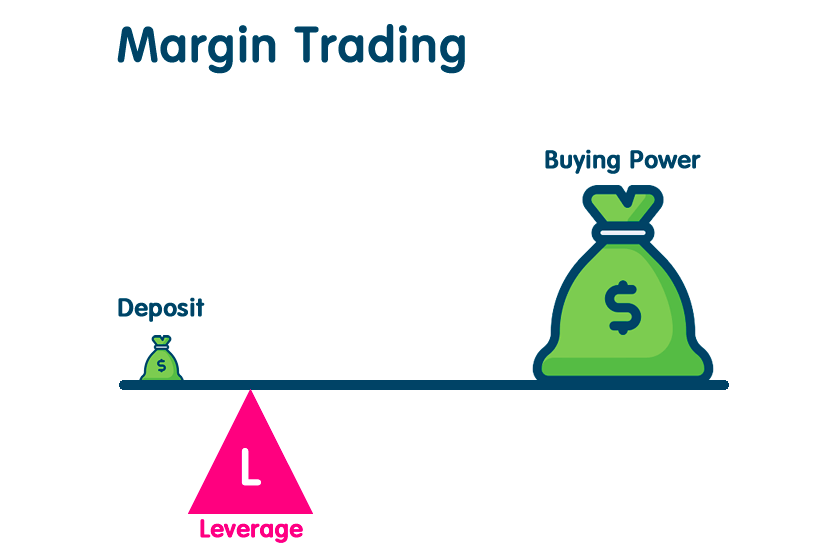
What Is Margin
What Is Margin

4.1 Margin Formula

Margin = (Trade Size / Leverage)

Example:

  • Leverage: 1:100

  • Position size: 1 Standard Lot = 100,000 units

Margin = 100,000 / 100 = $1,000

4.2 Free Margin, Used Margin & Margin Level

Term Meaning
Used Margin Margin locked for open trades
Free Margin Available for new trades
Margin Level (Equity / Used Margin) × 100%

When your margin level drops too low, you may face:

Margin Call

Broker warns your equity is critically low.

Stop-Out

Broker automatically closes positions to protect you from going negative.


5. What Is Leverage? (The Power & the Danger)

Leverage allows you to control large positions with small capital.

Example

With 1:100 leverage:

  • You deposit $100

  • You can trade $10,000

What Is Leverage
What Is Leverage

5.1 Benefits of Leverage

  • Allows small accounts to trade large positions

  • Increases potential returns

  • Enables flexible strategy building

5.2 Risks of Leverage

  • Magnifies losses

  • Causes account blowouts

  • Increases emotional stress while trading

High leverage can be powerful — but deadly if misused.


6. How These Five Concepts Connect (Simple Map)

Concept Controls Impact
Pip movement profit/loss calculation
Lot size pip value & risk
Spread entry cost upfront trading cost
Margin collateral ability to open positions
Leverage exposure risk multiplier

Together, they determine:

  • How much you can trade

  • How much you can win

  • How much you can lose

Understanding them is the foundation of serious trading.


7. Putting It All Together: Real Trade Example

✔Trade Setup

  • Pair: GBP/USD

  • Lot Size: 0.10 (Mini Lot)

  • Spread: 1.5 pips

  • Leverage: 1:100

  • Stop Loss: 20 pips

✔Step 1 — Pip Value

Mini lot: ~$1 per pip
20-pip SL ≈ $20 risk

✔Step 2 — Margin Requirement

Mini lot = 10,000 units

Margin = 10,000 / 100 = $100

✔Step 3 — Spread Cost

1.5-pip spread × $1/pip = $1.50 cost upfront

✔Step 4 — Profit Target

Say you aim for 30 pips
Profit ≈ $30

✔Result

Risk/Reward = 1:1.5 — a solid beginner-friendly setup.


8. Common Mistakes Beginners Make

✔ Using large lot sizes

Huge pip value = fast losses.

✔ Using excessive leverage

Most blown accounts use 1:500 or 1:1000 leverage.

✔ Ignoring spreads

Trading during news = extreme spread widening.

✔ Not understanding margin

Margin calls happen because traders over-open positions.


Conclusion

Pip, lot, spread, margin, and leverage are the DNA of forex trading.
Master these five concepts and you immediately gain an advantage over 90% of beginners.

You will finally understand:

  • How much you risk

  • How much you can earn

  • Why brokers liquidate your trades

  • How lot size affects every calculation

  • How leverage can either help or destroy your account

If you want to trade forex safely and professionally, these fundamentals are non-negotiable.

Tags: BeginnerLeveragelotMarginpipSpread
Share76Tweet48
Previous Post

How the Forex Market Works: A Complete Beginner-Friendly Explanation (2025 Guide)

Next Post

Forex Account Types Explained: Standard, Raw, ECN & More

Related Posts

Risk Management in Forex

Risk Management in Forex: The Foundation of Long-Term Trading Success

by Baby Bull
December 25, 2025
0

In Forex trading, profitability is often misunderstood as the ability to predict market direction accurately. In reality, long-term success depends...

Common Mistakes of New Forex Traders

Common Mistakes of New Forex Traders (and How to Avoid Them)

by Baby Bull
December 21, 2025
0

Most beginner Forex traders do not fail because the market is unfair or unpredictable. They fail because they repeat the...

Forex Trading Styles

Forex Trading Styles Explained: Scalping, Day Trading, Swing Trading, and Position Trading

by Baby Bull
December 20, 2025
0

Forex trading is not a one-size-fits-all activity. While many beginners focus on indicators or strategies, experienced traders understand that choosing...

Forex Transaction Fees Explained

Forex Transaction Fees Explained: Spread, Commission, and Swap

by Baby Bull
December 19, 2025
0

One of the most overlooked aspects of Forex trading—especially among beginners—is transaction cost. Many traders focus heavily on strategies, indicators,...

Most Popular Currency Pairs in Forex

Most Popular Currency Pairs in Forex & Key Properties of Each Pair

by Baby Bull
December 15, 2025
0

In the Forex market, traders do not buy or sell individual currencies in isolation. Instead, every transaction involves a currency...

Load More
  • Trending
  • Comments
  • Latest
Market Structure in Price Action

Market Structure in Price Action: Higher Highs, Lower Lows Explained

February 27, 2026
exness review

Exness Review 2026: Is It Safe, Legit & Worth It for Beginners?

March 23, 2026
Discipline & Consistency in Trading

Psychology #3: Discipline & Consistency in Trading: How Professionals Actually Follow Rules

March 21, 2026
trading psychology basics

Psychology #1: Trading Psychology Basics: Why Most Traders Fail Despite Good Strategies

March 20, 2026
breakout forex strategy

Strategy #2: Breakout & False Breakout – How Smart Money Traps Retail Traders

0
price action trading strategy

Strategy #1: Price Action Trading Strategy: A Complete Framework for Consistent Decisions

0
trading mindset

Psychology #6: Process-Based Thinking vs Outcome-Based Thinking in Trading

0
trading journal

Psychology #5: Trading Routine, Journaling & Mental Process: How Professionals Build Consistency

0
breakout forex strategy

Strategy #2: Breakout & False Breakout – How Smart Money Traps Retail Traders

March 23, 2026
price action trading strategy

Strategy #1: Price Action Trading Strategy: A Complete Framework for Consistent Decisions

March 23, 2026
trading mindset

Psychology #6: Process-Based Thinking vs Outcome-Based Thinking in Trading

March 21, 2026
trading journal

Psychology #5: Trading Routine, Journaling & Mental Process: How Professionals Build Consistency

March 22, 2026

BullBearLearn.com is an independent educational website on Forex and financial trading, offering knowledge, strategies, and tools to help traders understand and navigate markets—whether bullish or bearish.

Categories
  • Broker Reviews
  • Core Concepts
  • Core Strategies
  • Crypto Exchange
  • Execution
  • Forex Basic
  • Learn Forex
  • Market Condition
  • Price Action
  • Psychology
  • Risk Management
  • Strategy
  • Tools
  • Trading Strategies
Tags
Beginner Binance Review breakout Broker Reviews Bybit review calculator Core Concepts cost crypto exchange Execution Exness Review fees forex basic guide Leverage lot Margin mistake OKX review pip position size price action Psychology risk risk reward Spread swap Swing XM Review xtb review

Disclaimer: Content on BullBearLearn.com is for educational purposes only and not intended as financial advice. Trading involves risk.​

  • About
  • Privacy Policy
  • Terms of Service
  • Disclaimer
  • Cookie Policy
  • Affiliate Disclosure
  • Contact Us

© 2025 BullBearLearn.com — Learn to Trade, Bull or Bear.

Welcome Back!

Login to your account below

Forgotten Password?

Retrieve your password

Please enter your username or email address to reset your password.

Log In

Session expired

Please log in again. The login page will open in a new tab. After logging in you can close it and return to this page.

Add New Playlist

>

Table of Contents

×
    • 1. What Is a Pip? (The Smallest Price Movement in Forex)
      • 1.1 Standard Pip Rules
      • 1.2 Why Pips Matter
      • 1.3 Pip Value Formula
    • 2. What Is a Lot? (Your Trade Size)
      • 2.1 Types of Lots
      • 2.2 Why Lot Size Matters
      • 2.3 How Lot Size Impacts Pip Value
    • 3. What Is the Spread? (Broker’s Hidden Trading Cost)
      • 3.1 Types of Spreads
    • 4. What Is Margin? (Your Required Collateral)
      • 4.1 Margin Formula
      • 4.2 Free Margin, Used Margin & Margin Level
    • 5. What Is Leverage? (The Power & the Danger)
      • 5.1 Benefits of Leverage
      • 5.2 Risks of Leverage
    • 6. How These Five Concepts Connect (Simple Map)
    • 7. Putting It All Together: Real Trade Example
  • 8. Common Mistakes Beginners Make
    • Conclusion
→ Index
No Result
View All Result
  • Home
  • Learn Forex
    • Forex Basic
    • Trading Strategies
    • Price Action
  • Learn Crypto
  • Broker Reviews
  • Tools FREE
  • Blog
START

© 2025 BullBearLearn.com — Learn to Trade, Bull or Bear.