

One of the first decisions you’ll make when buying or selling cryptocurrency is choosing an order type.
Most crypto exchanges, including Binance, OKX, and Bybit, offer several order options. However, beginners only need to understand two of them:
- Market Order
- Limit Order
These two order types are the foundation of spot trading.
Choosing the right one can help you buy or sell more efficiently, avoid unnecessary mistakes, and better control your trading experience.
In this guide, you’ll learn how market orders and limit orders work, their advantages and disadvantages, and when each type is most appropriate.
What Is a Market Order?
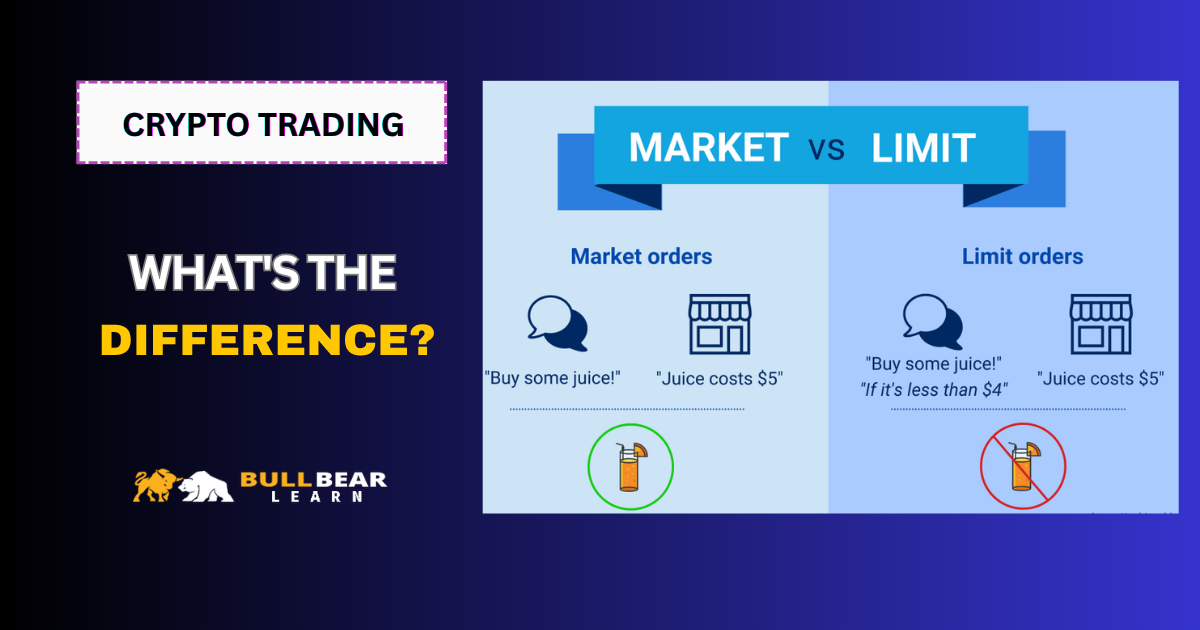
A market order is an instruction to buy or sell a cryptocurrency immediately at the best available market price.
When you place a market order:
- The exchange automatically matches your order with the best available price.
- The trade is executed almost instantly.
- You receive the asset without needing to wait for a specific price.
Example
Suppose Bitcoin is currently trading around $100,000.
You place a market order to buy $500 worth of Bitcoin.
The exchange fills your order using the best available sellers in the market, and your Bitcoin appears in your account within seconds.
You don’t choose the exact execution price—the market determines it.
Advantages of Market Orders
Fast Execution
Market orders are usually completed within seconds.
This makes them ideal when speed is more important than price precision.
Simple for Beginners
Most first-time investors use market orders because they require very little setup.
Simply choose the amount you want to buy or sell and confirm the transaction.
High Probability of Execution
As long as there is enough liquidity, market orders are almost always filled immediately.
Disadvantages of Market Orders
Less Control Over Price
Because the order executes at the current market price, the final execution price may differ slightly from what you see on your screen.
This difference is known as slippage.
Can Cost More During Volatile Markets
When prices move rapidly, your order may execute at a less favorable price than expected.
What Is a Limit Order?
A limit order allows you to specify the exact price at which you want to buy or sell.
The exchange will only execute the order if the market reaches your chosen price.
Example
Bitcoin is currently trading at $100,000.
You believe the price may fall to $97,000.
Instead of buying immediately, you place a limit order at $97,000.
If Bitcoin drops to that level, your order may be executed automatically.
If the price never reaches $97,000, the order remains unfilled.
Advantages of Limit Orders
Greater Price Control
You decide the maximum price you’re willing to pay or the minimum price you’re willing to accept.
Better for Planned Trades
Limit orders allow investors to plan trades in advance rather than reacting emotionally to market movements.
Useful in Volatile Markets
Instead of chasing rapidly moving prices, you can wait for the market to come to your preferred entry or exit level.
Disadvantages of Limit Orders
No Guarantee of Execution
If the market never reaches your specified price, your order won’t be filled.
Slower Execution
Unlike market orders, limit orders may remain open for minutes, days, or even weeks.
Market Order vs Limit Order
| Feature | Market Order | Limit Order |
|---|---|---|
| Execution Speed | Immediate | Only when target price is reached |
| Price Control | Low | High |
| Best For | Quick execution | Planned entries and exits |
| Risk of Missing Trade | Very low | Possible |
| Beginner Friendly | Excellent | Very good |
When Should Beginners Use a Market Order?
A market order is often the better choice when:
- Buying your first cryptocurrency
- Investing a relatively small amount
- Trading highly liquid assets such as Bitcoin or Ethereum
- Speed is more important than getting the exact price
For most first-time buyers, the convenience of a market order outweighs the small price differences that may occur.
When Should Beginners Use a Limit Order?
A limit order may be a better option when:
- You have a specific target price.
- You’re willing to wait.
- The market is highly volatile.
- You’re following a trading plan.
Rather than chasing prices, you let the market come to you.
What Is Slippage?
Slippage occurs when the final execution price differs slightly from the expected price.
This is most common with market orders during periods of high volatility or low liquidity.
For example:
- You expect to buy Bitcoin at $100,000.
- Your order executes at $100,120 because prices moved while your trade was being processed.
For large orders or less-liquid cryptocurrencies, slippage can be more noticeable.
Do Limit Orders Always Get Filled?
No.
A limit order is only executed if the market reaches your specified price and there is sufficient liquidity.
If Bitcoin never falls to your target price, your buy order will remain open until you cancel it or it expires (depending on the exchange settings).
Which Order Type Is Better?
There is no universal answer.
Both order types serve different purposes.
Market Orders
Best when:
- Speed matters.
- You want immediate execution.
- You’re investing rather than actively trading.
Limit Orders
Best when:
- Price matters more than speed.
- You already have a trading plan.
- You’re comfortable waiting.
Experienced traders often use both, depending on the situation.
Common Beginner Mistakes
Using Limit Orders Without Patience
Some beginners place a limit order and cancel it after a few minutes because it hasn’t been filled.
Markets don’t always move immediately.
Ignoring Market Conditions
During periods of extreme volatility, both market and limit orders behave differently than in calm markets.
Understanding the current environment helps you choose the appropriate order type.
Confusing Market Price with Last Traded Price
The price displayed on the screen may not always be the exact price at which your market order is executed.
This is normal in active markets.
Which Order Type Should You Use First?
If you’re buying cryptocurrency for the first time, a market order is usually the simplest option.
As you become more familiar with trading, limit orders can help you improve discipline and control over your entries and exits.
Learning both order types early will make it much easier to understand more advanced trading concepts later.
Final Thoughts
Market orders and limit orders are the two most important order types every crypto investor should understand.
A market order prioritizes speed and convenience.
A limit order prioritizes price control and patience.
Neither is universally better—the right choice depends on your goals, your strategy, and current market conditions.
By understanding when to use each order type, you’ll be better prepared to trade confidently and avoid many common beginner mistakes.
🚀 Practice on a Trusted Exchange
Most major exchanges provide easy-to-use spot trading interfaces where you can place both market and limit orders.
👉 Binance — https://bullbearlearn.com/go/binance
⚡ OKX — https://bullbearlearn.com/go/okx
🔥 Bybit — https://bullbearlearn.com/go/bybit
Start with small trades while learning how each order type works.
Related Articles
📈 What Is Spot Trading? A Beginner’s Guide
💰 How to Buy Cryptocurrency: A Beginner’s Step-by-Step Guide
₿ How to Buy Bitcoin: A Beginner’s Step-by-Step Guide
📊 Bid vs Ask Price Explained (coming soon)
📒 Understanding the Crypto Order Book (coming soon)
Frequently Asked Questions
Is a market order better than a limit order?
Not necessarily. A market order is better when you want immediate execution, while a limit order is better when you want greater control over the price.
Can a limit order fail to execute?
Yes. If the market never reaches your specified price, the order will remain unfilled.
Why is my market order price different from the displayed price?
This is usually caused by slippage, which can occur when prices move quickly or liquidity is limited.
Which order type is recommended for beginners?
Most beginners start with market orders because they are simple and execute immediately. As you gain experience, limit orders become a useful tool for planning trades.
Can I cancel a limit order?
Yes. On most exchanges, you can cancel an unfilled limit order at any time before it is executed.