

When buying cryptocurrency, most beginners focus on one thing: the price.
They want to know whether Bitcoin is cheap, whether Ethereum might increase in value, or which altcoin could deliver the highest returns.
However, there is another important factor that can affect almost every trade: liquidity.
Liquidity determines how easily you can buy or sell a cryptocurrency without significantly affecting its price. It can also influence your trading costs, the speed at which orders are executed, and the amount you receive when selling.
For example, buying and selling Bitcoin in a highly active market is generally easier than trading a small cryptocurrency with very few active buyers and sellers.
In this guide, you’ll learn what crypto liquidity means, how it works, how to identify liquid markets, and what beginners should check before placing a trade.
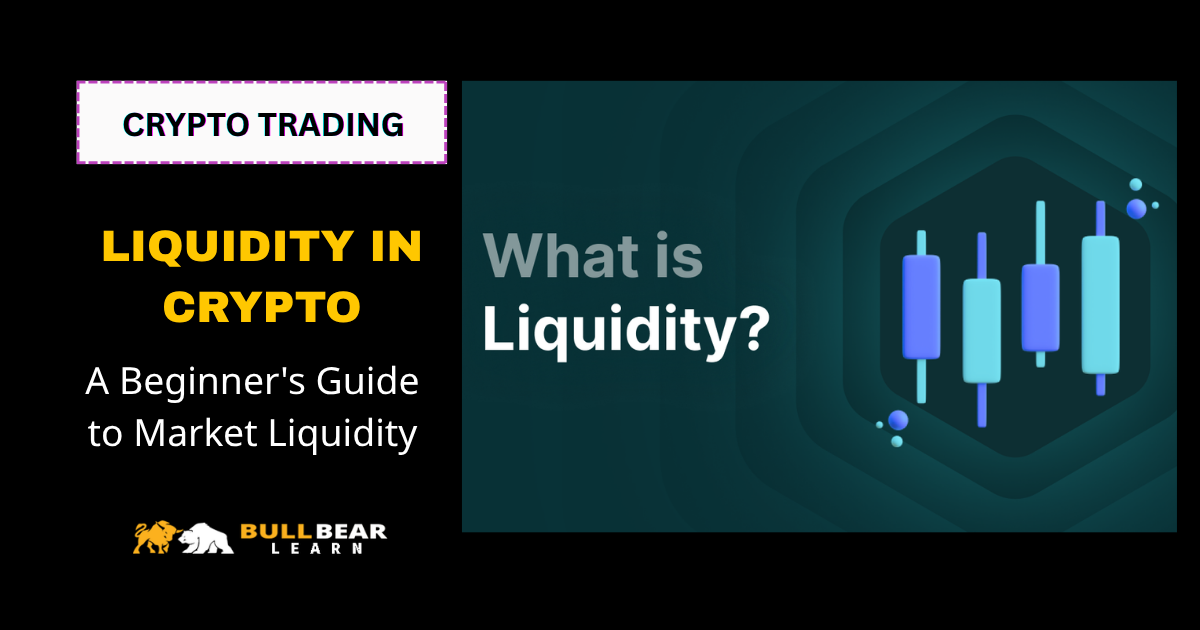
What Is Liquidity in Crypto?
Liquidity in cryptocurrency refers to how easily a digital asset can be bought or sold at prices close to the current market price without significantly moving that price.
A market with high liquidity generally has many active buyers and sellers, with sufficient trading interest near the current price.
A market with low liquidity has fewer available orders or less trading interest. As a result, even a relatively small trade may cause a noticeable price movement.
For example, imagine you want to buy $100 worth of Bitcoin. In a liquid market, your order will usually have little impact on the price.
Now imagine placing a $100 buy order for a small cryptocurrency with very few sellers. Your order could consume much of the available supply at the lowest asking price, forcing the remaining portion to execute at higher prices.
The difference comes from liquidity.
Why Is Liquidity Important in Cryptocurrency?
Liquidity matters because the displayed price does not always tell you how easily you can complete a trade.
A cryptocurrency might appear attractive on a price chart, but buying or selling it could be expensive if there are not enough orders available near the current price.
Here are four reasons liquidity matters.
1. Easier Buying and Selling
Highly liquid markets generally allow traders to enter and exit positions more easily.
You are more likely to find buyers when selling and sellers when buying, although liquidity is never guaranteed.
This is particularly important if you need to sell an asset quickly.
2. Lower Trading Costs
Low liquidity can lead to wider bid-ask spreads and greater slippage.
These costs may not appear as a separate fee on your exchange statement, but they can still affect the price you receive.
3. More Predictable Order Execution
In a deep market, a reasonably sized order is more likely to execute close to the best available prices.
In a thin market, the same order may need to consume multiple price levels, resulting in a less favorable average execution price.
4. More Flexibility During Volatile Markets
Liquidity can become especially important when prices move rapidly.
If many participants withdraw their orders during a market shock, the available liquidity may decrease just when traders most want to buy or sell.
This can make it harder to exit a position at a favorable price.
What Is the Difference Between High and Low Liquidity?
The simplest way to understand liquidity is to compare two hypothetical markets.
| Feature | High-Liquidity Market | Low-Liquidity Market |
|---|---|---|
| Available buyers and sellers | Generally more | Generally fewer |
| Bid-ask spread | Often narrower | Often wider |
| Price impact of a trade | Usually smaller | Can be larger |
| Slippage risk | Often lower | Often higher |
| Ease of exiting a position | Generally better | Can be more difficult |
These are general tendencies, not guarantees. Liquidity can change quickly, and even a normally active market can become less liquid during extreme volatility.
What Is the Difference Between Liquidity and Trading Volume?
Liquidity and trading volume are related, but they are not the same thing.
Trading volume measures how much of an asset has been traded during a particular period, such as the previous 24 hours.
Liquidity describes how easily you can buy or sell an asset now without substantially affecting its price.
Consider this example.
Cryptocurrency A has $50 million in reported 24-hour trading volume. Cryptocurrency B has $5 million.
At first glance, Cryptocurrency A appears to be the better market for trading.
However, the reported volume does not tell you how many buy and sell orders are currently available near the market price. The market could have substantial historical activity but relatively little liquidity at the moment you want to trade.
Therefore, trading volume is a useful starting point, but it should not be your only measure of liquidity.
📊 Read Trading Volume Explained to understand how trading activity is measured.
How Do You Measure Crypto Liquidity?
There is no single number that perfectly measures liquidity. Beginners can start by checking several indicators.
1. Bid-Ask Spread
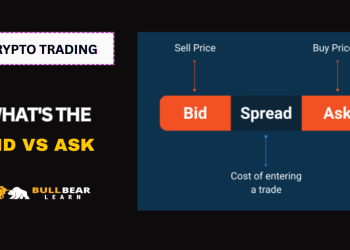
The bid-ask spread is the difference between the highest price buyers are willing to pay and the lowest price sellers are willing to accept.
For example:
- Highest bid: $99.90
- Lowest ask: $100.00
- Spread: $0.10
A narrow spread often indicates that buyers and sellers are willing to trade at similar prices.
A wider spread can indicate weaker liquidity or greater uncertainty.
However, spread alone is not enough. A market can have a narrow spread but very little quantity available at those prices.
📊 Read: Bid vs Ask Price Explained
2. Order Book Depth
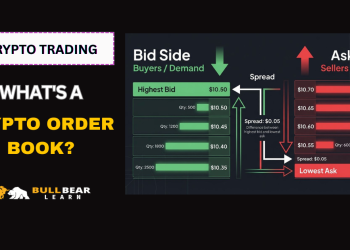
The order book displays active buy and sell orders at different price levels.
A market with substantial orders near the current price generally has more depth than one with only a few small orders.
For example, imagine the sell side of two hypothetical order books.
| Price | Market A: Available BTC | Market B: Available BTC |
|---|---|---|
| $100,000 | 2 BTC | 0.02 BTC |
| $100,100 | 3 BTC | 0.03 BTC |
| $100,200 | 5 BTC | 0.05 BTC |
Market A has considerably more displayed sell quantity near these prices.
A market buy order may therefore be able to purchase more BTC in Market A before reaching higher price levels.
Remember that these figures are illustrative. Live orders can be modified or canceled at any time.
📘 Read: Understanding the Crypto Order Book
3. Trading Volume
Consistently strong trading activity can indicate that a market attracts many participants.
Check the trading volume for the specific trading pair you intend to use, such as BTC/USDT, rather than looking only at the cryptocurrency’s total reported volume across all markets.
Volume should be considered alongside order book depth, spreads, and other indicators.
4. Price Impact
Price impact describes how much your trade itself moves the market price.
A relatively small price impact generally suggests that the market can absorb your order without requiring substantial movement through the available prices.
A large price impact can indicate that your order is too large relative to the liquidity available.
For beginners, a useful question is: How much could the execution price change if I buy or sell the amount I actually intend to trade?
What Is the Relationship Between Liquidity and Slippage?
Slippage occurs when the actual execution price differs from the price you expected when placing an order.
It can happen when market prices change before execution, when available orders are insufficient, or when an order consumes multiple price levels.
Imagine Bitcoin has the following sell orders:
| Ask Price | Available BTC |
|---|---|
| $100,000 | 0.01 BTC |
| $100,100 | 0.02 BTC |
| $100,300 | 0.05 BTC |
Suppose you place a market buy order large enough to consume all three levels.
Your purchase would not be filled entirely at $100,000. Part of it would execute at $100,100 and another part at $100,300.
Your average purchase price would therefore be higher than the initial asking price.
This illustrates why a market order’s execution price depends partly on available liquidity.
The opposite can occur when selling into a thin market: your order may consume the highest bids first and then execute at progressively lower prices.
💡 Read: Market Order vs Limit Order
Is Bitcoin More Liquid Than Other Cryptocurrencies?
Bitcoin and Ethereum often have deeper markets than smaller cryptocurrencies, particularly on major exchanges and widely traded pairs.
Their popularity attracts substantial trading activity and participation from different types of market participants.
However, liquidity varies by exchange, trading pair, market conditions, and order size.
For example, BTC/USDT on one exchange may have a different spread and order book depth from BTC/EUR on another.
A smaller cryptocurrency can also have a reasonably liquid market on a particular exchange, while a normally active asset may become less liquid during unusual market conditions.
The practical lesson is simple: evaluate the specific market you intend to trade, rather than assuming liquidity from the coin’s name or popularity alone.
Can a Cryptocurrency Have a High Market Cap but Low Liquidity?
Yes.
Market capitalization is typically calculated by multiplying a cryptocurrency’s circulating supply by its current market price.
It is not a measurement of how much money is available to buy or sell that cryptocurrency.
A token can have a large reported market capitalization while having relatively few active orders near its current price.
This means its quoted market price may not be achievable for a large trade.
Similarly, a relatively small cryptocurrency can have a more active market on a particular trading pair than its market capitalization might suggest.
Before trading, examine liquidity and market depth separately from market capitalization.
📊 Read What Is Crypto Market Capitalization? to understand how market cap works.
What Is Liquidity in Decentralized Finance (DeFi)?
Liquidity also matters when trading through decentralized exchanges (DEXs).
Unlike centralized exchanges that commonly match orders through an order book, many decentralized exchanges use liquidity pools.
A liquidity pool is a collection of cryptocurrency tokens deposited into a smart contract to facilitate swaps between assets.
For example, a pool might contain ETH and USDC. A user can swap one asset for the other according to the pool’s pricing mechanism.
The pool’s size and the size of your trade affect the resulting price. A large trade relative to a small pool can cause substantial price impact.
DeFi liquidity introduces additional considerations, including:
- Smart contract vulnerabilities
- Network transaction fees
- Token price volatility
- Slippage tolerance settings
- Risks associated with the pool or token itself
Liquidity pools do not eliminate trading risk. A token may also have insufficient liquidity to let holders exit their positions at a reasonable price.
How Can Beginners Check Liquidity Before Trading?
You do not need advanced trading tools to perform a basic liquidity check.
Follow these steps before placing a trade.
Step 1: Choose the Correct Trading Pair
Find the exact pair you intend to trade, such as BTC/USDT or ETH/USDT.
Different pairs can have different liquidity even when they involve the same cryptocurrency.
Step 2: Check the Bid-Ask Spread
Look at the highest bid and lowest ask.
A very wide spread relative to the asset’s price deserves closer attention.
Step 3: Examine the Order Book
Check how much buying and selling quantity is available around the current price.
Do not look only at the first row. A large order may need to consume several price levels.
Step 4: Compare Volume and Depth
Review recent trading volume alongside the current order book.
A healthy-looking volume figure alone does not guarantee that enough liquidity is available for your order.
Step 5: Consider Your Order Size
The liquidity needed for a small purchase differs from that needed for a large trade.
Ask yourself whether your intended order could consume a significant portion of the available quantity.
Step 6: Choose an Appropriate Order Type
A market order prioritizes execution but can produce a less favorable average price in a thin market.
A limit order lets you set a price condition, but it may remain unfilled or only partially fill.
Neither order type removes liquidity risk entirely.
Does High Liquidity Mean a Cryptocurrency Is Safe?
No.
Liquidity and investment safety are different concepts.
A highly liquid cryptocurrency can still experience severe price declines, technical problems, regulatory restrictions, or other risks.
Likewise, a cryptocurrency with low liquidity may be difficult to sell even if its price appears stable.
Before investing, consider several separate factors:
- Liquidity: How easily can you trade?
- Volatility: How much can the price change?
- Security: How well are your assets and accounts protected?
- Project risk: What risks are associated with the token and its underlying project?
- Exchange risk: What could happen if the platform experiences operational or financial problems?
High liquidity can make trading easier, but it does not guarantee profits or protect you against losses.
Common Liquidity Mistakes Beginners Should Avoid
Assuming High Trading Volume Guarantees Liquidity
Volume measures past trading activity. It does not guarantee sufficient orders at your desired price right now.
Buying a Coin Only Because Its Price Is Low
A coin priced at $0.01 is not necessarily cheaper in investment terms than Bitcoin. Its market capitalization, supply, liquidity, and risks all matter.
Ignoring the Spread
A wide spread can make entering and exiting a position more expensive than expected.
Placing Large Market Orders in Thin Markets
Large orders can consume multiple price levels and create significant price impact.
Consider your order size and the available liquidity before trading.
Assuming You Can Always Sell Immediately
A sell order requires buyers willing to trade at acceptable prices. During market stress, available liquidity may decline and selling can become more difficult.
Final Thoughts
Liquidity is one of the most important concepts to understand before trading cryptocurrency.
It determines how easily buyers and sellers can transact and helps explain why two cryptocurrencies with similar price movements can have very different trading costs.
For beginners, the most useful habits are straightforward:
- Check the bid-ask spread.
- Examine order book depth.
- Compare trading volume with available orders.
- Consider the size of your intended trade.
- Understand the risks of market orders and low-liquidity assets.
You do not need to predict every market movement to become a more informed crypto investor. Learning to recognize liquidity risks is already a valuable step toward making better trading decisions.
Explore Crypto Markets and Trading Tools
If you want to practice reading spreads and order books, you can explore the spot markets offered by established exchanges. Availability and features depend on your country and account eligibility.
- Binance — https://bullbearlearn.com/go/binance
- OKX — https://bullbearlearn.com/go/okx
- Bybit — https://bullbearlearn.com/go/bybit
Before opening an account, review the platform’s local availability, fees, and applicable terms. Start by learning how the market works rather than rushing into a trade.
Related Articles
📊 Bid vs Ask Price Explained: Understand the difference between bid prices, ask prices, and the spread.
📘 What Is a Crypto Order Book? Learn how buy and sell orders are displayed and matched.
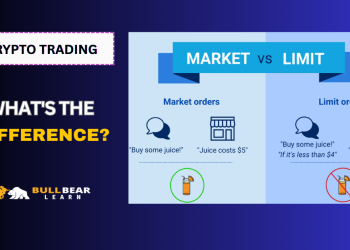
📑 Market Order vs Limit Order: Compare the two main order types used by beginners.
💰 How to Buy Bitcoin: Follow a step-by-step guide to making your first BTC purchase.
Frequently Asked Questions
What is liquidity in simple terms?
Liquidity describes how easily you can buy or sell a cryptocurrency without significantly affecting its price.
What is a liquid cryptocurrency?
A liquid cryptocurrency has sufficient active trading interest and available orders to allow buying and selling relatively easily. Bitcoin and Ethereum often have liquid markets on major exchanges, but conditions vary by trading pair and time.
How do I know if a crypto coin has low liquidity?
Look for a wide bid-ask spread, limited order book depth, low trading activity, or a large price impact relative to your intended trade size. No single indicator tells the whole story.
Is high liquidity always better?
High liquidity generally helps with execution and can reduce trading costs, but it does not make an asset safe or guarantee that its price will rise.
What is the difference between liquidity and volume?
Volume measures how much has been traded over a period. Liquidity measures how easily an asset can be bought or sold without materially affecting its price.
Can I lose money because of low liquidity?
Yes. Low liquidity can lead to unfavorable execution prices, larger spreads, and greater slippage. These costs can increase the loss you experience when buying or selling.
Does liquidity matter for long-term investors?
Yes, although the importance depends on the asset and the size of the investment. Low liquidity can make it difficult to sell a position when needed, even if you intend to hold it for a long time.