

Choosing the right trading account is one of the first decisions you need to make when opening an account with XM.
Different account types can have different spreads, commissions, contract specifications, minimum deposit requirements, and trading conditions.
That means the account with the lowest advertised spread isn’t necessarily the best choice for every trader.
For beginners, simplicity and accessibility may be more important. For active traders and scalpers, transaction costs can have a much larger impact on overall performance.
XM has offered several account structures over the years, although availability and conditions can vary depending on the XM entity and the trader’s country.
In this guide, we’ll compare the main XM account types, explain how they differ, and help you determine which account may be most suitable for your trading style.
If you’re still evaluating the broker itself, read our complete XM Review covering regulation, platforms, fees, trading conditions, and overall suitability.
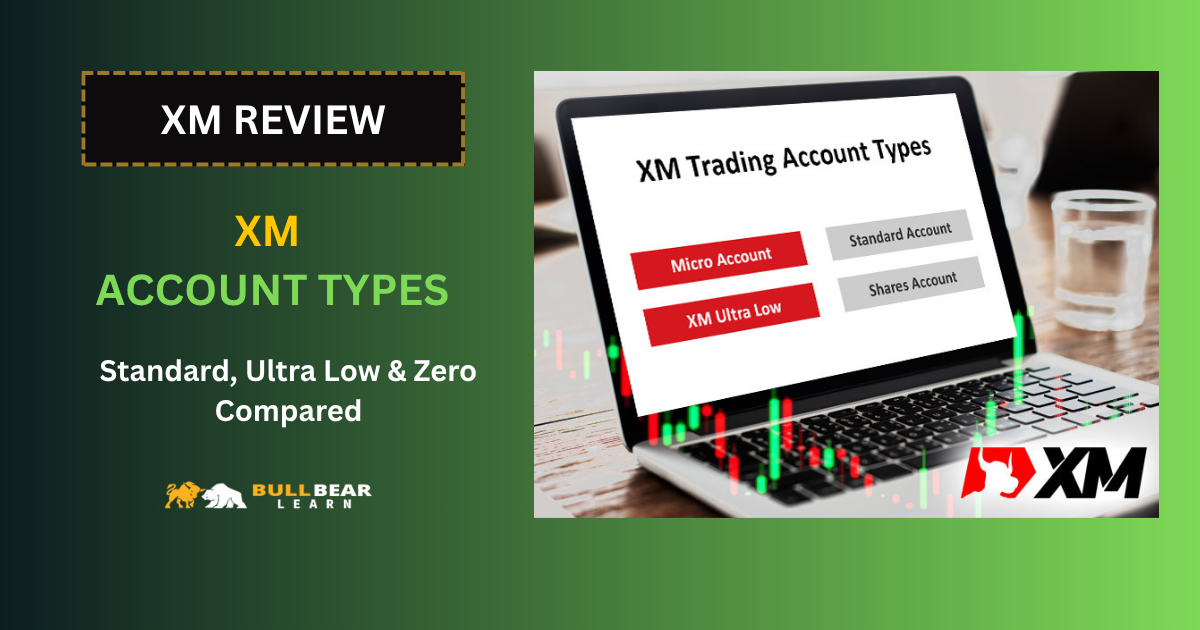
XM Account Types at a Glance
| Account | Main Pricing Structure | Best For |
|---|---|---|
| Standard | Spread-based | General traders |
| Ultra Low | Lower-spread structure | Active traders |
| Zero | Commission + very tight spreads | Cost-conscious active traders |
Important: XM account availability, minimum deposits, leverage, spreads, commissions, and other conditions can vary by jurisdiction and XM entity. Always verify the current terms available to your account before depositing funds.
Our Take
There isn’t one universally “best” XM account.
For a beginner, a straightforward spread-based account may be easier to understand.
For an active trader, an account offering tighter spreads may potentially reduce transaction costs.
For a scalper, a commission-based account may make more sense if the overall cost per trade is competitive.
The right decision should therefore be based on total trading costs and strategy requirements, not simply the advertised minimum spread.
What Are XM Account Types?
An account type determines the trading conditions under which your XM account operates.
Depending on the available entity and region, these conditions can include:
- Minimum deposit
- Spread structure
- Commission
- Contract size
- Minimum trade volume
- Maximum leverage
- Available instruments
- Hedging and trading conditions
- Platform availability
This is why choosing an account should happen before you deposit significant capital.
The account you select can directly affect your cost of trading.
XM Standard Account
The Standard Account is designed as a general-purpose trading account.
It is particularly suitable for traders who want a straightforward account structure without having to calculate a separate commission on every trade.
Main characteristics
The Standard Account generally focuses on spread-based pricing.
This makes it relatively easy for beginners to understand their trading costs.
It can be suitable for:
- Forex beginners
- Casual traders
- Manual traders
- Traders with smaller balances
- Traders who prefer simple pricing
However, traders who place a large number of trades may want to compare the total spread cost against XM’s other account structures.
XM Ultra Low Account
The Ultra Low Account is designed around more competitive spread conditions.
For a deeper look at this account, see our XM Ultra Low Account Review.
This can make it particularly interesting for traders who are more sensitive to transaction costs.
Potential users include:
- Active forex traders
- Day traders
- Scalpers
- Traders who open and close positions frequently
The important point is that a lower spread does not automatically mean lower overall trading costs.
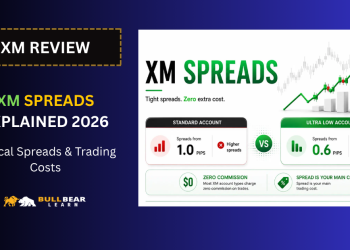
Learn more about how XM spreads work in our detailed XM Spreads Explained guide.
You should also consider:
- Commission
- Swap
- Instrument
- Trading volume
- Position size
- Execution conditions
For active traders, even a relatively small difference in transaction costs can become significant over hundreds of trades.
XM Zero Account
The Zero Account is structured around very tight spreads combined with commission-based pricing.
See our detailed XM Zero Account Review for a closer look at its trading conditions and suitability for active traders.
This type of pricing can be attractive to traders who prioritize the raw spread and are comfortable calculating commission separately.
It may be particularly relevant to:
- Scalpers
- High-frequency traders
- Professional traders
- Traders with larger trading volumes
However, a commission-based account isn’t automatically cheaper.
The correct comparison is:
Spread + Commission + Other Trading Costs
rather than simply looking at the spread displayed on the platform.
For a broader breakdown of spreads, commissions, swaps, and other costs, see our XM Fees Explained guide.
XM Standard vs Ultra Low vs Zero
The easiest way to understand the difference is to think about the pricing model.
Standard
Simple pricing
You primarily pay through the spread.
This can make Standard easier for beginners and casual traders.
Ultra Low
Lower spread focus
The account is designed for traders who want more competitive spread conditions.
This can become more valuable as trading frequency increases.
Zero
Very tight spread + commission
The spread can be extremely tight, while a separate commission applies.
This structure is generally more relevant to active traders who understand transaction costs.
Which XM Account Is Best for Beginners?
For most beginners, simplicity should be the priority.
A trader who is still learning technical analysis, risk management, and order execution doesn’t necessarily need the most sophisticated pricing structure.
A straightforward Standard-style account may therefore be easier to understand.
However, beginners who are already familiar with spread and commission-based pricing may also consider Ultra Low.
The important thing is to understand the cost structure before opening live positions.
Which XM Account Is Best for Scalping?
Scalpers typically prioritize transaction costs because they may open and close many positions during a trading session.
For this reason, Ultra Low and Zero-style accounts deserve closer consideration.
However, the cheapest account depends on the actual combination of spread and commission available to you.
For example, an account with a 0-pip spread may still have a meaningful commission.
Likewise, a slightly wider-spread account with no commission can sometimes be competitive for smaller trading volumes.
Scalpers should therefore calculate the all-in cost per trade rather than choosing an account based on spread alone.
Which XM Account Is Best for Gold Trading?
Gold traders have different requirements from traders who only trade major forex pairs.
XAU/USD can experience significant volatility, particularly around:
- US economic data
- Federal Reserve decisions
- Inflation reports
- Employment reports
- Major geopolitical events
Because gold can move quickly, both spread and execution conditions matter.
Traders who frequently trade gold should therefore compare the actual XAU/USD trading conditions available under each XM account rather than assuming that the account with the lowest advertised forex spread will automatically be best for gold.
XM Account Types and Minimum Deposit
Minimum deposit requirements can vary depending on the account, XM entity, and jurisdiction.
This is an important distinction because information published for one country may not apply to another.
Before opening an account, check the current minimum deposit displayed during the registration process or in your XM Member Area.
If you’re mainly interested in the minimum amount required to get started, our XM Minimum Deposit guide covers this topic in more detail.
XM Account Types and Leverage
Leverage is another factor that can vary according to the XM entity and regulatory jurisdiction.
Higher leverage can reduce the margin required to open a position, but it does not reduce the underlying market risk.
For example, a highly leveraged position can produce a large percentage loss from a relatively small market movement.
Beginners should therefore choose leverage conservatively and focus on position sizing rather than trying to maximize the leverage available.
How to Choose the Right XM Account
A simple decision framework can help.
Choose Standard if:
- You’re new to forex.
- You prefer straightforward pricing.
- You trade relatively infrequently.
- You don’t want to calculate commissions separately.
Consider Ultra Low if:
- You trade more frequently.
- Spread costs matter to your strategy.
- You want tighter pricing.
- You’re comfortable comparing trading costs.
Consider Zero if:
- You are an experienced trader.
- You scalp or trade frequently.
- You understand commission-based pricing.
- You want very tight spreads.
But remember:
Your actual trading volume determines how valuable a particular pricing structure is.
XM Account Types: Pros and Cons
Standard Account
Pros
- Simple pricing
- Beginner-friendly
- Suitable for general trading
- No separate commission structure in the traditional spread-based model
Cons
- Spreads may be less attractive for high-frequency traders
- Not necessarily the cheapest option for scalping
Ultra Low Account
Pros
- More competitive spreads
- Suitable for active traders
- Potentially useful for scalping
Cons
- Lower spread doesn’t automatically mean lower total cost
- Conditions vary by market and jurisdiction
Zero Account
Pros
- Very tight spreads
- Attractive for active traders
- Useful for traders focused on transaction costs
Cons
- Commission applies
- More complicated cost calculation
- May provide little advantage for casual traders
Which XM Account Should You Choose?
For a beginner, Standard is generally the easiest place to start.
For an active trader, Ultra Low may deserve consideration.
For an experienced scalper, Zero may be worth comparing against Ultra Low based on the actual all-in trading cost.
But there is no reason to choose a more complex account simply because it advertises tighter spreads.
The best account is the one that gives you the most suitable combination of:
Spread + Commission + Execution + Trading Frequency + Risk Management.
Final Verdict
XM offers different account structures to accommodate different trading styles.
The Standard Account focuses on simplicity and accessibility.
The Ultra Low Account is more attractive to traders who prioritize tighter spreads.
The Zero Account is designed around very tight spreads combined with commission-based pricing and can be particularly relevant to active traders.
For most beginners, Standard is the easiest account to understand.
For traders who execute a high number of trades, however, comparing Ultra Low and Zero may be worthwhile.
Before choosing an account, always check the current conditions applicable to your XM entity and country, because account availability and trading terms can vary.
Ready to trade with XM? Compare the account conditions available in your region, choose the account that fits your strategy, and open your XM account when you’re ready to start.
Frequently Asked Questions
How many XM account types are there?
XM has offered several account structures, including Standard, Ultra Low, and Zero accounts. The exact accounts available can vary by XM entity and jurisdiction.
Which XM account is best for beginners?
A Standard-style account is generally the simplest option for beginners because its spread-based pricing is relatively straightforward to understand.
Which XM account is best for scalping?
Ultra Low and Zero accounts may be more suitable for scalpers because transaction costs are particularly important for high-frequency trading. The best option depends on the actual spread and commission available to you.
Does XM Zero have zero trading costs?
No. A Zero account can offer very tight spreads, but commission may apply. Traders should evaluate the total cost rather than the spread alone.
Is XM Ultra Low better than Standard?
Not necessarily. Ultra Low may provide more competitive spreads, but Standard can be more suitable for traders who value simplicity or trade less frequently.
Can I change my XM account type?
The available options for changing or opening additional accounts depend on XM’s current account-management rules and your jurisdiction. Check your XM Member Area for the options available to you.
Which XM account is best for gold?
There is no universal answer. Gold traders should compare the actual XAU/USD spread, commission, swap, contract specifications, and execution conditions available for each account.
Ready to Choose Your XM Account?
The right XM account depends on how you trade—not simply on which account has the lowest advertised spread.
Compare the available conditions for your region, choose the structure that fits your strategy, and make sure your position sizing and risk management are appropriate before trading with real money.
Explore XM’s current account options and choose the account that fits your trading style.