

If you’ve just opened an account on a cryptocurrency exchange, you’ve probably noticed a section called Spot Trading.
For beginners, the term may sound technical, but the concept is actually simple.
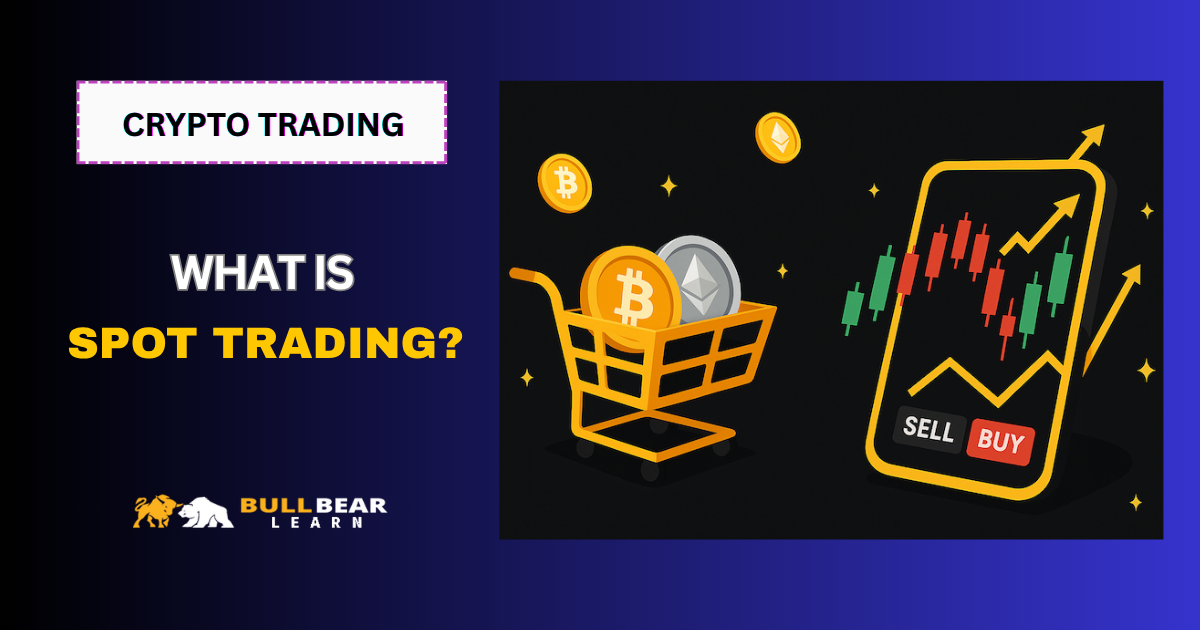
Spot trading is the most common and straightforward way to buy and sell cryptocurrencies.
When you buy Bitcoin, Ethereum, or another cryptocurrency through spot trading, you become the actual owner of those assets.
This makes spot trading the preferred starting point for most new crypto investors.
In this guide, you’ll learn what spot trading is, how it works, its advantages and disadvantages, and why many experienced investors still rely on it despite the popularity of leverage and futures trading.
What Is Spot Trading?
Spot trading is the purchase or sale of an asset for immediate settlement at the current market price.
In cryptocurrency, this means you exchange one asset for another and receive ownership immediately after the trade is executed.
For example:
- You use USDT to buy Bitcoin.
- The Bitcoin is credited to your account.
- You now own that Bitcoin.
Unlike futures or margin trading, there is no borrowing or leverage involved.
You simply buy the asset and keep it until you decide to sell it.
Why Is It Called the “Spot” Market?
The word spot refers to transactions that settle “on the spot” or immediately.
When your order is filled:
- The trade is completed.
- Your balance is updated.
- You own the cryptocurrency.
This is different from contracts that represent future obligations rather than ownership of the asset itself.
How Spot Trading Works
The process is surprisingly simple.
Step 1: Deposit Funds
Deposit fiat currency or transfer cryptocurrency such as USDT into your exchange account.
Step 2: Choose a Trading Pair
Trading pairs represent the two assets involved in a trade.
Examples include:
- BTC/USDT
- ETH/USDT
- SOL/USDT
BTC/USDT means you’re buying or selling Bitcoin using USDT.
Step 3: Place an Order
Choose how you want to buy.
Common order types include:
- Market Order
- Limit Order
We’ll cover these in detail in a separate guide.
Step 4: Receive Your Coins
Once your order is executed, the purchased cryptocurrency appears in your Spot Wallet.
You now own the asset.
Spot Trading vs Simply Buying Crypto
Many beginners wonder whether these are different.
In practice, buying cryptocurrency through the exchange’s “Buy Crypto” button usually uses the spot market behind the scenes.
The difference is that:
- Buy Crypto simplifies the process.
- Spot Trading provides more control over pricing and order types.
As you gain experience, you’ll likely begin using the Spot Trading interface more often.
Advantages of Spot Trading
You Own the Asset
Perhaps the biggest advantage is ownership.
When you buy Bitcoin through spot trading, the Bitcoin belongs to you.
You can:
- Hold it long term
- Transfer it to a personal wallet
- Use it in other blockchain applications
No Leverage Risk
Spot trading does not involve borrowed funds.
This means you cannot lose more than the value of the assets you purchase.
For beginners, this significantly reduces risk compared to leveraged products.
Beginner-Friendly
Spot trading is much easier to understand than:
- Margin trading
- Futures trading
- Options trading
It allows new investors to focus on learning the market before exploring more advanced strategies.
Suitable for Long-Term Investing
Many long-term Bitcoin and Ethereum investors buy exclusively through the spot market.
They simply purchase assets and hold them over time.
Disadvantages of Spot Trading
While spot trading has many strengths, it’s not perfect.
Limited Profit in Falling Markets
If prices decline, spot traders generally need to wait for recovery or sell at a loss.
No Leverage
Although avoiding leverage reduces risk, it also limits potential returns compared to leveraged trading.
Capital Requirements
Because there is no borrowing, larger positions require more capital.
For most beginners, however, this is often a benefit rather than a drawback.
Spot Trading vs Futures Trading
Many exchanges prominently advertise futures trading.
Understanding the difference is important.
| Spot Trading | Futures Trading |
|---|---|
| You own the cryptocurrency | You trade contracts |
| No leverage required | Leverage available |
| Lower risk | Higher risk |
| Ideal for beginners | Better suited to experienced traders |
| Suitable for long-term investing | Often used for short-term speculation |
For someone buying their first Bitcoin, spot trading is generally the simpler and lower-risk choice.
Spot Trading vs Margin Trading
Margin trading allows users to borrow money from the exchange to increase position size.
While this can amplify gains, it can also amplify losses.
Spot trading avoids this additional layer of complexity.
Most beginners should understand spot trading thoroughly before considering margin products.
Common Spot Trading Order Types
Although exchanges offer many order types, beginners primarily need to understand two.
Market Order
Executes immediately at the best available price.
Best for:
- Fast execution
- Simplicity
Limit Order
Allows you to specify the price you’re willing to pay.
Best for:
- Greater price control
- Planned entries
Understanding these two order types will cover the vast majority of beginner trading situations.
What Is a Spot Wallet?
On many exchanges, you’ll notice a section called the Spot Wallet.
This wallet stores the cryptocurrencies you purchase through spot trading.
It is different from:
- Funding Wallets
- Futures Wallets
- Earn Accounts
Your Spot Wallet is where your purchased assets are typically held until you move or use them.
Is Spot Trading Safe?
Spot trading itself is considered one of the safer ways to participate in cryptocurrency markets.
However, your overall safety depends on your habits.
Good practices include:
- Enable Two-Factor Authentication (2FA)
- Use a strong password
- Verify website URLs
- Protect your wallet credentials
- Avoid phishing scams
Security should always be your highest priority.
Common Mistakes Beginners Make
Confusing Spot and Futures
Many beginners accidentally open futures trading screens.
Always confirm you’re using the Spot market before placing your first trade.
Chasing Rapid Price Movements
Buying simply because prices are rising quickly often leads to emotional decisions.
Ignoring Trading Fees
Even small fees can affect returns over time.
Trading Too Frequently
More trades don’t necessarily mean higher profits.
Many successful investors trade less than beginners expect.
Is Spot Trading Good for Beginners?
Absolutely.
Spot trading offers several advantages for new investors:
- Simplicity
- Lower risk
- Direct asset ownership
- No liquidation risk
- Long-term investment potential
This is why most educational resources recommend starting with the spot market before exploring more advanced trading products.
Final Thoughts
Spot trading is the foundation of cryptocurrency investing.
Whether you’re buying Bitcoin, Ethereum, or another digital asset, understanding how the spot market works will help you make more informed decisions.
As your knowledge grows, you may eventually explore futures, margin trading, or other advanced strategies.
But for most beginners, spot trading provides everything needed to begin investing confidently and responsibly.
🚀 Ready to Start Spot Trading?
Choose a reputable exchange with a beginner-friendly spot trading interface.
👉 Binance — https://bullbearlearn.com/go/binance
⚡ OKX — https://bullbearlearn.com/go/okx
🔥 Bybit — https://bullbearlearn.com/go/bybit
Remember: focus on learning the market before taking on additional risk.
Related Articles
💰 How to Buy Cryptocurrency: A Beginner’s Step-by-Step Guide
₿ How to Buy Bitcoin: A Beginner’s Step-by-Step Guide
🏦 How to Choose a Cryptocurrency Exchange
⚖️ Binance vs OKX vs Bybit: Which Crypto Exchange Is Best?
Frequently Asked Questions
Is spot trading the same as buying crypto?
In most cases, yes. The “Buy Crypto” feature on exchanges often executes transactions through the spot market, although it uses a simplified interface.
Do I actually own my crypto with spot trading?
Yes. When you buy cryptocurrency through the spot market, you own the asset and can usually transfer it to a personal wallet.
Is spot trading safer than futures trading?
Generally, yes. Spot trading does not use leverage, making it less risky for most beginners.
Can I lose more money than I invest in spot trading?
No. Without leverage, your maximum loss is generally limited to the amount you invested (excluding transaction fees).
Which cryptocurrencies can I trade on the spot market?
Most major exchanges offer spot trading for hundreds of cryptocurrencies, including Bitcoin, Ethereum, Solana, XRP, BNB, and many others.