

Buying cryptocurrency for the first time can feel overwhelming.
New investors are often faced with questions like:
- Which exchange should I use?
- Should I buy Bitcoin or Ethereum?
- How much money do I need?
- Is cryptocurrency safe?
- Where should I store my coins?
The good news is that buying cryptocurrency today is much easier than it was just a few years ago.
With a reputable exchange and a basic understanding of security, most beginners can purchase their first cryptocurrency within minutes.
This guide will walk you through the entire process step by step.
Step 1: Understand What You’re Buying
Before investing money, it’s important to understand what cryptocurrency actually is.
Cryptocurrencies are digital assets that operate on blockchain technology.
Unlike traditional currencies, cryptocurrencies are generally not controlled by a central bank.
Some of the most popular cryptocurrencies include:
Bitcoin (BTC)
The world’s first cryptocurrency and the largest by market capitalization.
Bitcoin is often viewed as digital gold and a long-term store of value.
Ethereum (ETH)
The leading smart contract platform and the foundation of much of the decentralized finance (DeFi) ecosystem.
Stablecoins
Cryptocurrencies designed to maintain stable value, often linked to the US dollar.
Examples include:
- USDT
- USDC
As a beginner, Bitcoin and Ethereum are usually the most common starting points.
Step 2: Choose a Cryptocurrency Exchange
A cryptocurrency exchange is the platform where you buy, sell, and trade crypto.
Choosing a reputable exchange is one of the most important decisions you’ll make.
What to Look For
Consider:
- Security
- Reputation
- Trading fees
- Available cryptocurrencies
- Ease of use
- Customer support
Popular Exchanges for Beginners
🚀 Binance
Advantages:
- Largest crypto exchange by trading volume
- Extensive selection of cryptocurrencies
- Competitive fees
- Suitable for beginners and advanced users
👉 Binance — https://bullbearlearn.com/go/binance
⚡ OKX
Advantages:
- User-friendly platform
- Competitive trading fees
- Strong crypto ecosystem
- Advanced trading features
👉 OKX — https://bullbearlearn.com/go/okx
🔥 Bybit
Advantages:
- Clean interface
- Excellent mobile experience
- Strong educational resources
- Popular among active traders
👉 Bybit — https://bullbearlearn.com/go/bybit
For most beginners, any of these platforms can be a suitable starting point.
Step 3: Create Your Exchange Account
After selecting an exchange:
- Visit the official website.
- Register an account.
- Verify your email address.
- Create a strong password.
Security Tip
Use a unique password that is not used on any other website.
This simple step dramatically improves account security.
Step 4: Complete Identity Verification (KYC)
Most regulated exchanges require identity verification.
This process is commonly called:
Know Your Customer (KYC)
You may be asked to provide:
- Government-issued ID
- Passport
- Driver’s license
- Selfie verification
Although some beginners find this inconvenient, KYC helps improve platform security and regulatory compliance.
Verification often takes only a few minutes.
Step 5: Enable Two-Factor Authentication (2FA)
Before depositing funds, activate two-factor authentication.
This is one of the most important security measures available.
When 2FA is enabled:
- Password alone is not enough.
- Additional verification is required.
Authentication apps are generally preferred over SMS-based verification.
Security Checklist
✅ Strong password
✅ Email verification
✅ Two-factor authentication
Complete these steps before depositing money.
Step 6: Deposit Funds
Once your account is verified, you can fund it.
Common methods include:
Bank Transfer
Often the lowest-cost option.
Credit or Debit Card
Fast and convenient.
Third-Party Payment Providers
Availability depends on your region.
Different exchanges support different payment methods.
Review fees before making a deposit.
Step 7: Choose Which Cryptocurrency to Buy
Many beginners feel pressured to find the “next Bitcoin.”
This often leads to unnecessary risk.
For newcomers, it may be wiser to start with established cryptocurrencies.
Bitcoin (BTC)
Suitable for investors seeking:
- Simplicity
- Long-term holding
- Store-of-value characteristics
Ethereum (ETH)
Suitable for investors interested in:
- Blockchain innovation
- DeFi
- Smart contracts
- Web3
Many investors choose to hold both.
Step 8: Place Your First Buy Order
Buying cryptocurrency is usually straightforward.
Most exchanges offer a simple purchase interface.
Example
You decide to invest:
$100
The exchange will display:
- Current price
- Estimated amount received
- Applicable fees
After confirming:
The cryptocurrency appears in your exchange account.
Congratulations—you now own crypto.
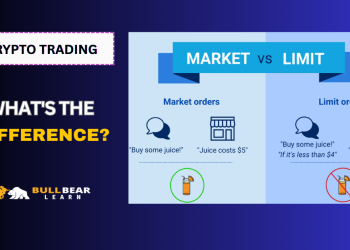
Understanding Market Orders
The simplest purchase method is a:
Market Order
A market order buys cryptocurrency immediately at the best available market price.
Advantages:
- Fast
- Easy
- Beginner-friendly
For most first-time buyers, market orders are sufficient.
Understanding Limit Orders
More experienced users often use:
Limit Orders
A limit order allows you to specify the maximum price you are willing to pay.
The order only executes if the market reaches that price.
Advantages:
- Greater control
- Potentially better entry prices
Disadvantages:
- Order may never execute
Beginners typically start with market orders before exploring limit orders.
Step 9: Decide Where to Store Your Crypto
After purchasing cryptocurrency, you must decide where to keep it.
There are three common options.
Option 1: Leave Crypto on the Exchange
Advantages:
- Convenient
- Easy access
- No wallet setup required
Disadvantages:
- Exchange controls the private keys
This is often acceptable for small amounts.
Option 2: Use a Hot Wallet
Examples include:
- MetaMask
- Trust Wallet
- Exodus
Advantages:
- Greater control
- Easy access
- DeFi compatibility
Disadvantages:
- Increased exposure to online threats
Option 3: Use a Hardware Wallet
Examples include:
- Ledger
- Trezor
Advantages:
- Strong security
- Offline storage
Disadvantages:
- Additional cost
- Less convenience
Many investors eventually move larger holdings to hardware wallets.
How Much Crypto Should Beginners Buy?
One of the most common questions is:
How much should I invest?
There is no universal answer.
However, beginners often benefit from starting small.
Consider an amount you are comfortable learning with.
The goal initially is education, not maximizing profits.
Many investors begin with:
- $50
- $100
- $500
and gradually increase exposure as they gain confidence.
Should You Buy All at Once?
Not necessarily.
Many investors use a strategy called:
Dollar-Cost Averaging (DCA)
This involves investing fixed amounts at regular intervals.
Example:
- $100 every week
- $200 every month
Advantages include:
- Reduced emotional decision-making
- Less concern about perfect timing
- Simpler long-term investing
DCA is especially popular among beginners.
Common Mistakes New Crypto Investors Make
Investing More Than They Can Afford to Lose
Cryptocurrency remains volatile.
Never invest money required for essential expenses.
Ignoring Security
Many losses occur because users fail to:
- Enable 2FA
- Protect seed phrases
- Verify websites
Chasing Hype
Social media excitement does not guarantee investment quality.
Buying Without Research
Understanding an asset before investing is important.
Expecting Overnight Wealth
Successful investing generally requires patience.
Is Buying Cryptocurrency Safe?
Buying cryptocurrency can be relatively safe when using reputable exchanges and good security practices.
Key recommendations include:
✅ Use trusted exchanges
✅ Enable 2FA
✅ Verify websites carefully
✅ Learn wallet security
✅ Avoid suspicious investment schemes
The biggest risks often come from scams and user mistakes rather than the technology itself.
A Simple Beginner Crypto Plan
If you’re completely new to crypto, consider the following roadmap:
Month 1
- Learn the basics
- Open an exchange account
- Buy a small amount of BTC or ETH
Month 2
- Learn about wallets
- Understand seed phrases
- Improve security
Month 3
- Explore blockchain projects
- Learn basic trading concepts
- Continue investing gradually
This approach reduces stress and allows knowledge to grow alongside your portfolio.
Final Thoughts
Buying cryptocurrency is much simpler than many beginners expect.
The process generally involves:
- Choosing a reputable exchange
- Creating and securing an account
- Depositing funds
- Purchasing cryptocurrency
- Learning proper storage and security practices
While cryptocurrency can be exciting, beginners should focus first on education, risk management, and security.
A strong foundation is often more valuable than chasing quick profits.
🚀 Ready to Buy Your First Cryptocurrency?
Start with a reputable exchange and invest only what you’re comfortable learning with.
👉 Binance — https://bullbearlearn.com/go/binance
⚡ OKX — https://bullbearlearn.com/go/okx
🔥 Bybit — https://bullbearlearn.com/go/bybit
Take your time, learn continuously, and prioritize security from day one.
Related Articles
📘 What Is Cryptocurrency? A Beginner’s Guide to Digital Assets
₿ What Is Bitcoin? A Beginner’s Guide to the World’s First Cryptocurrency
⟠ What Is Ethereum? A Beginner’s Guide to the Leading Smart Contract Platform
🔐 What Is a Crypto Wallet? A Beginner’s Guide
🛡️ How to Store Crypto Safely: A Beginner’s Guide
Frequently Asked Questions
What is the easiest way to buy cryptocurrency?
Most beginners use a reputable cryptocurrency exchange such as Binance, OKX, or Bybit.
How much money do I need to start buying crypto?
Many exchanges allow purchases with relatively small amounts, often as little as $10–$50.
Should beginners buy Bitcoin or Ethereum?
Bitcoin and Ethereum are generally considered among the most beginner-friendly cryptocurrencies because of their adoption and liquidity.
Is cryptocurrency safe for beginners?
It can be, provided users choose reputable platforms and follow proper security practices.
Do I need a crypto wallet immediately?
Not necessarily. Many beginners initially keep small amounts on exchanges before learning about wallet security and self-custody.