
• About
  • Crypto Exchange
Bullbearlearn
Advertisement
  • Home
  • Learn Forex
    • Forex Basic
    • Trading Strategies
    • Price Action
  • Learn Crypto
  • Broker Reviews
  • Tools FREE
  • Blog
Start
No Result
View All Result
Bullbearlearn
No Result
View All Result
Home Price Action

Risk Management #2: Position Sizing Explained: How Much Should You Risk Per Trade?

Baby Bull by Baby Bull
March 16, 2026
in Price Action, Risk Management
56 3
0
position sizing forex

position sizing forex

190
SHARES
1.5k
VIEWS
Share on FacebookShare on Twitter

Most traders believe risk management starts with a stop loss.

That belief is incomplete.

In reality, position sizing is the mechanism that determines how dangerous a trade truly is.
Two traders can place the same stop loss at the same level, yet experience completely different outcomes—simply because they sized their positions differently.

If Risk Management #1 explained why risk control matters more than strategy, this article explains how risk is actually controlled in practice.


Table of Contents

Toggle
  • What Is Position Sizing in Forex Trading?
  • Why Position Sizing Matters More Than Entries
  • Fixed Lot Size vs Fixed Percentage Risk
    • Fixed Lot Size (Beginner Trap)
    • Fixed Percentage Risk (Professional Standard)
  • The Relationship Between Stop Loss and Position Size
  • Why “1–2% Risk per Trade” Is Not a Rule
  • Position Sizing and Losing Streaks
  • Execution Factors That Affect Real Risk
  • Position Sizing Is a Skill, Not a Formula
  • What Comes Next
  • Final Thoughts

What Is Position Sizing in Forex Trading?

Position sizing refers to how large your trade size is relative to your account and stop loss distance.

It answers one critical question:

If this trade fails, how much of my capital do I lose?

Position sizing connects three elements:

  1. Account size

  2. Stop loss distance (in pips or price units)

  3. Risk tolerance (percentage or fixed amount)

Without proper position sizing:

  • Stop losses become meaningless

  • Risk percentages are illusions

  • Losing streaks escalate rapidly


Why Position Sizing Matters More Than Entries

Entries decide where you enter.
Position sizing decides whether you survive being wrong.

A perfect entry with poor sizing can:

  • Destroy months of progress

  • Trigger emotional trading

  • Force strategy abandonment

A mediocre entry with proper sizing:

  • Keeps losses manageable

  • Preserves psychological stability

  • Allows probabilities to play out

This is why professionals focus less on finding “perfect setups” and more on risk consistency.


Fixed Lot Size vs Fixed Percentage Risk

Fixed Lot Size (Beginner Trap)

Many traders use:

  • 0.10 lot per trade

  • 1 mini lot per trade

  • “Same size every time”

This approach ignores:

  • Stop loss distance

  • Market volatility

  • Account growth or drawdown

Result:

  • Risk fluctuates wildly from trade to trade

  • One volatile setup can wipe out multiple wins


Fixed Percentage Risk (Professional Standard)

With percentage-based risk:

  • Risk stays constant regardless of stop size

  • Losses are predictable

  • Drawdowns are controlled

Example:

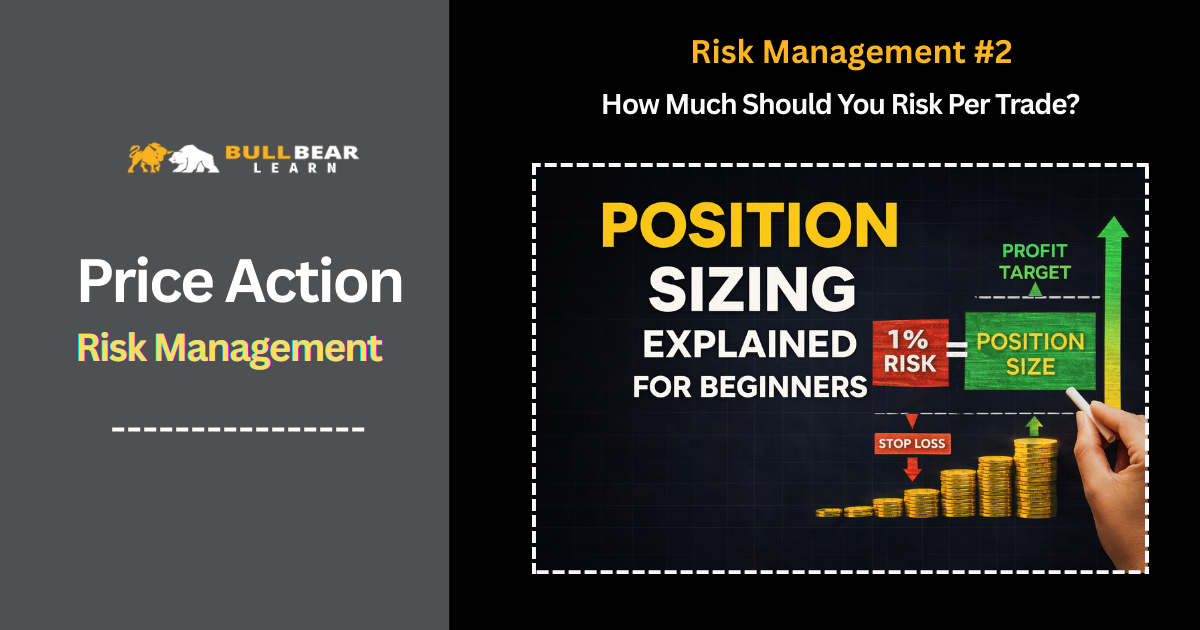
  • Account: $10,000

  • Risk per trade: 1%

  • Maximum loss per trade: $100

Whether the stop loss is 20 pips or 80 pips, position size adjusts automatically.

This is the foundation of professional risk management.


The Relationship Between Stop Loss and Position Size

A stop loss does not define risk by itself.

Risk is defined by:

Stop loss distance × position size

This is why:

  • Tight stops with large positions are dangerous

  • Wide stops with small positions can be safe

Stop placement logic will be covered in depth in:

  • Risk Management #3: Stop Loss Placement – Logic, Structure & Common Mistakes


Why “1–2% Risk per Trade” Is Not a Rule

You will often hear:

“Never risk more than 1–2% per trade.”

This is guidance, not law.

Appropriate risk depends on:

  • Account size

  • Trading frequency

  • Market volatility

  • Execution quality

  • Psychological tolerance

For example:

  • A scalper trading 20 times per week may need lower risk per trade

  • A swing trader trading 2–3 times per week may tolerate slightly higher risk

Risk must be contextual, not dogmatic.


Position Sizing and Losing Streaks

Losing streaks are inevitable.

Position sizing determines whether:

  • A losing streak is a setback

  • Or a career-ending event

Smaller, consistent risk:

  • Flattens equity curves

  • Reduces emotional pressure

  • Improves long-term expectancy

This directly connects to:

  • Risk Management #5: Drawdown, Losing Streaks & Capital Survival


Execution Factors That Affect Real Risk

Position sizing must account for real-world execution issues:

  • Slippage

  • Spread widening

  • Low liquidity during news

Ignoring execution turns theoretical risk into actual losses larger than planned.

To understand why this matters, revisit:

  • Execution #2: Order Execution in Forex – Slippage, Requotes & Why It Affects Your Results


Position Sizing Is a Skill, Not a Formula

Many traders search for a single formula to solve position sizing forever.

That mindset is flawed.

Position sizing is a decision-making process, not a static calculation.
It evolves with:

  • Experience

  • Market conditions

  • Account growth

Tools can assist—but understanding must come first.


What Comes Next

Now that position size and risk amount are clear, the next step is where to place risk structurally.

That is the role of:

  • Risk Management #3: Stop Loss Placement – Logic, Structure & Common Mistakes


Final Thoughts

Position sizing is where theory meets reality.

It is the difference between:

  • Knowing about risk

  • And actually controlling it

Master this skill, and no single trade will ever threaten your trading future again.

Tags: price actionrisk
Share76Tweet48
Previous Post

Execution #5: Risk Management & Execution Alignment — Protecting Your Edge in Live Markets (Extended Edition)

Next Post

Risk Management #3: Stop Loss Placement: Logic, Structure & Common Mistakes

Related Posts

breakout forex strategy

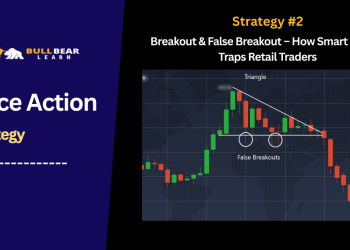
Strategy #2: Breakout & False Breakout – How Smart Money Traps Retail Traders

by Baby Bull
March 23, 2026
0

1. What Is a Breakout in Price Action? A breakout occurs when price moves beyond a significant level such as:...

price action trading strategy

Strategy #1: Price Action Trading Strategy: A Complete Framework for Consistent Decisions

by Baby Bull
March 23, 2026
0

Introduction: Why Most Trading Strategies Fail Most traders spend their time searching for: the best indicator the perfect entry a...

trading mindset

Psychology #6: Process-Based Thinking vs Outcome-Based Thinking in Trading

by Baby Bear
March 21, 2026
0

Introduction: Why Results Can Be Misleading Most traders judge their performance based on one thing: Did I make money or...

trading journal

Psychology #5: Trading Routine, Journaling & Mental Process: How Professionals Build Consistency

by Baby Bull
March 22, 2026
0

Introduction: Consistency Is Built, Not Natural Most traders struggle with: inconsistency emotional decisions lack of discipline They believe the solution...

losing streaks in trading

Psychology #4: Losing Streaks, Tilt & Psychological Recovery in Trading

by Baby Bull
March 21, 2026
0

Introduction: Losing Streaks Are Inevitable — Breakdown Is Optional Every trader experiences losing streaks. Even the best strategies, with solid...

Load More
  • Trending
  • Comments
  • Latest
Market Structure in Price Action

Market Structure in Price Action: Higher Highs, Lower Lows Explained

February 27, 2026
exness review

Exness Review 2026: Is It Safe, Legit & Worth It for Beginners?

March 23, 2026
Discipline & Consistency in Trading

Psychology #3: Discipline & Consistency in Trading: How Professionals Actually Follow Rules

March 21, 2026
trading psychology basics

Psychology #1: Trading Psychology Basics: Why Most Traders Fail Despite Good Strategies

March 20, 2026
breakout forex strategy

Strategy #2: Breakout & False Breakout – How Smart Money Traps Retail Traders

0
price action trading strategy

Strategy #1: Price Action Trading Strategy: A Complete Framework for Consistent Decisions

0
trading mindset

Psychology #6: Process-Based Thinking vs Outcome-Based Thinking in Trading

0
trading journal

Psychology #5: Trading Routine, Journaling & Mental Process: How Professionals Build Consistency

0
breakout forex strategy

Strategy #2: Breakout & False Breakout – How Smart Money Traps Retail Traders

March 23, 2026
price action trading strategy

Strategy #1: Price Action Trading Strategy: A Complete Framework for Consistent Decisions

March 23, 2026
trading mindset

Psychology #6: Process-Based Thinking vs Outcome-Based Thinking in Trading

March 21, 2026
trading journal

Psychology #5: Trading Routine, Journaling & Mental Process: How Professionals Build Consistency

March 22, 2026

BullBearLearn.com is an independent educational website on Forex and financial trading, offering knowledge, strategies, and tools to help traders understand and navigate markets—whether bullish or bearish.

Categories
  • Broker Reviews
  • Core Concepts
  • Core Strategies
  • Crypto Exchange
  • Execution
  • Forex Basic
  • Learn Forex
  • Market Condition
  • Price Action
  • Psychology
  • Risk Management
  • Strategy
  • Tools
  • Trading Strategies
Tags
Beginner Binance Review breakout Broker Reviews Bybit review calculator Core Concepts cost crypto exchange Execution Exness Review fees forex basic guide Leverage lot Margin mistake OKX review pip position size price action Psychology risk risk reward Spread swap Swing XM Review xtb review

Disclaimer: Content on BullBearLearn.com is for educational purposes only and not intended as financial advice. Trading involves risk.​

  • About
  • Privacy Policy
  • Terms of Service
  • Disclaimer
  • Cookie Policy
  • Affiliate Disclosure
  • Contact Us

© 2025 BullBearLearn.com — Learn to Trade, Bull or Bear.

Welcome Back!

Login to your account below

Forgotten Password?

Retrieve your password

Please enter your username or email address to reset your password.

Log In

Session expired

Please log in again. The login page will open in a new tab. After logging in you can close it and return to this page.

Add New Playlist

>

Table of Contents

×
  • What Is Position Sizing in Forex Trading?
  • Why Position Sizing Matters More Than Entries
  • Fixed Lot Size vs Fixed Percentage Risk
    • Fixed Lot Size (Beginner Trap)
    • Fixed Percentage Risk (Professional Standard)
  • The Relationship Between Stop Loss and Position Size
  • Why “1–2% Risk per Trade” Is Not a Rule
  • Position Sizing and Losing Streaks
  • Execution Factors That Affect Real Risk
  • Position Sizing Is a Skill, Not a Formula
  • What Comes Next
  • Final Thoughts
→ Index
No Result
View All Result
  • Home
  • Learn Forex
    • Forex Basic
    • Trading Strategies
    • Price Action
  • Learn Crypto
  • Broker Reviews
  • Tools FREE
  • Blog
START

© 2025 BullBearLearn.com — Learn to Trade, Bull or Bear.