

Forex Beginner Course – Lesson 1 of 20
Forex is the largest and most liquid financial market in the world. Every single day, more than $7.5 trillion flows through the global foreign exchange market, making it bigger than the stock market, crypto, and commodities combined. For beginners, Forex can seem overwhelming with its charts, indicators, and strange terminology. But at its core, Forex is simple: you buy one currency and sell another to profit from changes in exchange rates.
This comprehensive forex trading guide for beginners explains everything you need to know before placing your first trade — what Forex is, how the market works, why it matters, and how to trade Forex safely and effectively.
1. What Is Forex? (Simple Definition for Beginners)
Forex (short for Foreign Exchange) is the global marketplace where currencies are traded. When you trade Forex, you are always trading currency pairs, such as:
-
EUR/USD
-
GBP/USD
-
USD/JPY
-
XAU/USD
If EUR/USD rises from 1.0800 → 1.0900, the euro becomes stronger against the US dollar. Anyone who bought (went long) earlier makes a profit.
Unlike the stock market, Forex does not have a central exchange. Instead, it operates as an OTC (Over-the-Counter) network through banks, financial institutions, liquidity providers, hedge funds, and retail traders.
2. How Big Is the Forex Market? (Mind-Blowing Facts)
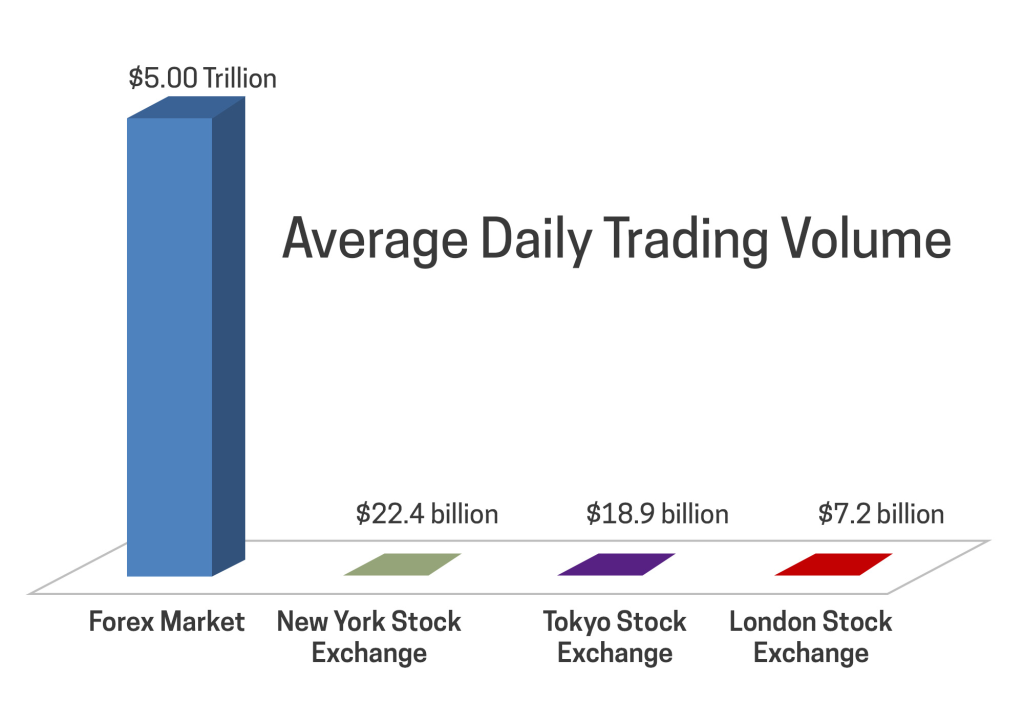
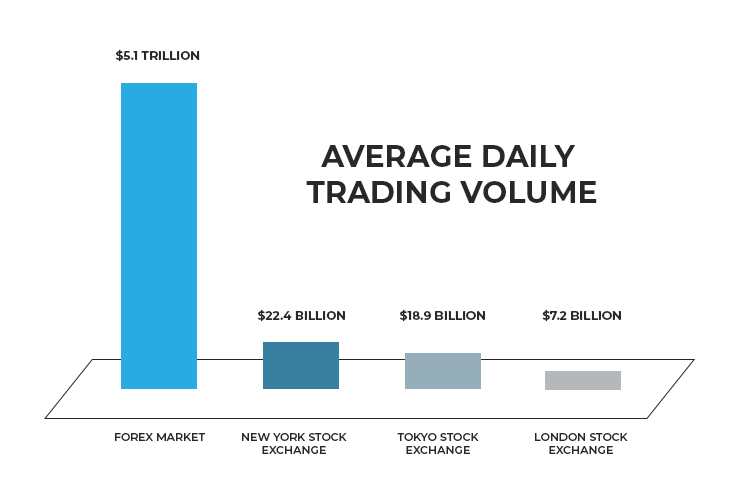
According to the Bank for International Settlements, the Forex market processes over $7.5 trillion per day.
To put this into perspective:
-
It’s 25 times larger than the global stock market.
-
It’s bigger than crypto + gold + oil combined.
-
It never sleeps — the market runs 24 hours a day, 5 days a week.
This enormous liquidity is one of the key reasons why Forex is ideal for beginners: trades execute instantly, spreads are low, and you can enter or exit positions at any time.
3. Who Trades Forex? (The 5 Major Players)
Forex is not dominated by small traders — it is powered by the world’s largest financial entities.
1. Central Banks
Institutions like the Federal Reserve (FED), ECB, BOJ influence currency prices through interest rate decisions and monetary policy.
2. Commercial & Investment Banks
They account for 50–60% of all global Forex transactions.
3. Hedge Funds & Large Financial Institutions
These players move billions and can create strong market trends.
4. Corporations & Import/Export Businesses
Companies exchange currencies to pay for goods and services internationally.
5. Retail Traders (You)
Retail traders make up around 5–6% of daily volume — still huge thanks to modern trading platforms and online brokers.
4. How the Forex Market Works (Beginner-Friendly Explanation)
Forex is a two-way market. This means you can profit when prices rise and when they fall.
-
If you believe a currency will increase → Buy (Long)
-
If you believe it will decrease → Sell (Short)
⏰ Forex Market Hours (24/5 Sessions)
The market operates across four major trading sessions:
| Session | Main Region | Activity |
|---|---|---|
| Sydney | Oceania | Slow |
| Tokyo | Asia | Stable, moderate movement |
| London | Europe | High volatility |
| New York | US | Very active |
The most volatile and profitable time is the London–New York overlap.
5. What Are Currency Pairs?
Every Forex trade involves two currencies:
EUR/USD = Base Currency / Quote Currency
If EUR/USD = 1.0850 ⟶ 1 EUR = 1.0850 USD
Currency pairs are divided into:
-
Major pairs (EUR/USD, GBP/USD, USD/JPY…)
-
Minor pairs (EUR/GBP, AUD/NZD…)
-
Exotic pairs (USD/TRY, USD/ZAR…)
6. Why Trade Forex? (Key Advantages for Beginners)
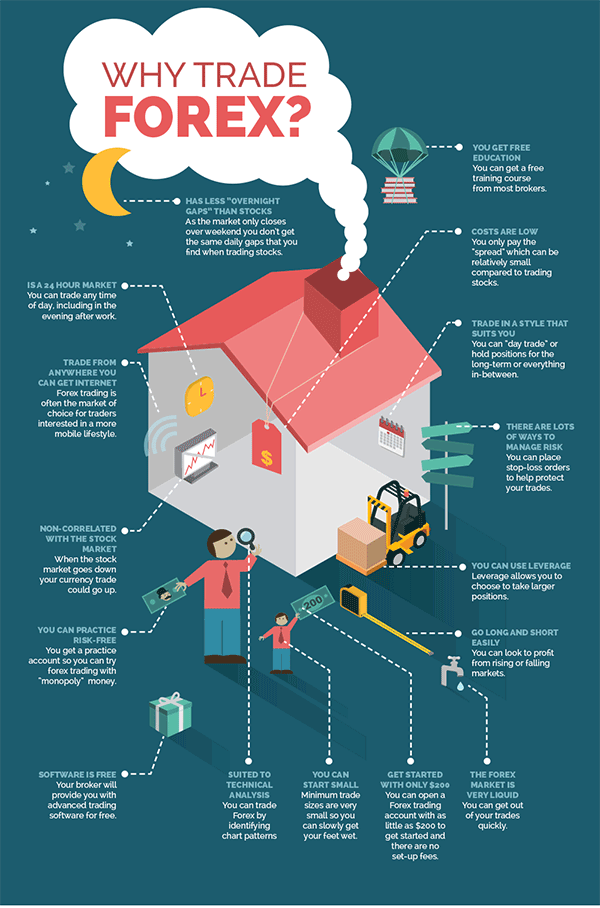
✔ 1. Low capital required
You can start trading live with as little as $10–$50.
✔ 2. Trade anytime (24/5)
Perfect for students, employees, or anyone with a busy schedule.
✔ 3. Make money when the market goes up or down
Buy or sell anytime.
✔ 4. High liquidity
Prices move smoothly, orders fill instantly.
✔ 5. Strong tools and technology
MetaTrader 4/5, TradingView, cTrader…
✔ 6. Multiple trading styles
Scalping, day trading, swing trading, long-term trading.
7. The Risks of Forex Trading (What Beginners Must Know)
❌ 1. High leverage
Amplifies profit and loss — beginners often blow accounts due to over-leveraging.
❌ 2. Volatile news events
NFP, CPI, FOMC can move markets 10–100 pips in seconds.
❌ 3. Emotional trading
Fear, greed, and lack of discipline cause most beginner losses.
❌ 4. Unregulated or low-quality brokers
Can manipulate spreads, delay withdrawals, or offer unfair conditions.
❌ 5. Poor risk management
Using large lot sizes or trading without stop loss is a fast path to failure.
8. Is Forex Trading Legal?
Forex is legal worldwide, but regulations differ by country:
-
US → Strict (CFTC/NFA)
-
UK/EU → FCA, CySEC, ESMA
-
Australia → ASIC
-
Vietnam / SEA Region → Allowed for individuals, but no local brokers
Most traders in Asia, Africa, and Europe use international regulated brokers like Exness, IC Markets, Pepperstone, RoboForex, XTB…
9. Tools You Need to Start Forex Trading
✔ A trusted Forex broker
✔ MT4 / MT5 or TradingView
✔ Basic technical analysis
✔ A risk management plan
✔ A beginner-friendly trading strategy
10. How to Trade Forex – A 7-Step Beginner Roadmap
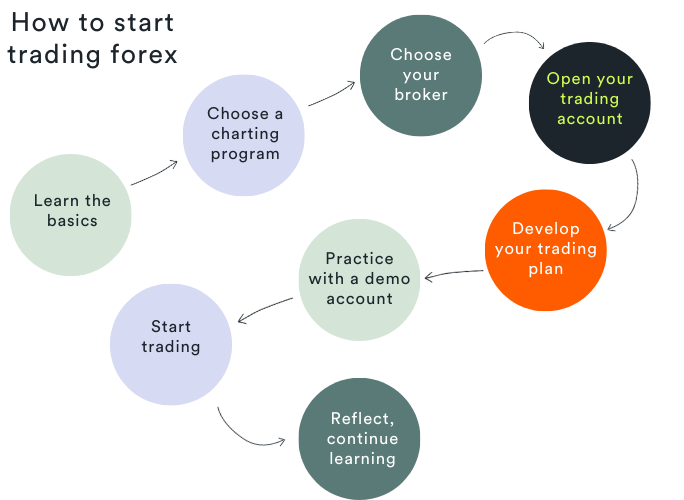
Pip, lot, spread, leverage, margin…
Step 2 – Choose a regulated broker
(Exness, XM, IC Markets, Pepperstone, XTB…)
Step 3 – Open a Demo Account
Practice for 2–3 weeks until you master the platform.
Step 4 – Trade only 1–2 pairs
EUR/USD is the best for new traders.
Step 5 – Learn simple technical analysis
Support/resistance, candlestick patterns, trendlines.
Step 6 – Apply risk management
Risk 1–2% per trade.
Step 7 – Move to a small real account
Start with $50–$200 — not more.
11. Conclusion: Is Forex Right for You?
Forex is suitable for:
-
Beginners with small capital
-
People looking for flexible trading hours
-
Those who enjoy chart analysis
-
Anyone willing to learn and stay disciplined
Forex is not suitable if you:
-
Want to get rich overnight
-
Hate learning
-
Cannot handle losses
-
Have no time to practice
But if you approach Forex seriously, it can become one of the most valuable skills you ever learn.