

If you’ve ever opened the trading screen on Binance, OKX, Bybit, or another cryptocurrency exchange, you’ve probably noticed two different prices for the same coin.
One is called the Bid price.
The other is the Ask price.
Many beginners assume the market has a single price, but that’s not actually how financial markets work.
Every trade requires two parties:
- Someone willing to buy.
- Someone willing to sell.
The interaction between these buyers and sellers determines the market price.
Understanding bid and ask prices will help you better understand how crypto trading works, why prices sometimes move suddenly, and how your orders are executed.
What Is the Bid Price?
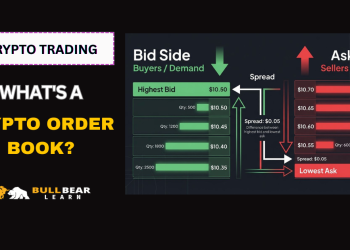
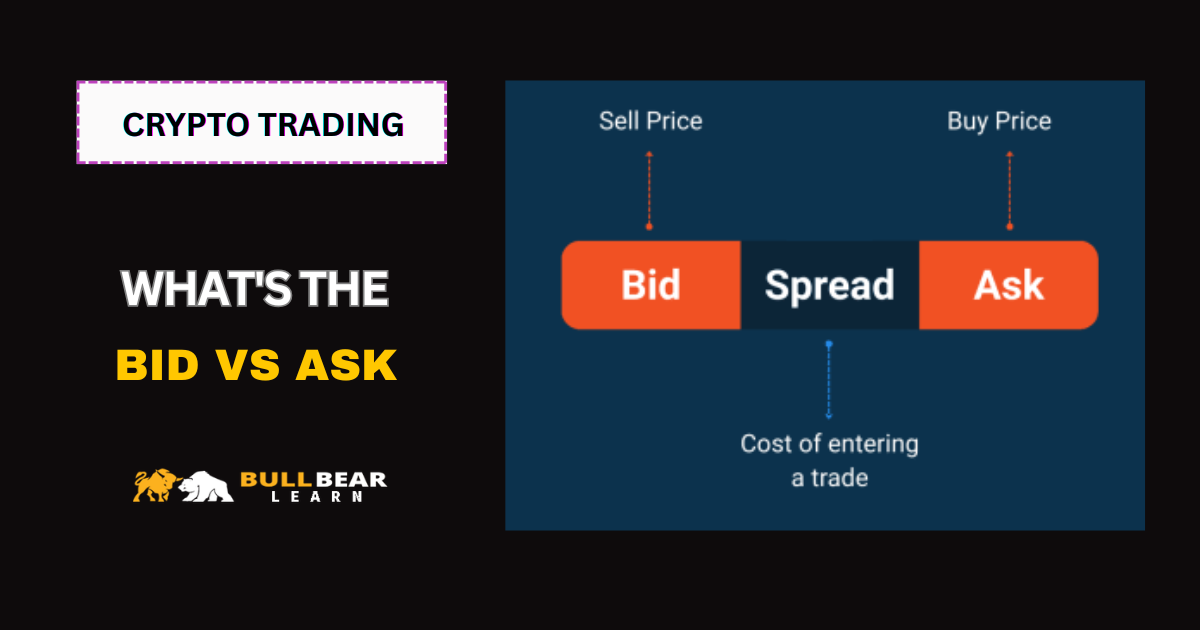
The bid price is the highest price that a buyer is currently willing to pay for a cryptocurrency.
Think of it as an offer from buyers.
For example:
- Current highest bid for Bitcoin:
$100,000
This means someone is willing to purchase Bitcoin for up to $100,000.
If you decide to sell immediately using a market order, your Bitcoin will generally be matched with one of these buyers.
What Is the Ask Price?
The ask price is the lowest price that a seller is currently willing to accept.
Think of it as an offer from sellers.
Example:
Lowest asking price:
$100,020
A seller is offering Bitcoin for $100,020.
If you place a market buy order, you’ll generally purchase from one of these sellers.
Why Are There Two Prices?
The market consists of thousands of buyers and sellers placing orders simultaneously.
Buyers naturally want to pay less.
Sellers naturally want to receive more.
The difference between these two prices creates the market spread.
Once a buyer accepts a seller’s asking price—or a seller accepts a buyer’s bid—a trade occurs.
What Is the Bid-Ask Spread?
The bid-ask spread is simply the difference between the highest bid price and the lowest ask price.
For example:
Highest bid:
$100,000
Lowest ask:
$100,020
Spread:
$20
This gap exists because buyers and sellers have different price expectations.
Why Does the Spread Matter?
Although the spread often appears small, it affects every trade you make.
A narrower spread generally means:
- Better liquidity
- Lower trading costs
- Faster execution
A wider spread usually indicates:
- Lower liquidity
- Greater uncertainty
- Higher transaction costs
For active traders, even small differences in the spread can become significant over time.
A Simple Example
Imagine you’re buying Bitcoin.
The order book shows:
| Bid | Ask |
|---|---|
| $99,995 | $100,010 |
| $99,990 | $100,015 |
| $99,985 | $100,020 |
If you submit a market buy order, your order is matched with the lowest available ask price.
If you submit a market sell order, your order is matched with the highest available bid price.
This matching process happens automatically within seconds.
What Causes the Spread to Change?
The spread is constantly changing.
Several factors influence it.
Market Liquidity
Highly traded cryptocurrencies such as Bitcoin and Ethereum usually have very narrow spreads.
Smaller cryptocurrencies often have wider spreads because fewer buyers and sellers are participating.
Market Volatility
During periods of high volatility, buyers and sellers become less certain about prices.
As a result, spreads often widen.
Trading Activity
When more participants enter the market, competition between buyers and sellers usually reduces the spread.
Bid and Ask in Spot Trading
Every spot trade depends on bid and ask prices.
When you:
- Buy with a market order → you accept the current ask price.
- Sell with a market order → you accept the current bid price.
Understanding this relationship helps explain why your execution price may differ slightly from the price displayed on a chart.
Bid and Ask vs Market Price
Many beginners think the market price is always the amount they’ll pay.
In reality, the displayed market price often represents the last completed trade.
However, if you place a new order:
- Buyers transact at the ask.
- Sellers transact at the bid.
This explains why your purchase price may be slightly higher—or your selling price slightly lower—than the latest quoted market price.
How Bid and Ask Affect Market Orders
Suppose Bitcoin is trading around $100,000.
The order book shows:
Highest bid:
$99,995
Lowest ask:
$100,005
You submit a market buy order.
Your order executes at approximately $100,005, not $99,995, because you’re buying from the lowest available seller.
The reverse happens when selling.
How Bid and Ask Affect Limit Orders
Limit orders interact directly with bid and ask prices.
If you place:
- A buy limit order below the current ask price, you’ll wait until a seller accepts your price.
- A sell limit order above the current bid price, you’ll wait until a buyer accepts your price.
This gives traders greater price control but may delay execution.
What Is a Tight Spread?
A tight spread means the bid and ask prices are very close together.
Example:
Bid:
$100.00
Ask:
$100.01
Spread:
$0.01
Tight spreads are common for:
- Bitcoin
- Ethereum
- Other highly liquid cryptocurrencies
What Is a Wide Spread?
A wide spread means there is a larger gap between buyers and sellers.
Example:
Bid:
$100
Ask:
$104
Spread:
$4
Wide spreads often occur in:
- Small-cap cryptocurrencies
- Low-volume markets
- Highly volatile trading sessions
Wide spreads increase trading costs.
Bid, Ask, and Liquidity
Liquidity refers to how easily an asset can be bought or sold without significantly affecting its price.
Generally:
High liquidity →
- Smaller spreads
- Faster execution
- Lower slippage
Low liquidity →
- Larger spreads
- Greater slippage
- More volatile price movements
This is one reason why beginners often start by trading large, well-established cryptocurrencies.
Common Beginner Mistakes
Looking Only at the Chart Price
The chart usually shows completed trades—not necessarily the price you’ll receive.
Always check the current bid and ask before placing an order.
Ignoring the Spread
A small spread may seem insignificant, but it represents part of your trading cost.
This becomes especially important for frequent traders.
Trading Low-Liquidity Coins
Less popular cryptocurrencies may have unexpectedly large spreads, increasing trading costs and execution risk.
Do Long-Term Investors Need to Worry About the Spread?
Usually not.
If you’re investing over several years, a small bid-ask spread is unlikely to have a meaningful impact on your returns.
However, active traders who buy and sell frequently should pay much closer attention to spreads because the costs accumulate over time.
Final Thoughts
Bid and ask prices are fundamental concepts in every financial market—not just cryptocurrency.
They explain how buyers and sellers interact and why there isn’t a single fixed market price at any given moment.
By understanding the bid, the ask, and the spread, you’ll be better prepared to interpret trading screens, choose appropriate order types, and execute trades with greater confidence.
As you continue learning, these concepts will become the foundation for understanding order books, liquidity, and more advanced trading strategies.
🚀 Practice Reading Bid and Ask Prices
The easiest way to understand these concepts is by watching a live order book on a reputable exchange.
👉 Binance — https://bullbearlearn.com/go/binance
⚡ OKX — https://bullbearlearn.com/go/okx
🔥 Bybit — https://bullbearlearn.com/go/bybit
Observe how the bid and ask prices change in real time before placing your next trade.
Related Articles
📈 What Is Spot Trading? A Beginner’s Guide to Crypto Spot Markets
📑 Market Order vs Limit Order: What’s the Difference in Crypto Trading?
📘 Understanding the Crypto Order Book (coming soon)
💧 What Is Liquidity in Crypto? (coming soon)
💰 How to Buy Cryptocurrency: A Beginner’s Step-by-Step Guide
Frequently Asked Questions
What is the difference between the bid price and the ask price?
The bid price is the highest price a buyer is willing to pay, while the ask price is the lowest price a seller is willing to accept.
Why is the ask price higher than the bid price?
Buyers generally want to pay less, while sellers want to receive more. The difference between the two creates the bid-ask spread.
What is a good bid-ask spread?
For highly liquid cryptocurrencies like Bitcoin and Ethereum, the spread is usually very small. Wider spreads are more common in low-volume or highly volatile markets.
Does the bid-ask spread affect long-term investors?
It has some impact, but for long-term investors making occasional trades, the effect is usually minor. Active traders are generally more sensitive to spreads because they trade more frequently.
Why did my market order execute at a different price than the chart?
The chart often displays the last traded price, while market orders execute against the current bid or ask prices available in the order book.