
• About
  • Crypto Exchange
Bullbearlearn
Advertisement
  • Home
  • Learn Forex
    • Forex Basic
    • Trading Strategies
    • Price Action
  • Learn Crypto
  • Broker Reviews
  • Tools FREE
  • Blog
Start
No Result
View All Result
  • Home
  • Learn Forex
    • Forex Basic
    • Trading Strategies
    • Price Action
  • Learn Crypto
  • Broker Reviews
  • Tools FREE
  • Blog
No Result
View All Result
Bullbearlearn
No Result
View All Result
Home Learn Forex Forex Basic

Risk Management in Forex: The Foundation of Long-Term Trading Success

Baby Bull by Baby Bull
December 25, 2025
in Forex Basic, Learn Forex
57 1
0
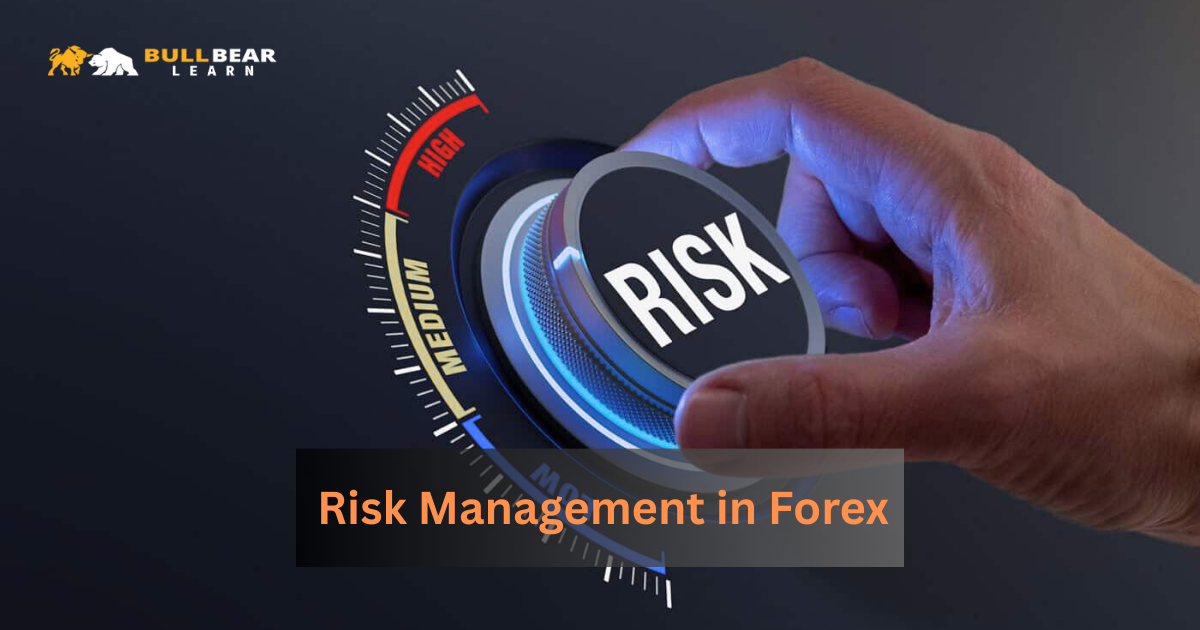
Risk Management in Forex

Risk Management in Forex

190
SHARES
1.5k
VIEWS
Share on FacebookShare on Twitter

In Forex trading, profitability is often misunderstood as the ability to predict market direction accurately. In reality, long-term success depends far more on risk management than on entry precision.

Many traders with strong technical knowledge still fail because they underestimate risk exposure, overtrade, or mismanage position size. Conversely, traders with average strategies but strict risk control often survive and grow steadily.

This article explains what risk management in Forex truly means, why it matters more than strategy selection, and how beginners can implement practical risk controls from day one.


Table of Contents

Toggle
  • What Is Risk Management in Forex?
  • Why Risk Management Matters More Than Strategy
  • Core Principles of Forex Risk Management
    • 1. Risk Per Trade
    • 2. Position Sizing
    • 3. Stop-Loss Discipline
    • 4. Risk-to-Reward Ratio
  • Account-Level Risk Management
    • Maximum Drawdown Limits
    • Correlation Risk
  • Psychological Risk Management
  • Risk Management vs Money Management
  • Common Risk Management Mistakes
  • Building a Simple Risk Management Framework
  • Why Risk Management Improves Long-Term Results
  • Conclusion

What Is Risk Management in Forex?

Risk management refers to the systematic process of limiting potential losses while allowing profitable trades to develop naturally.

In Forex, risk management answers three fundamental questions:

  1. How much capital should be risked per trade?

  2. Where should losses be cut?

  3. How does risk scale as account size changes?

Without clear answers to these questions, trading becomes speculation rather than a controlled activity.


Why Risk Management Matters More Than Strategy

Many beginner traders spend most of their time searching for:

  • The “best” indicator

  • The “most accurate” strategy

  • The “perfect” entry signal

However, no strategy wins 100% of the time. Even a system with a high win rate can fail if losses are not controlled.

Risk management determines:

  • Maximum drawdown tolerance

  • Psychological stability during losing streaks

  • Account survival during unfavorable market conditions

Simply put, risk management keeps traders in the game.


Core Principles of Forex Risk Management

1. Risk Per Trade

One of the most widely accepted rules is risking a small, fixed percentage of the account per trade.

Common ranges:

  • Conservative traders: 0.5%–1%

  • Moderate traders: 1%–2%

  • Aggressive traders: above 2% (not recommended for beginners)

By limiting risk per trade, a series of losses does not threaten account survival.


2. Position Sizing

Position size determines how much a trader gains or loses for each pip movement.

Incorrect position sizing often occurs when traders:

  • Trade fixed lot sizes regardless of stop-loss distance

  • Increase size after wins impulsively

  • Ignore account balance changes

Proper position sizing aligns stop-loss distance with risk tolerance.

Many traders rely on a position size calculator to quickly adjust lot size based on account balance, risk percentage, and stop-loss distance.


3. Stop-Loss Discipline

A stop-loss defines the point where a trade thesis is invalidated.

Common stop-loss mistakes include:

  • Trading without a stop-loss

  • Moving stops further away to avoid losses

  • Placing stops arbitrarily without structure

A stop-loss is not a sign of failure—it is a predefined cost of doing business.


4. Risk-to-Reward Ratio

Risk-to-reward ratio (R:R) measures how much potential reward is expected relative to the risk taken.

Examples:

  • Risk 1 to make 1 (1:1)

  • Risk 1 to make 2 (1:2)

  • Risk 1 to make 3 (1:3)

Even with a win rate below 50%, a favorable R:R can keep a strategy profitable.

Risk management focuses on outcomes over many trades, not individual results.


Account-Level Risk Management

Maximum Drawdown Limits

Drawdown refers to the decline from a peak account balance.

Professional traders often set:

  • Daily drawdown limits

  • Weekly loss caps

  • Maximum overall drawdown thresholds

Once reached, trading stops temporarily to prevent emotional decisions.


Correlation Risk

Trading multiple correlated currency pairs simultaneously increases hidden exposure.

For example:

  • EUR/USD and GBP/USD often move in similar directions

  • AUD/USD and NZD/USD share risk sentiment behavior

Risk management requires evaluating portfolio exposure, not just individual trades.


Psychological Risk Management

Risk is not only financial—it is psychological.

Poor risk control leads to:

  • Fear-driven exits

  • Revenge trading

  • Hesitation on valid setups

By defining risk clearly before entry, emotional pressure during trades decreases significantly.

Traders who know their maximum loss are more likely to:

  • Follow rules

  • Let trades play out

  • Accept losses calmly


Risk Management vs Money Management

Risk Management in Forex

Although often used interchangeably, they differ slightly:

  • Risk management focuses on limiting losses

  • Money management focuses on capital growth and allocation

Both are interconnected, but risk management always comes first.


Common Risk Management Mistakes

New traders frequently:

  • Increase risk after losses

  • Trade without calculating position size

  • Ignore spread and swap costs

  • Risk more during emotional states

Most of these errors stem from impatience rather than lack of knowledge.


Building a Simple Risk Management Framework

A basic framework for beginners:

  1. Risk no more than 1% per trade

  2. Always use a stop-loss

  3. Maintain minimum 1:2 risk-to-reward

  4. Limit total open risk across trades

  5. Track performance over at least 50 trades

Simplicity increases consistency.


Why Risk Management Improves Long-Term Results

Risk management does not eliminate losses—but it controls their impact.

Over time, it:

  • Reduces emotional volatility

  • Smooths equity curves

  • Allows strategies to express edge

Successful traders do not avoid losing trades; they avoid large, unnecessary losses.


Conclusion

Risk management is the backbone of Forex trading. Without it, even the most sophisticated strategies fail under pressure.

By controlling position size, defining risk clearly, and maintaining discipline, traders shift from reactive behavior to structured decision-making.

In Forex, the goal is not to win every trade—it is to manage losses well enough that winners can compound over time.


Tags: Beginnerforex basicrisk
Share76Tweet48
Previous Post

Common Mistakes of New Forex Traders (and How to Avoid Them)

Next Post

What Is Price Action Trading? A Beginner’s Guide to Reading the Market

Related Posts

Common Mistakes of New Forex Traders

Common Mistakes of New Forex Traders (and How to Avoid Them)

by Baby Bull
December 21, 2025
0

Most beginner Forex traders do not fail because the market is unfair or unpredictable. They fail because they repeat the...

Forex Trading Styles

Forex Trading Styles Explained: Scalping, Day Trading, Swing Trading, and Position Trading

by Baby Bull
December 20, 2025
0

Forex trading is not a one-size-fits-all activity. While many beginners focus on indicators or strategies, experienced traders understand that choosing...

Forex Transaction Fees Explained

Forex Transaction Fees Explained: Spread, Commission, and Swap

by Baby Bull
December 19, 2025
0

One of the most overlooked aspects of Forex trading—especially among beginners—is transaction cost. Many traders focus heavily on strategies, indicators,...

Most Popular Currency Pairs in Forex

Most Popular Currency Pairs in Forex & Key Properties of Each Pair

by Baby Bull
December 15, 2025
0

In the Forex market, traders do not buy or sell individual currencies in isolation. Instead, every transaction involves a currency...

Forex Trading Hours

Forex Trading Hours & Sessions Explained: Best Time to Trade Forex

by Baby Bull
December 15, 2025
0

One of the biggest advantages of Forex trading is that the market operates 24 hours a day, five days a...

Load More
  • Trending
  • Comments
  • Latest
Forex Trading Styles

Forex Trading Styles Explained: Scalping, Day Trading, Swing Trading, and Position Trading

December 20, 2025
forex account types

Forex Account Types Explained: Standard, Raw, ECN & More

December 15, 2025

Execution #2: Order Execution in Forex – Slippage, Requotes & Why It Affects Your Results

January 12, 2026
OKX Review

OKX Review 2026 — Is OKX a Safe, Legit and Reliable Crypto Exchange?

December 29, 2025

Swing Trading Strategy: A Practical Approach for Consistent Traders

0

Risk–Reward Strategy: The Foundation of All Profitable Trading

0

Risk Management #6: Scaling Risk, Drawdown Control & When to Reduce Size

0

Risk Management #5: Drawdown, Losing Streaks & Capital Survival

0

Swing Trading Strategy: A Practical Approach for Consistent Traders

January 12, 2026

Risk–Reward Strategy: The Foundation of All Profitable Trading

January 7, 2026

Risk Management #6: Scaling Risk, Drawdown Control & When to Reduce Size

January 5, 2026

Risk Management #5: Drawdown, Losing Streaks & Capital Survival

January 5, 2026

BullBearLearn.com is an independent educational website on Forex and financial trading, offering knowledge, strategies, and tools to help traders understand and navigate markets—whether bullish or bearish.

Categories
  • Broker Reviews
  • Core Concepts
  • Core Strategies
  • Crypto Exchange
  • Execution
  • Forex Basic
  • Learn Forex
  • Market Condition
  • Price Action
  • Risk Management
  • Trading Strategies
Tags
Beginner Binance Review breakout Broker Reviews Bybit review Core Concepts cost crypto exchange Execution Exness Review fees forex basic guide Leverage lot Margin mistake OKX review pip price action risk risk reward Spread swap Swing XM Review xtb review

Disclaimer: Content on BullBearLearn.com is for educational purposes only and not intended as financial advice. Trading involves risk.​

  • About
  • Privacy Policy
  • Terms of Service
  • Disclaimer
  • Cookie Policy
  • Affiliate Disclosure
  • Contact Us

© 2025 BullBearLearn.com — Learn to Trade, Bull or Bear.

Welcome Back!

Login to your account below

Forgotten Password?

Retrieve your password

Please enter your username or email address to reset your password.

Log In

Session expired

Please log in again. The login page will open in a new tab. After logging in you can close it and return to this page.

Add New Playlist

>

Table of Contents

×
  • What Is Risk Management in Forex?
  • Why Risk Management Matters More Than Strategy
  • Core Principles of Forex Risk Management
    • 1. Risk Per Trade
    • 2. Position Sizing
    • 3. Stop-Loss Discipline
    • 4. Risk-to-Reward Ratio
  • Account-Level Risk Management
    • Maximum Drawdown Limits
    • Correlation Risk
  • Psychological Risk Management
  • Risk Management vs Money Management
  • Common Risk Management Mistakes
  • Building a Simple Risk Management Framework
  • Why Risk Management Improves Long-Term Results
  • Conclusion
→ Index
No Result
View All Result
  • Home
  • Learn Forex
    • Forex Basic
    • Trading Strategies
    • Price Action
  • Learn Crypto
  • Broker Reviews
  • Tools FREE
  • Blog
START

© 2025 BullBearLearn.com — Learn to Trade, Bull or Bear.