

Forex trading is not a one-size-fits-all activity. While many beginners focus on indicators or strategies, experienced traders understand that choosing the right trading style is far more important than choosing the “perfect” setup.
A trading style determines:
-
How long trades are held
-
How frequently you trade
-
How much screen time is required
-
What type of risk you are exposed to
-
Which account type and broker conditions suit you best
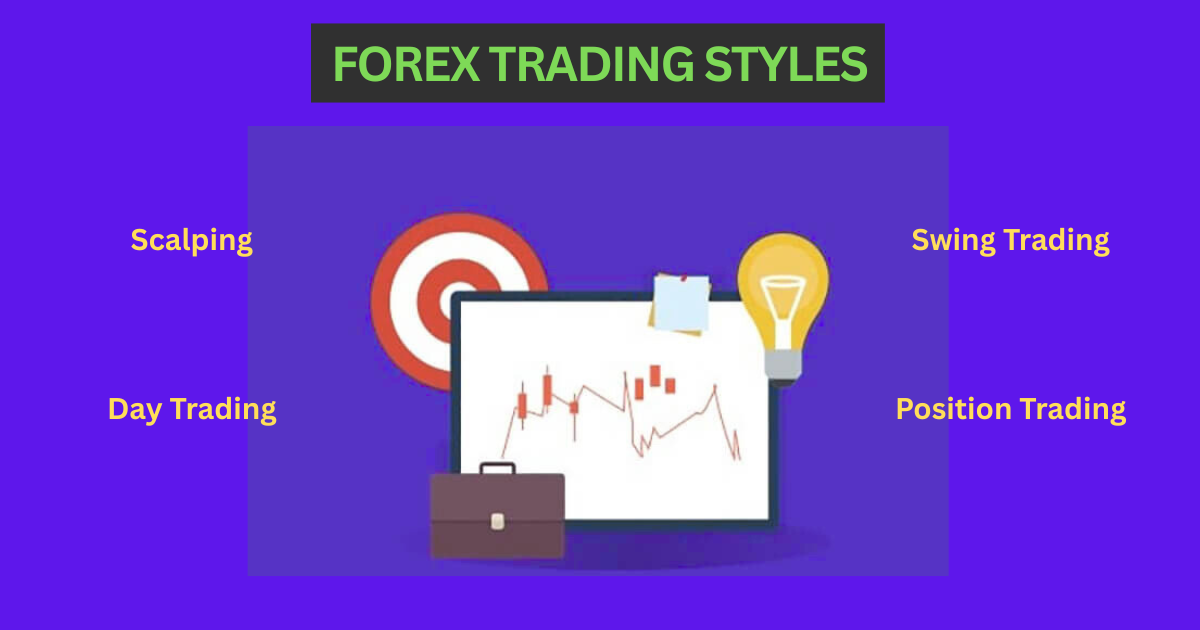
This article explains the four main Forex trading styles—scalping, day trading, swing trading, and position trading—their characteristics, advantages, disadvantages, and how to choose the style that fits your personality and lifestyle.
What Is a Forex Trading Style?
A Forex trading style refers to the way a trader approaches the market based on:
-
Trade duration
-
Time commitment
-
Risk tolerance
-
Market conditions
There is no “best” trading style in absolute terms. A style is only effective if it matches the trader’s psychology, schedule, and capital size.
Many trading failures occur not because a strategy is bad, but because the trader applies it using the wrong trading style.
Overview of the Main Forex Trading Styles
The four most common Forex trading styles are:
-
Scalping
-
Day Trading
-
Swing Trading
-
Position Trading
Each style operates on different timeframes and requires different market conditions.
Scalping: High Frequency, Short Exposure
What Is Scalping?
Scalping is a trading style that focuses on very short-term price movements, often holding trades for seconds or minutes. Scalpers aim to capture small profits repeatedly throughout the trading session.
Key Characteristics
-
Timeframes: 1-minute to 5-minute charts
-
Trade duration: Seconds to minutes
-
Trades per day: High frequency
-
Profit per trade: Small
Advantages
-
Minimal overnight risk
-
Frequent trading opportunities
-
Quick feedback on performance
Disadvantages
-
High transaction costs sensitivity
-
Requires strong discipline and focus
-
Emotionally demanding
Who Is Scalping Suitable For?
Scalping is suitable for traders who:
-
Can monitor the market continuously
-
React quickly under pressure
-
Prefer fast-paced decision-making
Because scalping involves frequent entries and exits, transaction costs and execution quality play a critical role in long-term profitability.
Day Trading: Structured Intraday Trading
What Is Day Trading?
Day trading involves opening and closing all positions within the same trading day. No trades are held overnight, eliminating swap fees.
Key Characteristics
-
Timeframes: 5-minute to 1-hour charts
-
Trade duration: Minutes to hours
-
Trades per day: Moderate
-
Exposure: Intraday only
Advantages
-
No overnight risk
-
Clear daily trading routine
-
Balanced frequency and control
Disadvantages
-
Requires consistent screen time
-
Still sensitive to spreads and commissions
-
Performance depends on session volatility
Who Is Day Trading Suitable For?
Day trading suits traders who:
-
Can trade during active market sessions
-
Prefer defined daily risk limits
-
Want a balance between speed and analysis
Day traders often focus on London and New York sessions, where liquidity and volatility are highest.
Swing Trading: Capturing Medium-Term Market Moves
What Is Swing Trading?
Swing trading aims to capture price movements that unfold over several days to weeks. Traders focus on market structure, trends, and key technical levels rather than short-term fluctuations.
Key Characteristics
-
Timeframes: 4-hour to daily charts
-
Trade duration: Days to weeks
-
Trades per week: Low to moderate
-
Exposure: Overnight and multi-day
Advantages
-
Less screen time required
-
Lower trading frequency
-
More time for analysis and decision-making
Disadvantages
-
Exposure to overnight risk
-
Swap fees may apply
-
Requires patience
Who Is Swing Trading Suitable For?
Swing trading is ideal for traders who:
-
Have limited daily screen time
-
Prefer analytical planning
-
Are comfortable holding positions overnight
Swap rates and broader market conditions become more important for swing traders than for intraday traders.
Position Trading: Long-Term Market Perspective
What Is Position Trading?
Position trading is a long-term approach where trades are held for weeks, months, or even longer. This style relies heavily on macroeconomic analysis and long-term trends.
Key Characteristics
-
Timeframes: Daily to weekly charts
-
Trade duration: Weeks to months
-
Trades per year: Very low
-
Exposure: Long-term
Advantages
-
Minimal screen time
-
Lower emotional pressure
-
Strong alignment with fundamental analysis
Disadvantages
-
Large stop-loss distances
-
High capital requirements
-
Significant swap considerations
Who Is Position Trading Suitable For?
Position trading suits traders who:
-
Have a long-term investment mindset
-
Understand macroeconomic factors
-
Can tolerate larger drawdowns
Comparing Forex Trading Styles
| Trading Style | Timeframe | Trade Frequency | Key Cost Factor |
|---|---|---|---|
| Scalping | 1–5 min | Very High | Spread & commission |
| Day Trading | 5 min–1H | Moderate | Spread |
| Swing Trading | 4H–Daily | Low | Swap |
| Position Trading | Daily–Weekly | Very Low | Swap & capital cost |
Choosing the Right Trading Style
When choosing a trading style, consider:
-
Available trading time
-
Psychological tolerance for risk
-
Capital size
-
Preferred market sessions
Trying to force a style that does not fit your lifestyle often leads to inconsistent results.
Account Types and Broker Conditions by Trading Style
Different trading styles require different trading conditions:
-
Scalping: ultra-low spreads, fast execution
-
Day trading: stable spreads, reliable liquidity
-
Swing trading: competitive swap rates
-
Position trading: transparent long-term costs
This is why many traders evaluate account types based on their trading style, rather than choosing a broker blindly.
Choosing an Account Type Based on Your Trading Style
Because transaction costs and execution conditions vary significantly, traders often look for account types that match their trading style, especially when scalping or day trading.
👉For example, traders who execute many short-term trades may prefer account types designed for active trading styles, where spreads are tighter and pricing is more transparent.
This is not about finding the “best broker,” but about selecting conditions that align with how you trade.
Common Mistakes When Choosing a Trading Style
-
Switching styles too frequently
-
Copying other traders without self-assessment
-
Ignoring transaction costs
-
Using the wrong timeframe for analysis
Consistency in style selection is often more important than strategy complexity.
Conclusion
Forex trading styles define how traders interact with the market. Scalping, day trading, swing trading, and position trading each require different skills, time commitments, and cost considerations.
There is no universal best style—only the style that fits your goals, personality, and resources. Understanding this is a critical step toward building a sustainable trading approach.